Sarracenia is one of the best choices for indoor decoration
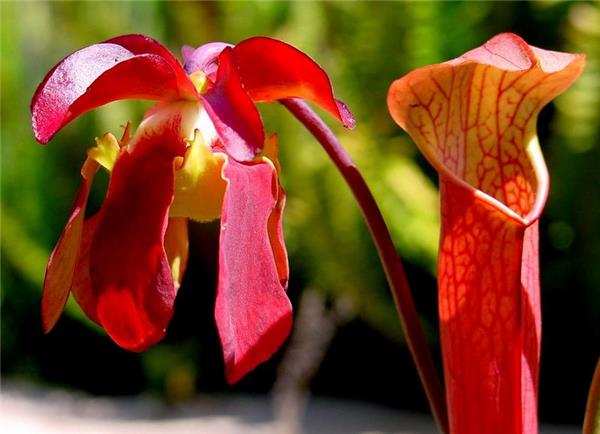
Sarracenia is very beautiful in appearance, with its pitcher-shaped leaves forming a rosette in a circle; in spring, a long flower scape extends from it, bearing a red flower that droops downward like a small bowl, adding much color to the foliage. Below is a brief introduction to the cultivation methods for Sarracenia.
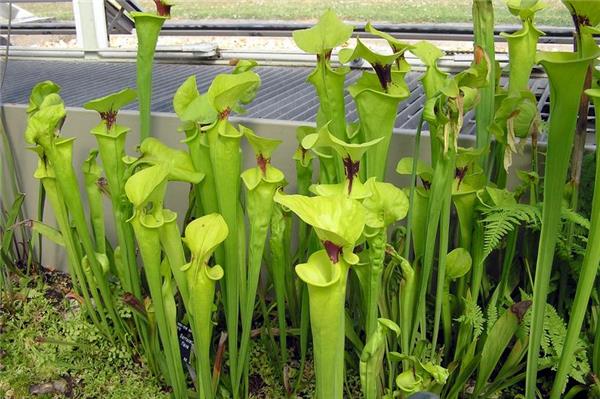
Cultivation methods for Sarracenia
Sarracenia is generally propagated by division, cuttings, and sowing.
Sarracenia propagation by division: carry it out from April to June, before the new shoots sprout. Cut Sarracenia into several small plants from the rhizome, then plant them separately.
Sarracenia propagation by cuttings: first cut off the pitcher (insect-trapping pouch) from the upper part of the Sarracenia leaf, then cut off a section of stem together with the base for use as a cutting, and pot it up after it has rooted.
Sarracenia propagation by sowing: carry it out in August-September, sowing the Sarracenia seeds on chopped sphagnum without covering. At a temperature of 20-25°C and with relatively high air humidity maintained, they germinate in about 30 days. From sowing to the Sarracenia plant reaching maturity takes about 3 years.
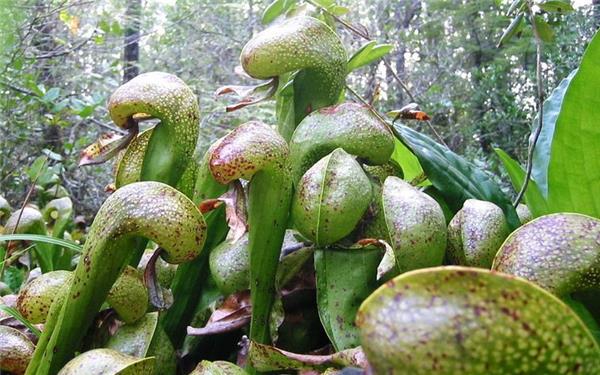
How to grow Sarracenia
Soil: Sarracenia likes poor, acidic soil. The growing medium is made from materials such as peat soil, sphagnum moss, and perlite, or it can be planted in peat soil alone. Put plenty of broken bricks or broken pot pieces in the bottom of the pot. Do not plant it too deep; let half of the rhizome be exposed above the soil surface. After planting, cover the pot surface with a small amount of moss to retain moisture, then place the pot in shallow water 3-4 cm deep.
Temperature: Sarracenia likes warm winters and cool summers. The suitable temperature for growth is 20-26°C, and it is relatively cold-tolerant. In winter, Sarracenia is in its dormant period, and the overwintering temperature should not be lower than -5°C, but it is best to maintain a temperature above 8°C. Sarracenia is not tolerant of dryness and high temperatures; when temperatures are high, measures such as shading, misting, and enhancing ventilation should be used to lower the temperature.
Light: Sarracenia likes a semi-shaded environment, and strong sunlight will scorch the leaf tubes. In summer, shade is needed, blocking 50%-60% of sunlight, or place Sarracenia in a spot with ample scattered light, avoiding direct sunlight. At other times, ample light is needed, which can make Sarracenia's pitcher-shaped leaves fresher, greener, and more attractive; when light is insufficient, Sarracenia will grow leggy and the leaf color will become dull.
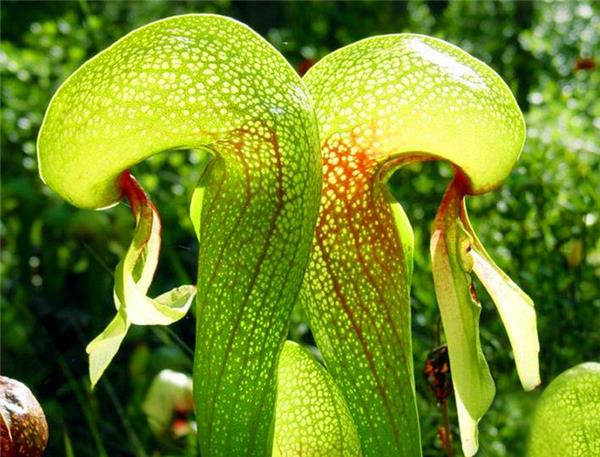
Watering: Sarracenia likes a moist soil environment and is not tolerant of drought. During the growing period, Sarracenia should be watered abundantly to keep the growing medium moist. In winter, watering should be controlled; the soil only needs to be slightly moist. In summer, prevent the water temperature from getting too high, otherwise it will cause root rot. Rainwater is best for watering; do not irrigate with water containing lime.
Humidity: Sarracenia is suitable for growing in a humid environment and is not tolerant of dryness, so during the growing period, Sarracenia should be misted frequently around the plant and its surroundings to keep the environment humid. In summer, mist Sarracenia's leaf surfaces more, which can both lower the ambient temperature and prevent the dry environment from being unfavorable to plant growth.
Fertilizing: In spring, apply a nitrogen-based fertilizer to Sarracenia once every half month; you can water the roots with a 0.2%-0.3% fertilizer solution, or directly pour the diluted fertilizer solution into the insect-trapping pouches for absorption. For Sarracenia with red leaves and red veins, attention should be paid to the balance of nitrogen, phosphorus, and potassium, so as to make Sarracenia's leaf color vivid and enhance its ornamental value. Do not apply nitrogen fertilizer alone or in excess, otherwise the leaf color will become pale and lose its green. Sarracenia should be fertilized lightly rather than heavily; heavy fertilizer easily causes fertilizer damage. In winter, when Sarracenia is dormant, fertilization should be stopped.
Pests and diseases: Sarracenia can be harmed by leaf spot disease, root rot, and pests such as aphids, scale insects, and red spider mites. It can be sprayed and killed with omethoate or dicofol at 1000 times dilution. The main disease of Sarracenia is root rot caused by rotting sphagnum moss; at this time, the pot should be changed promptly, old plants should be removed, and after cutting off the rotten roots, they should be replanted.
That is all for today's introduction to the cultivation methods for Sarracenia. I hope you like it!