How to care for a Peace Lily? Master the methods to grow a beautiful potted plant
Chinese people love plants with auspicious names to decorate their homes, and the Peace Lily is the flower of choice for gardening enthusiasts. How do you care for a Peace Lily? The Peace Lily's flower resembles a crane holding its head high, elegant and spotlessly white, giving people a sense of "purity, calm, peace and well-being," and it is regarded as the "flower of innocence." Let's take a look below at how to care for a Peace Lily.
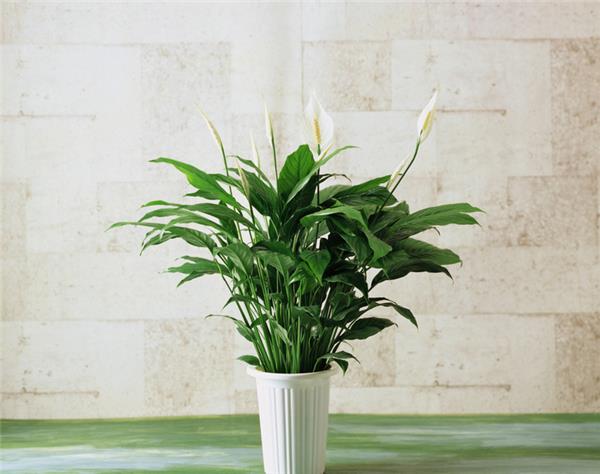
The Peace Lily (scientific name: Spathiphyllum kochii Engl. et Krause) is a perennial herbaceous plant of the Araceae family and the genus Spathiphyllum. Also known as: white flag, spathe flower, peace lily, etc. The Peace Lily has emerald-green leaves and pure white flowers, very fresh and elegant, and is an important ornamental flower in the world. It began to be used for potted ornamental cultivation in the early 20th century, and by the 1980s it was already very popular in Europe. The Peace Lily is regarded as the "flower of innocence," carrying the meaning of purity, calm, peace and well-being.
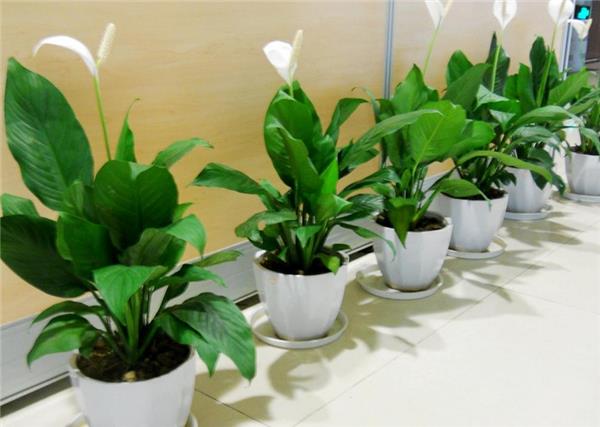
1. Light: The Peace Lily likes a semi-shady environment; it is neither tolerant of strong sunlight nor fond of fully shaded environments. Generally speaking, the Peace Lily needs a shade level of at least 50%, and in winter some light can be increased. During the high-temperature period in summer, when sunlight is strong, 75-80% shading is better. If the light level is too shady, the leaves of the Peace Lily will turn dark green, and growth will be stunted. Under strong light it easily yellows, and in severe cases growth is poor, or the plant may even die.
2. Fertilizing: The Peace Lily grows quickly and is easy to manage, and its fertilizer requirements are not limited to nitrogen, phosphorus and potassium; it also has a large demand for magnesium, much higher than many other foliage plants. When magnesium supply is insufficient, the edges of the Peace Lily's old leaves will show symptoms of yellowing and withering. Liquid fertilizer or solid fertilizer should be used to supplement magnesium for the plant, and magnesium sulfate, magnesium nitrate or magnesium chelate can also be sprayed on the plant regularly.
3. Watering: The Peace Lily likes moist sandy loam, and watering should keep it moist, not dry, but also not waterlogged, otherwise damage to the root system will affect the normal growth of the whole plant. The specific watering interval should be related to factors such as temperature, humidity and ventilation in the growing environment.
4. Temperature: The Peace Lily likes warmth and is not cold-tolerant. The optimal growth temperature range is between 15 and 28°C, the overwintering temperature should be above 10°C, below 5°C it suffers cold damage, and when above 30°C growth is also inhibited.
5. Humidity: The Peace Lily likes a humid environment, and the air humidity should preferably be between 70% and 90%. Below 50%, the leaves will show dry, scorched edges, and in severe cases the entire leaf withers and turns brown. You should frequently spray water on the plant or sprinkle water in the growing environment to increase air humidity, but it is best to do so before noon; it is best not to spray water in the evening or at night, to prevent inducing disease.
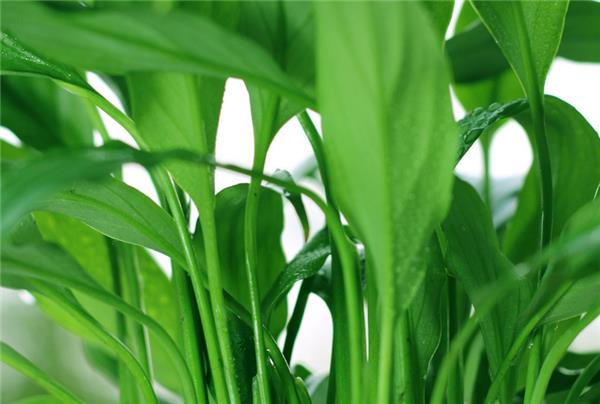
7. Induction: Spraying gibberellic acid to artificially induce the plant to bloom; different varieties bloom at different times. Generally speaking, small varieties respond faster to gibberellic acid and can bloom 7-9 weeks after spraying, medium varieties need 10-11 weeks, and large varieties need 12-13 weeks. Note that too high a concentration of gibberellic acid will cause the plant's flowers to become deformed.
8. Diseases: Controlling root rot is key. In fact, this is closely related to watering, mainly caused by poor permeability of the potting soil and watering too frequently. If the plant is infected with root rot, its root system will turn black and cause the old leaves to wither and die, and in severe cases it will cause the plant to die. At present, there is no Peace Lily variety on the market with good resistance to root rot, so the best method is prevention first. You can water with a broad-spectrum fungicide solution such as carbendazim for prevention and control.
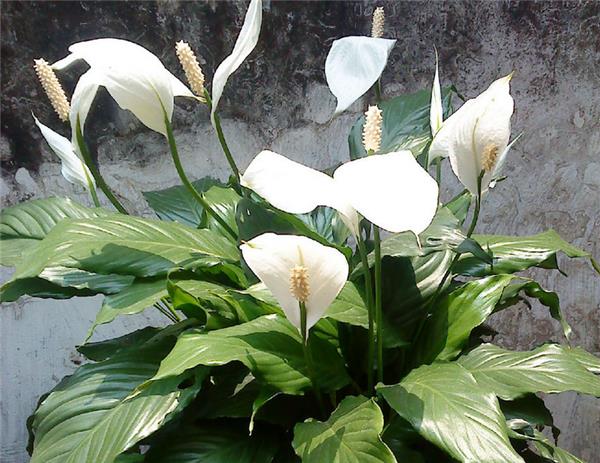
Propagation points: The common propagation methods for the Peace Lily are division and sowing, and tissue culture can also be used for mass propagation.
Division propagation: Because the Peace Lily (spathe flower) easily produces suckers, this method is mostly used for propagation. A robust plant can be divided once about every 2 years. Before new shoots emerge in early spring, turn the whole plant out of the pot, remove the old soil, and cut the rhizome apart at the base of the clump. Each small clump should preferably have more than 3 stems and buds, and as many roots as possible should be kept, so that the new plant can quickly produce new leaves and have a full shape.
Sowing propagation: After the Peace Lily seeds mature, sow them as they are harvested. The sowing temperature should be around 25°C; if the temperature is low, the seeds easily rot.
The Peace Lily is an auspicious flower. Placed indoors, looking at it every day will make your mood better. The above is the relevant introduction on how to care for a Peace Lily. If everyone wants to learn more about the Peace Lily, please stay tuned to related content. So that the new plant can quickly produce new leaves and have a full shape.
Sowing propagation: After the Peace Lily seeds mature, sow them as they are harvested. The sowing temperature should be around 25°C; if the temperature is low, the seeds easily rot.
The Peace Lily is an auspicious flower. Placed indoors, looking at it every day will make your mood better. The above is the relevant introduction on how to care for a Peace Lily. If everyone wants to learn more about the Peace Lily, please stay tuned to related content.