How to Grow Kalanchoe? Detailed Guide to Care Methods
The auspicious name of the kalanchoe makes it a favorite flower of many elders. Kalanchoe is often given to elders as a gift, and it is also often used to decorate one's living room, greening and beautifying the home environment. So what are the care methods for kalanchoe? Let's take a look below, and we hope it can be of some help to flower lovers!
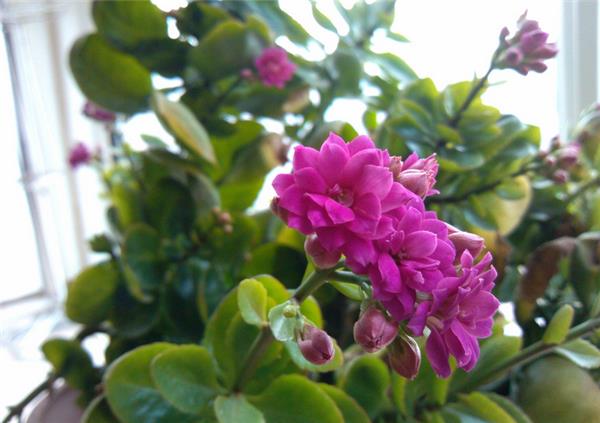
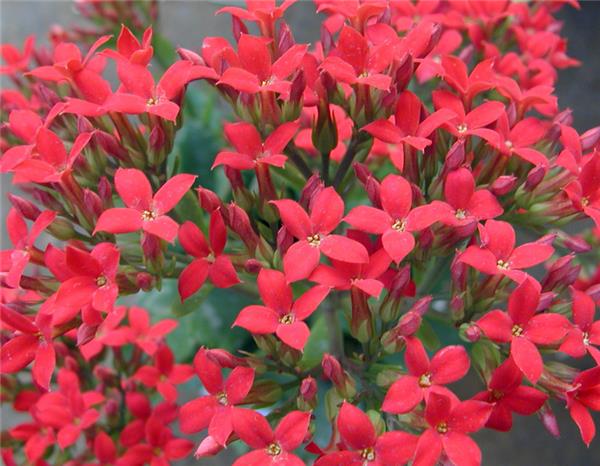
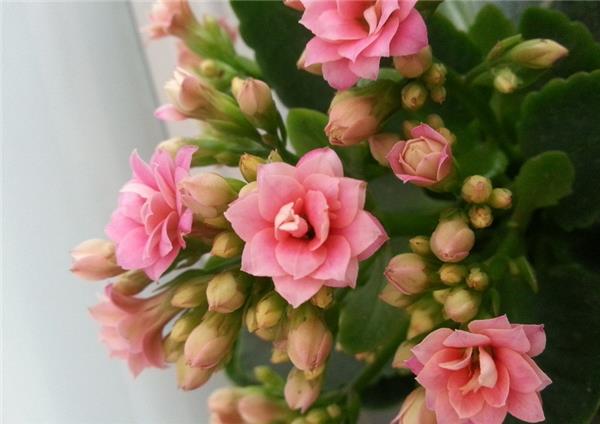
Kalanchoe is a succulent plant. Its low clumps, formed by thick, glossy leaves, stay emerald green all year round. The stems are upright, and the plant height is 10-30 cm. The simple leaves are opposite and alternate, ovate, and fleshy; the upper leaf margins have wavy blunt teeth, while the lower part is entire, bright green, and glossy, with a slight red tinge along the leaf edges. Each flowering branch can bear as many as dozens of flowers. The flowers are small, salverform, and pink, crimson, or orange-red in color. The flowering period lasts more than 4 months, which is how kalanchoe got its name. Also known as Shouxing flower, false chuanlian, Christmas kalanchoe, and dwarf kalanchoe, it is a plant of the genus Kalanchoe in the Crassulaceae family.
II. Kalanchoe Care Methods
Kalanchoe care methods: 1. Growing temperatureThe most suitable growing temperature for kalanchoe is 15°C to 25°C. Above 30°C, growth slows and the plant enters a semi-dormant state; below 10°C, growth stalls; below 8°C, the leaves turn red and the flowering period is delayed; below 0°C, it is prone to freezing to death. Therefore, to grow kalanchoe well, you must create a small environment for it that is warm in winter and cool in summer. At noon in midsummer, avoid strong direct sunlight and place it in a semi-shaded spot with ample scattered light, such as under a large tree, under the eaves, or on a north-facing balcony. Pay special attention to ventilation and cooling. You can sprinkle water on the nearby ground, but do not sprinkle it on the plant.
Kalanchoe care methods: 2. Ample sunlight
Kalanchoe likes a sunny, well-lit environment. Except for slight shading at noon in midsummer, it should be placed in a sunny spot at other times. It needs at least 4 hours of direct light each day to grow vigorously. On building balconies, turn the flowerpot 180 degrees every half month so that the light is even and the crown does not become lopsided, which would reduce its ornamental value. Although it can also grow in semi-shade, the stems are thin, the leaves are thin, the flowers are few, and the colors are pale, far less luxuriant than in a sunny spot. If it is too shady, it will not only easily drop leaves and produce no flowers; even a plant that has already bloomed, if placed in shade, will have duller flower colors and then the flowers will drop and wither.
Kalanchoe is a succulent plant and contains a fair amount of water in its tissues, so it is relatively drought-tolerant and afraid of waterlogging. It grows well under the dry air conditions of high-rise buildings. In spring and autumn, water thoroughly once after the potting soil has been dry for about 3 days, and keep it generally slightly moist. In summer, water less; once every 5 to 7 days is best. For kalanchoe placed outdoors, avoid rain during the rainy season. Too much water can easily cause root rot and leaf drop, or even death. With proper water control and letting the potting soil dry and wet alternately, the branches will be luxuriant and the flowers abundant. In winter, after bringing it indoors, it is best to water at noon with water close to room temperature, about once a week.
Kalanchoe care methods: 4. Sufficient fertilizer
Fertilizing should not be too concentrated. Sufficient fertilizer and water are certainly the foundation for lush flowers and leaves, but many flower lovers, on the one hand to save trouble and on the other hand overestimating kalanchoe's tolerance, often apply a large amount of concentrated fertilizer at once, with the opposite result. Kalanchoe either develops a large number of yellow leaves or looks listless because the soil solution concentration is too high. Kalanchoe is a plant with moderate fertilizer needs, and applying thin fertilizer frequently is the real rule. Topdressing should mainly be done during the bud stage and flowering stage. Bone meal and monopotassium phosphate can be diluted into a liquid fertilizer. For the bone meal (80 g/bag) and monopotassium phosphate (30 g/bag) bought from the flower market, generally use about one quarter or one fifth of each, dilute them separately into a 1.25 L beverage bottle, and make liquid fertilizer. Spraying the front and back of the leaves with monopotassium phosphate while also watering with bone meal and monopotassium phosphate will produce the effect of buds all over the branches.
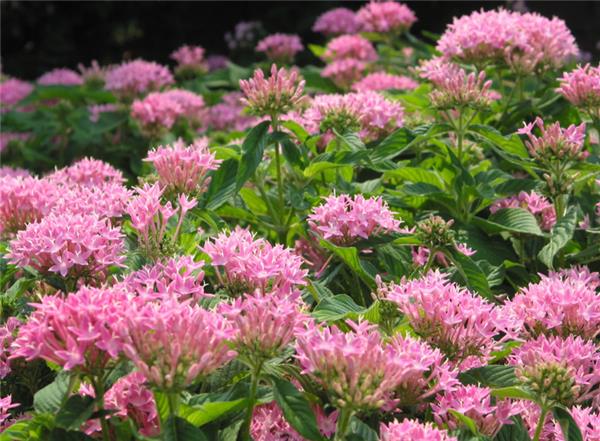
As the environment becomes milder, kalanchoe also becomes very susceptible to infection by pests and diseases. Pay attention to keeping the room ventilated to prevent pests and diseases from entering the room, and also mainly use some insecticides to prevent infection by pests and diseases. The main diseases seen are downy mildew and anthracnose.
Kalanchoe care methods: 6. Sandy loam should be loose
Kalanchoe grows best when planted in a breathable earthenware pot, but it is not attractive when placed indoors, so it can be set inside a plastic or porcelain pot, or planted directly in a small purple clay pot or plastic pot. When planting, place a layer of crushed charcoal pieces or crushed hard plastic foam pieces at the bottom of the pot to enhance breathability. For pots with an inner diameter of 10 cm to 20 cm, plant 3 to 6 plants. Although it is not very particular about soil, it is prone to root rot in heavy clay, while it grows best in loose, fertile, slightly acidic sandy loam. For home pot cultivation, it is best to use leaf mold mixed with an equal amount of vegetable garden topsoil, then add 5% to 8% sand as the growing medium.
Kalanchoe care methods: 7. Appropriate pruning
In the early stage of vigorous growth, pay attention to pinching to promote branching and make the potted plant fuller; after the flowers fade, promptly cut off the spent flowers to avoid consuming nutrients and affecting the number of flowers in the next bloom.
Kalanchoe is a bonsai flower used by many people to decorate their homes. Each plant has different growth characteristics. If you want kalanchoe to grow densely and bloom more, you must pay attention to the care methods. In addition, kalanchoe is afraid of cold. After autumn, it is recommended to place it on a balcony or indoors, and as far as possible do not leave it outdoors.
From the introduction above, do you now have a clear idea of the care methods for kalanchoe? Kalanchoe symbolizes good fortune and is suitable for home cultivation. If you like kalanchoe, you can also try the methods above. If you want to learn more about kalanchoe, please stay tuned for related content.
It can be set inside a plastic or porcelain pot, or planted directly in a small purple clay pot or plastic pot. When planting, place a layer of crushed charcoal pieces or crushed hard plastic foam pieces at the bottom of the pot to enhance breathability. For pots with an inner diameter of 10 cm to 20 cm, plant 3 to 6 plants. Although it is not very particular about soil, it is prone to root rot in heavy clay, while it grows best in loose, fertile, slightly acidic sandy loam. For home pot cultivation, it is best to use leaf mold mixed with an equal amount of vegetable garden topsoil, then add 5% to 8% sand as the growing medium.
Kalanchoe care methods: 7. Appropriate pruning
In the early stage of vigorous growth, pay attention to pinching to promote branching and make the potted plant fuller; after the flowers fade, promptly cut off the spent flowers to avoid consuming nutrients and affecting the number of flowers in the next bloom.
Kalanchoe is a bonsai flower used by many people to decorate their homes. Each plant has different growth characteristics. If you want kalanchoe to grow densely and bloom more, you must pay attention to the care methods. In addition, kalanchoe is afraid of cold. After autumn, it is recommended to place it on a balcony or indoors, and as far as possible do not leave it outdoors.
From the introduction above, do you now have a clear idea of the care methods for kalanchoe? Kalanchoe symbolizes good fortune and is suitable for home cultivation. If you like kalanchoe, you can also try the methods above. If you want to learn more about kalanchoe, please stay tuned for related content.