How to grow a small-leaf banyan bonsai? Detailed guide to cultivation methods and precautions
Small-leaf banyan, also called elegant banyan, is a plant of the genus Ficus in the mulberry family. Small-leaf banyan is an evergreen small tree with lush branches and leaves and an umbrella-shaped or rounded crown. It has good shade-giving properties and a strong ability to absorb smoke and dust, so it is often used in major landscape greening such as roads, plazas, parks, communities and courtyards. Nowadays many people like to use small-leaf banyan bonsai as a plant decoration for the home. However, few people know the cultivation methods and precautions for small-leaf banyan bonsai. Below let us look at the cultivation methods and precautions for small-leaf banyan bonsai.
Brief introduction to small-leaf banyan bonsai
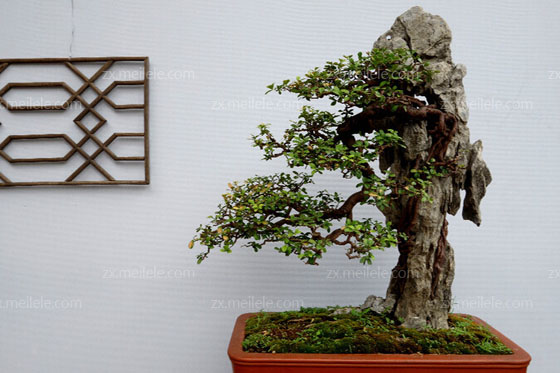
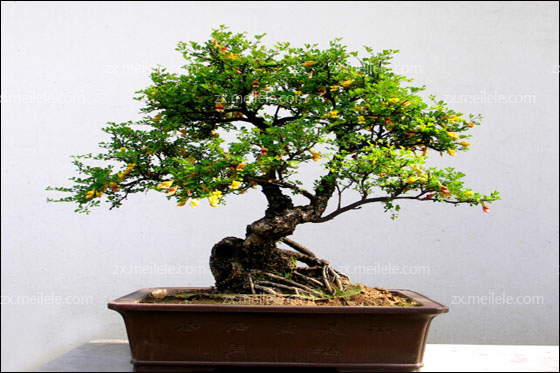
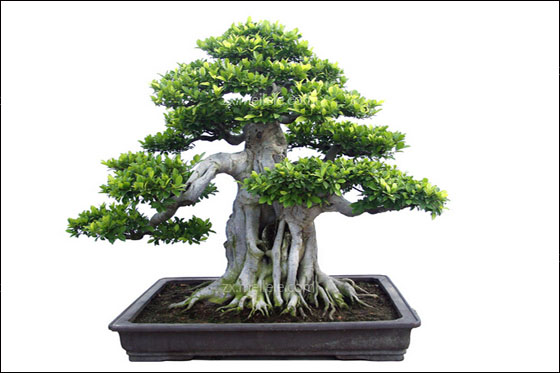
Small-leaf banyan bonsai is a variety cultivated by grafting the leaves of the small-leaf banyan tree onto old wild banyan stumps. Small-leaf banyan bonsai, among home plant bonsai, is loved and welcomed by people for its year-round greenness and its characteristics of greening the environment and purifying the air. The small-leaf banyan tree has leathery leaves, and the leaf surface is dark green and glossy, evergreen all year round. Small-leaf banyan branches are soft and have strong fibrous aerial roots. Some aerial roots hang down into the ground and resemble pillars, while others wind downward with twisted, interlocking roots, making a very beautiful landscape.
Cultivation methods and precautions for small-leaf banyan bonsai
Water
When the small-leaf banyan tree is planted in a pot, always pay attention to the moisture of the soil in the pot. Improper moisture is very harmful to the small-leaf banyan: if there is not enough water, the small-leaf banyan will wither from lack of water, and if there is too much water, the root system of the small-leaf banyan will rot. Usually when watering the small-leaf banyan, you can follow the principle of watering when dry and stopping when wet. First feel the moisture level of the soil with your hand, then water. There is no need to water too much; an appropriate amount is enough.
Temperature
Small-leaf banyan is a tropical plant and likes warm places with plenty of sunlight. Therefore, when cultivating small-leaf banyan bonsai, also pay attention to the temperature of the surrounding environment. If the surrounding temperature is too low, the bonsai should be moved indoors for cultivation. In winter, the lowest temperature for small-leaf banyan growth is about 5°C. Usually the small-leaf banyan bonsai should also be placed in a place with plenty of sunlight. In summer, when the sunlight is too strong, it needs to be shaded.
Soil
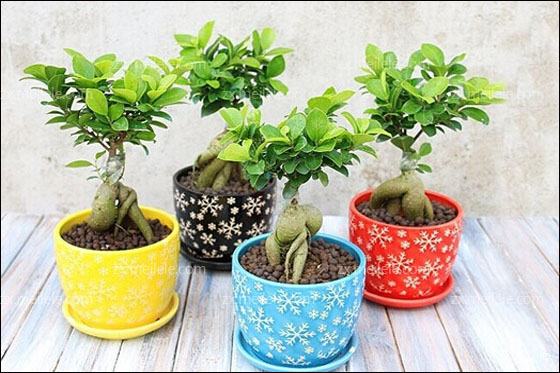
Small-leaf banyan likes loose and fertile soil. When planting it in a pot, it is best to choose loose leaf mold soil with good aeration. You can also mix garden soil, humus soil and sandy soil in a ratio of 2:2:1. In addition, some moss can be placed on top of the small-leaf banyan bonsai, which can increase the drainage and air permeability of the small-leaf banyan bonsai.
Fertilizing
Small-leaf banyan likes fertilizer during growth and needs a lot of fertilizer during its growing period. However, note that fertilizing should be appropriate; too many fertilizer applications and too much fertilizer will also harm the normal growth of the small-leaf banyan. Generally, applying liquid fertilizer 1-2 times a month during the growing season is enough.
Pest and disease control
The main pests of small-leaf banyan bonsai are aphids, red spiders and psyllids, etc. When usually cultivating small-leaf banyan bonsai, be sure to place it in a place with plenty of sunlight and good ventilation and light transmission to avoid pests and diseases of the small-leaf banyan. In addition, the bonsai can also be pruned promptly and appropriately to prevent pests and diseases in the small-leaf banyan.
Pruning
During the peak growing season of the small-leaf banyan, careful pinching and bud thinning and pruning should be carried out, and in autumn one major pruning is enough. Cut off the dead branches, diseased branches, leggy branches, parallel branches and crossing branches of the small-leaf banyan, so that the whole bonsai has an uneven height and a sense of layered beauty.
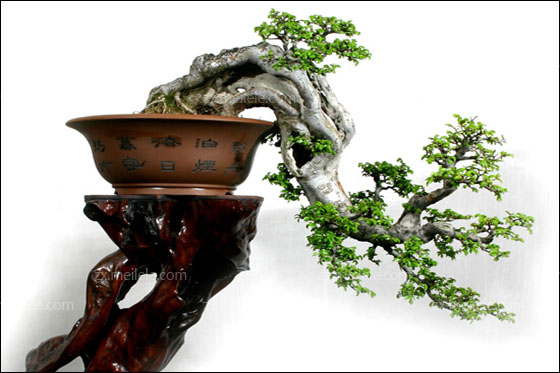
Conclusion: Placing a pot of verdant small-leaf banyan bonsai in the home can not only decorate the home but also purify the air. The above is the relevant introduction to the cultivation methods and precautions for small-leaf banyan bonsai. We hope it is helpful to everyone.
[You may be interested in]
☑ Grass head doll ☑ Potted vegetables ☑ Wallpaper brands ☑ Bedding ☑ Water-grown plants
☑ Daylily flower language ☑ Carpet brands ☑ Indoor potted plants ☑ Asparagus fern flower language ☑ Mural pictures
☑ Daylily flower language ☑ Carpet brands ☑ Indoor potted plants ☑ Asparagus fern flower language ☑ Mural pictures