How to Grow and Care for Yew in Northern Regions: Methods and Precautions
The yew is recognized worldwide as a rare, endangered natural anti-cancer plant, and its rarity goes without saying. Natural yew has a low survival rate and slow growth, and since its discovery its numbers have been declining sharply. As a result, many countries and people are now cultivating yew. However, many people do not know that yew is divided into northern and southern types. As the saying goes, "Oranges grown south of the Huai River are oranges; north of it, they are trifoliate oranges." Yews from different regions have different cultivation requirements, so before planting yew you must first confirm which type it is. So how should northern yew be grown? Below we will look at the growing methods and precautions for northern yew.
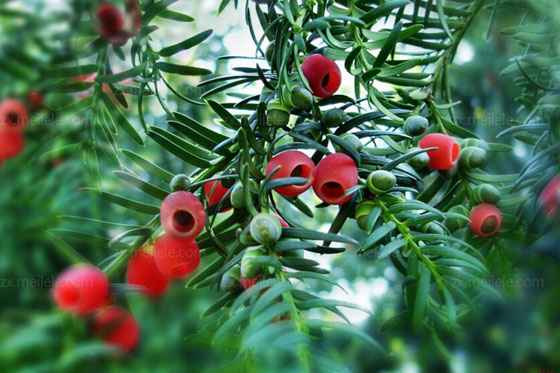
What Is Northern Yew
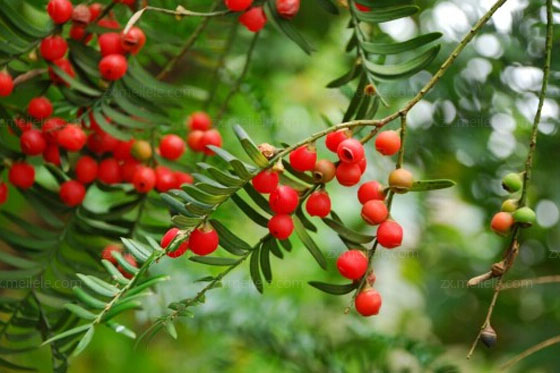
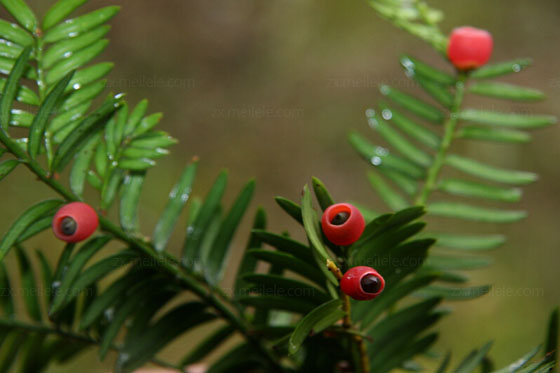
Northern yew mainly refers to the Japanese yew (Taxus cuspidata). Japanese yew, also called purple yew, is a tree of the yew family (Taxaceae) and a precious relict species from the Tertiary period. Compared with ordinary yew, Japanese yew has extremely high ornamental and medicinal value. The advantage Japanese yew has that other yews cannot match is its many side branches, red branches and green leaves, and graceful plant shape; the red fruits it bears are gorgeous and varied, very similar to the southern "love pea," giving it excellent ornamental value.
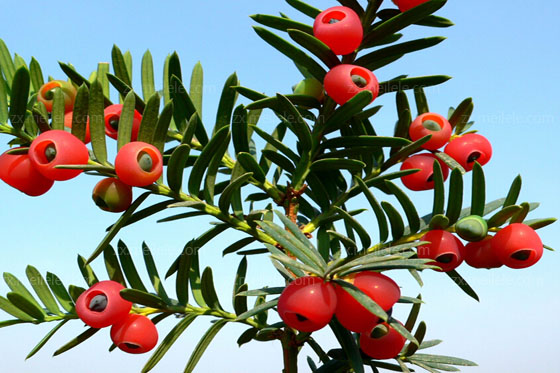
Differences Between Northern and Southern Yew
Northern yew: the branches and leaves are usually straight in form, with relatively dense leaves borne in strips, 1.0-2.5 cm long and 2.5-3.0 mm wide; the leaf surface is deep green and glossy, the underside is yellow-green, and the leaf back has two gray-green stomatal bands. The main trunk of northern yew is fresh and emerald green, smooth and clean; the red yew branches fork from the main trunk, and the whole tree is barrel-shaped, emerald green and full of vitality. Northern yew has solitary strobili, blooms in May, bears fruit after flowering, and the fruit ripens from September to October each year; the fruit is spherical, shaped like a red bean.
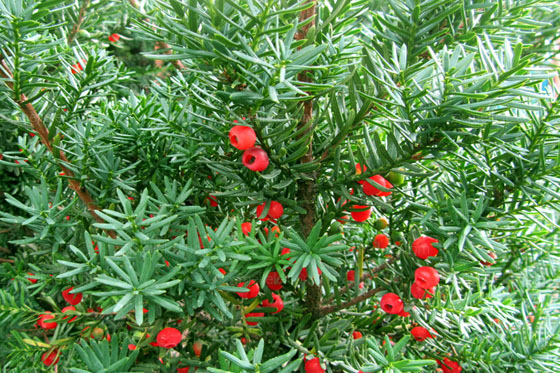
Southern yew: the branches and leaves are usually sickle-shaped, with sparser leaves, 2-3.5 cm long and 3-4.5 mm wide, and the leaf back has two narrower yellow-green stomatal bands. In addition, the main trunk of southern yew is dry and coffee-colored, and the branches are messy with no gap between them and the potting soil. It is not suitable for planting in the north, and its survival rate is relatively low.
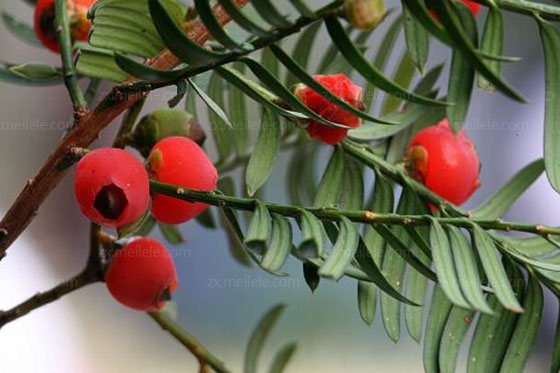
Growing Methods and Precautions for Northern Yew
Growing northern yew is mainly divided into seed propagation and cutting propagation. Seed propagation means: when the yew fruits from September to October each year, pick the seeds, wash them, soak them, and store them in moist sand. When mid-to-late April of the following year comes, place the seeds on a seedbed to sow and raise seedlings. When raising seedlings, open shallow furrows 5 cm deep at a row spacing of 20 cm, sow evenly, and sow 5 to 10 grams of yew seeds per sq m. After sowing, cover with 2 to 3 cm of soil, then press down lightly, and seedlings will emerge after 20 days. Note that when raising seedlings you must provide shade, the light transmittance must not be as high as 30%, and water promptly when the soil is dry.
Cutting propagation begins from May to June each year. Choose yew with a tree age of more than 4 years as the parent material for cuttings, cut off cuttings 15 cm long, soak the base of the cuttings in a solution of naphthaleneacetic acid or indoleacetic acid for 3 hours, then insert them into an open-field cutting bed. Note that the cuttings can be buried 3 to 5 cm deep in the soil, and the distance between each yew plant should be kept at about 8 x 10 cm. After cuttings are done, be sure to water the yew, spraying water twice a day, and after two weeks spray water once a day. After a month and a half, the yew will root and be ready for transplanting.
Conclusion: As a rare plant on the verge of extinction, northern yew has a relatively low survival rate and is relatively difficult to grow. People need to pay careful attention when growing it and not neglect the issues that need attention during its growth and development. The above is the relevant introduction to the growing methods and precautions for northern yew, and we hope it is helpful to everyone.
[You May Be Interested In]
☑ Where to recycle cross-stitch ☑ Machine-embroidered cross-stitch finished products ☑ Complete collection of tulip pictures ☑ DIY underwear storage box ☑ Wholesale straw weaving crafts
☑ Yew root carving pictures ☑ How to grow aquatic plants ☑ How to grow jade plant ☑ Cross-stitch stitching methods illustrated ☑ How to grow gladiolus