A Detailed Guide to Succulent Planting Techniques and Care Experience Sharing
When it comes to succulents, you may feel a bit unfamiliar, but when it comes to the cacti and agaves we commonly see, you are surely no stranger to them, right? Yes, these plants belong to the succulents. So what exactly is the difference between planting succulents and ordinary plants? Let's take a look together.
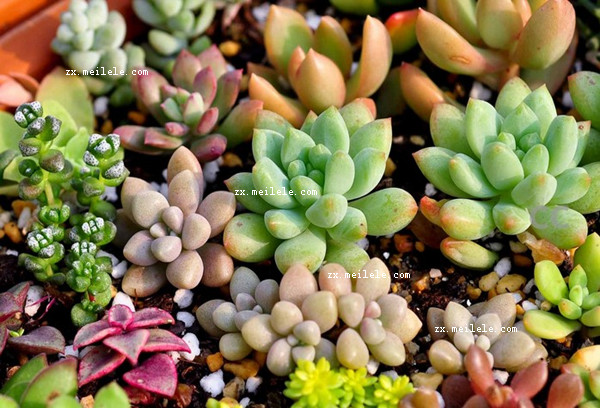
Key Point 1 of Succulent Planting Techniques: Soil
To grow plants well, the quality of the soil is very important. The soil is required to be loose and breathable, with good drainage, but with a certain water-holding capacity, and neutral or slightly acidic. For highland globular types (the genera Pterocactus, Yavia, and Gymnocalycium) and the genus Ariocarpus, a little rice husk ash and small-grained weathered rock can be added. For tall columnar species, coarse quartz sand can be mixed in to stabilize the plant.
Key Point 2 of Succulent Planting Techniques: Temperature
Succulents generally prefer warmth and a large temperature difference between day and night.
Key Point 3 of Succulent Planting Techniques: Light should be sufficient and soft
In summer, combined with cooling, the shading rate should be 50% to 70%. Although both the night-blooming cereus and the orchid cactus have a certain cold tolerance, keeping them warm in winter is beneficial for flowering the following year. Hylocereus undatus, which is widely cultivated for use as rootstock, is not cold-tolerant; in winter it needs at least 5°C and full sunlight.
Key Point 4 of Succulent Planting Techniques: Watering and Fertilizing
To prevent damage from pests and diseases, both watering and fertilizing should be carried out effectively. Watering should be done according to the plant's growth state. Whether a species is dormant in winter or in summer, watering into the pot should be stopped during the dormant period. Fertilizing should be light rather than concentrated, and can be applied several times when needed. Fertilizing is prohibited for plants with damaged roots, poor growth, or wounds on stems and leaves.
Conclusion: I am glad to share with you the above key points of succulent planting. If you are very interested in succulent planting techniques, I hope this can help you.