Freesia Flower Meaning: Understanding Its Symbolism and Significance
Freesia, in legend, is said to spread fragrance across a sea of snow. The legend tells of a young European noblewoman who went hunting in a distant place with her beloved. At the hunting grounds she discovered this beautiful flower and adored it so much that she dug it up to bring back to Europe. On the journey home, the petals scattered in the wind and fell upon the snow, and even the ice and snow were stained with their fragrant scent. Thus it was named freesia, freesia, sea of fragrant snow.
The flower meaning of freesia is purity, representing a pure person. It is said that a person's goodness is like the innocent maiden in a painting, a fairy who does not eat the food of the mortal world, born into this world as a representative of all that is beautiful, knowing nothing of the world's dangers, nor of its scheming and intrigue, believing every word people say about beauty. What freesia expresses is a simple purity and goodness.
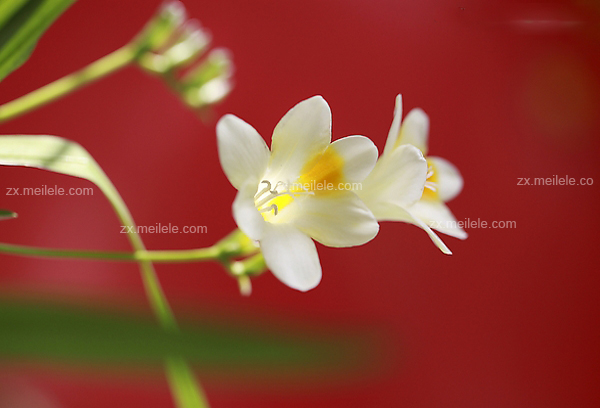
The growing environment suited to freesia is a relatively humid and cool one; it likes environments with plenty of sunlight and has poor cold tolerance. The most suitable growing temperature is around 15°C. Too low a temperature will prolong the flowering period, while a higher temperature can promote earlier blooming, but it will weaken the plant's growth. Today freesia is a well-known indoor cultivated plant.
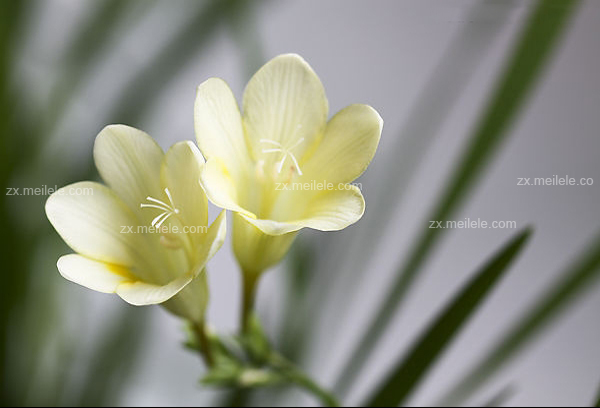
For the planting and care of freesia, freesia prefers relatively fertile and loose soil. When growing freesia at home, many people need to note that adding peat moss to the flowerpot increases the soil's looseness and fertility. Freesia likes to grow in an environment with plenty of sunlight; sufficient light is good for freesia's sprouting and growth. Generally, freesia's flowering period is around November, and around May its corms enter a dormant state.
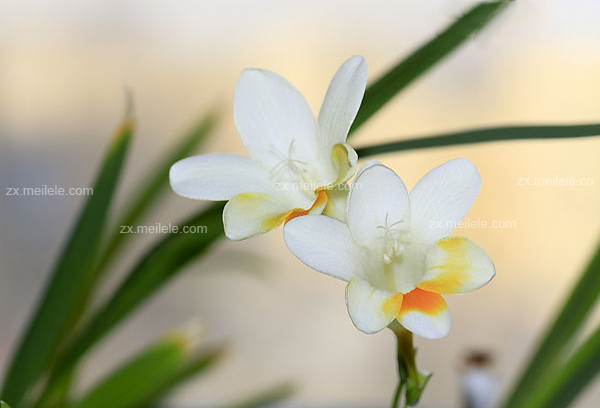
There is also a story about freesia's flowering period: it is said that long ago there was a flower called freesia that bloomed very beautifully. When the flower first bloomed, it was full of curiosity about the world, and its beauty attracted the pursuit of many butterflies and bees. In the end it fell in love with a butterfly, and they were inseparable. But the good times did not last; one day a rainstorm came, and the rainstorm broke the butterfly's wings. It flew for a long time before reaching the freesia's side, but the freesia blamed it for not keeping its promise to shelter it from wind and rain, and instead took up with the bee. The butterfly could only leave in sorrow.
But while freesia was with the bee, it also carried on with the bee, and in the end everyone left it. From then on, even with many admirers, freesia would still wonder how it could find someone to care for it, drifting all day long. Then came another rainy season, and freesia's petals were blown all over the ground. The pain was heart-rending, yet no one felt sorry for it. Freesia began to repent of what had happened before, and from then on it no longer bloomed in spring or autumn, only in winter.
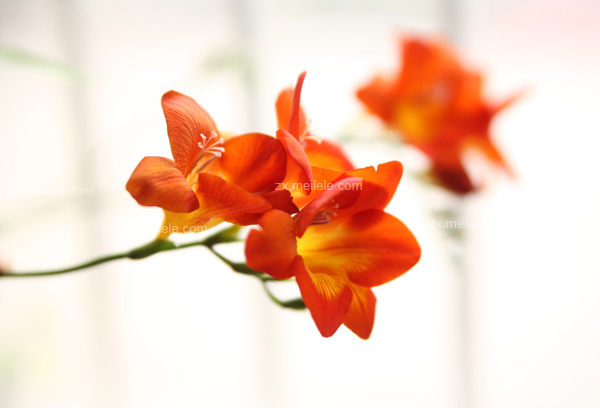
No matter what kind of beauty it comes from, or what kind of sorrow, whether flowers bloom or fall, there is always a reason. Freesia, beautiful freesia.
[More Information]
| Miniature Coconut | Succulent Plant Growing | How to Grow Serissa japonica | The Benefits and Effects of Osmanthus Tea | Home Flower Growing | Monstera deliciosa |
| What Does a White Rose Mean | What Plants Protect Against Computer Radiation | How to Grow Azaleas and Precautions | Boston Ivy | Osmanthus |
| The Benefits and Effects of Gynostemma pentaphyllum | The Benefits and Effects of Honeysuckle | How to Grow Mimosa pudica | How to Fold a Lily | Epiphyllum Images |