Is Mimosa pudica easy to grow? Teaching you the correct cultivation methods
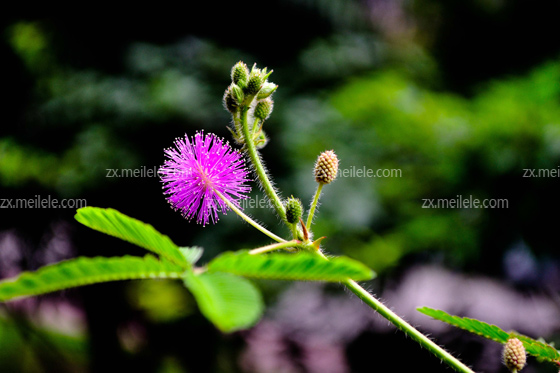
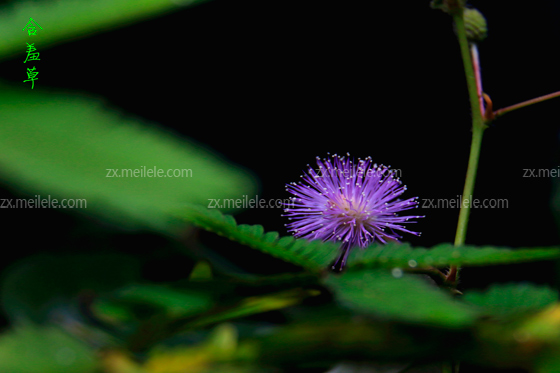
Mimosa pudica is a perennial herbaceous plant native to the tropical regions of South America. The reason Mimosa pudica got such a special and interesting name is that, unlike ordinary plants, its leaves are particularly sensitive to heat and light. When touched by an external force or when it senses changes in the external environment, they close immediately, and it takes on a state where the leaf stalks droop and the small leaflets fold shut. This action is cleverly interpreted by people as "shyness," hence the name Mimosa pudica. Although it is called a grass, Mimosa pudica can produce pink flowers shaped like pom-poms, and these fluffy flowers are especially endearing. After flowering, it can also produce flat, roundish pods. The leaves are pinnately compound, alternate, and arranged in a palmate pattern. The flowers, leaves and pods of Mimosa pudica all have good ornamental value, and Mimosa pudica has a high survival rate when planted, making it a very suitable plant for indoor decorative bonsai.

Propagation of Mimosa pudica
Sowing method: Before sowing the seeds of Mimosa pudica, you need to soak the seeds in warm water at about 30 degrees for two hours, and only then can they be planted in the soil. The planting depth should be about 0.5 cm, not too deep, so that the seeds are not under too much pressure and the sprouts cannot penetrate the soil layer, then water thoroughly. If the temperature is suitable, they will sprout in about five days. Newly sprouted Mimosa pudica is very fragile and needs to be cared for carefully. During this period, keep watering normally; generally after about 3 days, the small Mimosa pudica begins to produce its first leaf. At this time, the Mimosa pudica is small and cute, very charming. Under normal conditions, it can be transplanted after about a week.
Cultivation methods for Mimosa pudica
Soil: When planting Mimosa pudica, choose fertile, loose soil. Mimosa pudica does not have high soil requirements; the garden soil we usually use is sufficient, but if you want the Mimosa pudica plant to grow taller, you should choose relatively loose and fertile soil, and a mixed soil made from leaf mold and sand is best. Of course, when conditions are limited, you can also use only leaf mold; humus soil is also a good choice.
Watering: Mimosa pudica likes moist soil, so during the process of growing Mimosa pudica it needs frequent watering. Mimosa pudica is originally a tropical plant and likes a humid environment, so the potting soil should often be kept moist. In the hotter summer conditions, decide the number of waterings according to how dry or wet the potting soil is; just do not let the soil become dry. You can often spray water around the plant's surroundings to maintain environmental humidity. In winter, because the temperature is too low, water less to avoid freezing damage to the roots and stems. The time for watering should be chosen when the temperature is highest during the day.
Sunlight: During the cultivation of Mimosa pudica, sufficient sunlight must be ensured. Mimosa pudica likes sunlight, and it is best placed on a balcony or by a window where sunlight can shine well, because full exposure to sunlight is good for the growth of Mimosa pudica. If it receives too little sunlight, it may hinder the growth of Mimosa pudica.
Temperature: Mimosa pudica is suited to growing in a warm environment, so during the process of growing Mimosa pudica, attention should be paid to preventing freezing damage, especially in the cold winter. Generally, the suitable growing temperature for Mimosa pudica is around 25 degrees. If the temperature is too low, growth stops. If the temperature is below 10 degrees, it is best to provide certain protective and heat-preserving measures.
Summary: Such a special and yet such a lovely Mimosa pudica can not only decorate our environment, but also offer us its own unique characteristics. Has it aroused your particular interest? Then hurry and grow a pot of it.
Recommended reading:
☑ Peace Lily ☑ Lucky Bamboo ☑ Plant Feng Shui ☑ Hydroponic Plants ☑ Bambusa multiplex photos
☑ Sedum pachyphyllum ☑ Anthurium ☑ Epiphyllum photos ☑ Cymbidium ensifolium photos ☑ Carnation prices