Detailed introduction to various bonsai plant varieties
After the renovation of a new home is completed, many families choose several kinds of green potted plants to grow at home. Next, let us take a look at the introduction to bonsai plants!
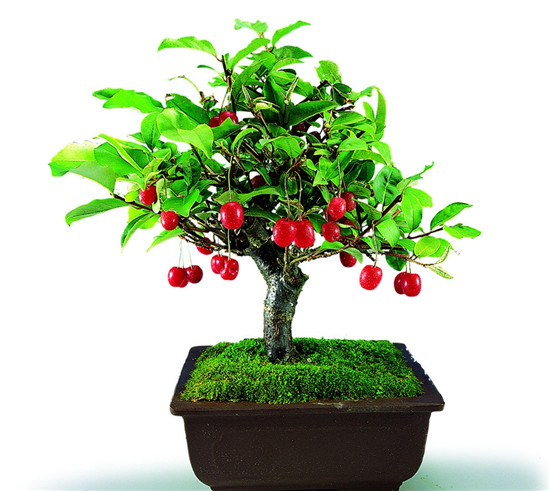
In home decoration, there are many potted plants. If you ask me to list exactly which potted plants there are, I can only say there are too many to explain clearly. However, most potted plants have the effect of purifying the air and decorating the environment, and some plants are also related to feng shui issues, such as the placement of the money tree.
Potted plants can roughly be classified in this way: functional potted plants and ornamental potted plants.
Functional potted plants have the effect of absorbing harmful substances such as formaldehyde and purifying the air. Potted plants such as aloe, Monstera deliciosa and spider plant belong to this category. Their absorption effect on harmful substances in the air is very good, and newly renovated houses are very suitable for growing this type of potted plant.
Ornamental potted plants are mainly succulents. They have beautiful appearances and are very effective for home decoration. Although they also have a certain air-purifying effect, the effect is not as good as that of functional potted plants.
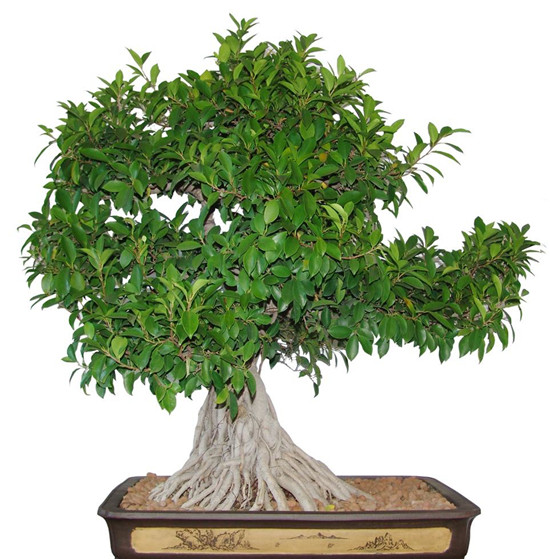
Why do people cultivate indoor bonsai?
1. After a new home is renovated, one or two pots of plants will be placed at home to remove formaldehyde. As everyone knows, plants have the wonderful use of purifying the air. The green plants in writers' works are always full of vitality. Placing one or two pots of plants at home will add a little vitality to the room;
2. The care of indoor bonsai goes through processes such as potting, fertilizer and water management, shaping and pruning, and repotting and changing soil, especially the shaping and pruning of bonsai plants, while also paying attention to issues such as angle, spread and shape. Although it looks rather complicated, it is an extremely tempering task, especially for people of different ages and occupations, whose choice of bonsai plants may also differ.
3. Plants and flowers symbolize the growth and prosperity of life. In feng shui, plants are considered one of the most practical and most attractive healing methods. Taoism believes that the essence of the world is qi, and feng shui also pays great attention to the influence of the energy and direction of qi on people. Because plants produce an endless natural atmosphere, they have become an important bridge strengthening the connection between humans and the natural world. They can enhance the energy of qi and can also explain the state of qi returning to balance.
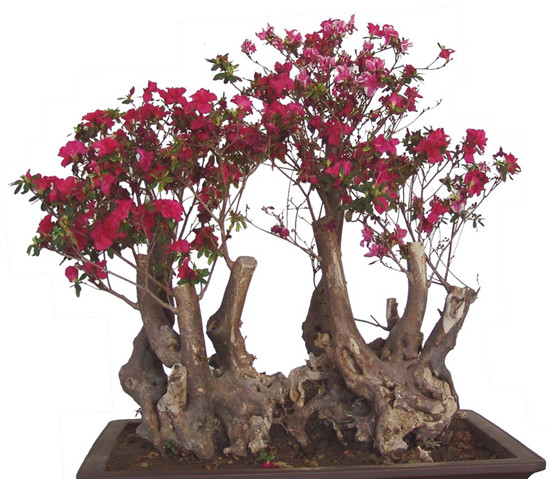
What indoor green bonsai are there
Honeysuckle bonsai: Honeysuckle is a plant of the Caprifoliaceae family, a perennial semi-evergreen twining shrub. Besides being planted in the ground, honeysuckle is also a rare good material for flower-viewing and trunk-viewing bonsai. Because its branches and trunk are relatively large, although the trunk form is vigorous and ancient-looking.
Boxwood bonsai: relatively cold-resistant, with strong sprouting ability, coarsely wired and finely pruned, made into cloud-layer shapes or steamed-bun shapes, or processed into natural tree forms. In spring, the tender leaves of boxwood bonsai first emerge, and the whole tree is tender green, very pleasing to the eye. After the severe tempering of wind, frost, ice and snow, it naturally grows into a tree form with twisted branches and curved trunks, peculiar and varied, becoming excellent material for stump bonsai.
Rock bonsai: the theme is rockery, processed with the magical technique of moving heaven and shrinking earth, reproducing natural beauty in a tiny pot through the form of rock bodies, plants and accessories arranged into a scene, and through artistic processing combined into a complete rock bonsai.
Yew bonsai: yew likes shade and should not be exposed to direct sunlight. It can be placed in the living room, bedroom, or the corner of a balcony. Yew can be processed and made into different forms of bonsai such as slanting-trunk style, straight-trunk style, curved-trunk style, double-trunk style, and lying-trunk style. The crown mostly adopts an elegant natural style, and its small branches' natural drooping characteristic can also be used to make a weeping-branch style bonsai.
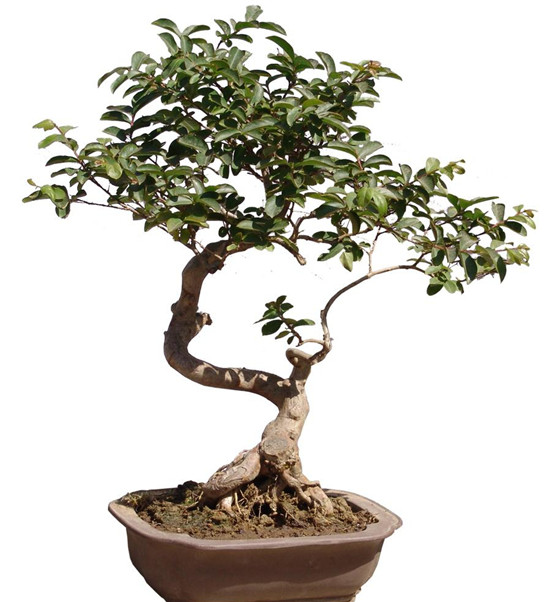
Elm bonsai: when shaping, according to the basic form of the old stump, through winding, pruning and so on, it is made into different forms of bonsai such as straight-trunk style, curved-trunk style, slanting-trunk style, waterside style, cliff style, wind-blown style, forest style, and rock-attached style. Some have twisted roots and gnarled branches, vigorous and ancient-looking; some turn decay into something magical, with dead roots and new leaves, opening another world, and are excellent materials for making bonsai.
Buddhist pine bonsai: the shaping of Buddhist pine is mostly carried out during the dormant period, mainly by coiling and binding, with pruning as a supplement. Because the branches of Buddhist pine are soft, easy to coil and bind, and can also be pruned, its shapes are diverse. Common forms include curved-trunk style, slanting-trunk style, lying-cloud style, cliff style, and raised-root style. The branches and leaves can be pruned into removed-layer shapes or steamed-bun shapes.
The above is all the content of the introduction to various bonsai plants that I have summarized for everyone. I hope this article can help everyone. Please also continue to follow us.
The above is all the content of the introduction to various bonsai plants that I have summarized for everyone. I hope this article can help everyone. Please also continue to follow us.