What hydroponic plants are there? Let us introduce several common hydroponic plants
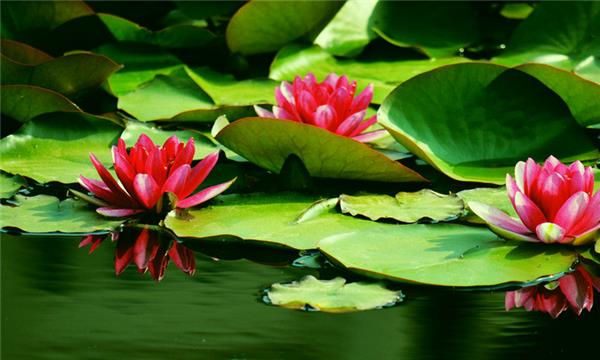
What hydroponic plants are there? Having seen the elegant, noble lotus in the water, with its graceful bearing, and silently reciting "the gentleman among flowers," our curiosity about hydroponic plants arises spontaneously. So, what hydroponic plants are there? Let us discuss them one by one.
What hydroponic plants are there: hydroponic Monstera deliciosa
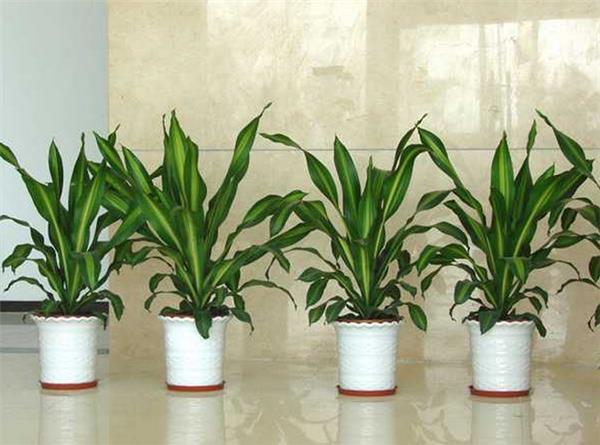
Hydroponic Monstera deliciosa likes moisture and needs plenty of water during the growing period. When the weather is dry, water must also be sprayed on the leaves to keep the air humid, so as to benefit the growth of branches and leaves and keep the leaves bright. The leaves of Monstera deliciosa sometimes develop brown spot disease, and thiophanate or carbendazim and similar treatments must be sprayed promptly to prevent the disease from spreading. Monstera deliciosa is easy to propagate and can be propagated by cuttings and sowing. Hydroponic Monstera deliciosa has a certain air-purifying effect. It is often grown in small vases and placed in indoor living rooms, bedrooms and studies. It can also be grown in large pots and placed in hotels, restaurants, halls and indoors, or by garden ponds and under large trees, giving a rather tropical look. The leaves can also be used as cut-flower foliage material.
What hydroponic plants are there: hydroponic Clivia miniata
When it comes to famous greenhouse flowers, hydroponic Clivia miniata is certainly indispensable. The flowers of hydroponic Clivia miniata are not as magnificent as peonies, nor as richly fragrant as jasmine, and even less as gorgeously varied as Chinese roses, but its leaves are verdant and glossy, the plant is elegant and handsome, with the bearing of a gentleman, and the flowers are orchid-like, beautiful and dignified, and it is also shade-tolerant. It is suitable for pot cultivation and indoor display, for foliage and flowers, and is also an ideal potted flower for decorating meeting venues and hotel environments. It also has an air-purifying effect and medicinal value.
What hydroponic plants are there: hydroponic hyacinth
Hyacinth, also known as Dutch narcissus, Western narcissus and five-color narcissus, inevitably reminds people of the narcissus that lives in water. So, is the hyacinth living in water even more beautiful than the narcissus? Hydroponic hyacinth is one of the easiest flowering varieties to grow among hydroponic flowers. Grow the hyacinth in a specially made glass bottle shaped like a gourd; above you can view the hyacinth's flower cluster, and below you can see a bundle of thick white roots. Moreover, hyacinths come in many colors, so there are also many choices available. In addition, the symbolism of the hyacinth is also very good; they represent positivity and a love of life. When they bloom, they symbolize the arrival of spring and inspire people. Start hydroponic growing from November, and they bloom after about 70-80 days, with fragrance.
What hydroponic plants are there: hydroponic Gardenia jasminoides
Hydroponic Gardenia jasminoides is an excellent indoor plant. Its flower language is "eternal love and promise." This flower begins to form buds in winter and does not bloom until near the summer solstice. The longer the budding period, the longer-lasting its fresh fragrance; the leaves of the gardenia tree also remain green and unfading through wind, frost, rain and snow all year round. The following are usually several suitable choices: large-flowered gardenia, a cultivated variety, with large double flowers and no fruit; oval-leaf gardenia, with obovate leaves and rounded tips; narrow-leaf gardenia, with narrow leaves, growing wild in Hong Kong, China; variegated-leaf gardenia, with patterned leaves.
What hydroponic plants are there: hydroponic Agave
Hydroponic Agave plants are tall. The leaves are grayish green or blue-gray. The flower stalk emerges from the center of the rosette, and the flowers are yellow-green. Because Agave leaves spread out and have sharp spines at the tips, when placed indoors they should not be placed in areas where family members frequently move about, such as corridors and stairways. For families with children, it is recommended to place them where children cannot reach them. For safety's sake, the sharp spines at the leaf tips can also be cut off.
What hydroponic plants are there: hydroponic Epipremnum aureum
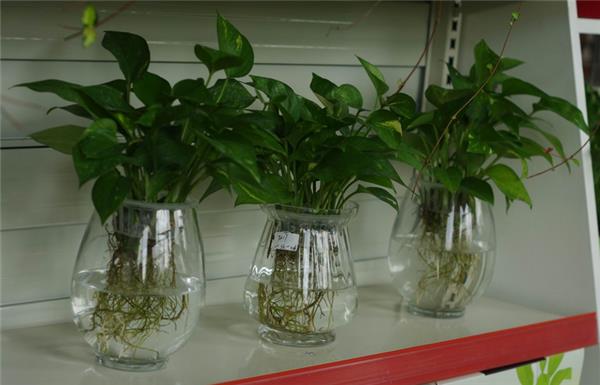
Hydroponic Epipremnum aureum is one of the very good hydroponic plants for indoor decoration, a climbing vine foliage flower. Place a nested pot high on top of a cabinet and let its vines hang down calmly, or after the hanging vines grow too long, coil and hang them into a ring, just like an emerald relief. Hydroponic Epipremnum aureum likes warm, humid environments and requires loose, fertile soil with good drainage. In dimmer indoor conditions, it should be moved every half month to a brighter environment to recover for a period of time; otherwise the internodes tend to lengthen and the leaves become smaller.
What hydroponic plants are there: the clear-water lotus
The lotus has always had the saying of being the "clear-water lotus," and the lotus has always been a representative plant among water-grown plants. The lotus is loved by people for many reasons. For example, its symbolism is very auspicious, as "lotus" is homophonous with "harmony." It blesses a family with complete harmony and happiness for ten thousand years. The lotus also symbolizes love, because in Wang Bo's "Song of Picking Lotus" from the early Tang Dynasty, "pulling flowers just twin-stemmed, breaking lotus root love threads unbroken," using twin lotus flowers on one stalk and unbroken lotus-root fibers to express the steadfastness and unshifting nature of love between men and women.
What hydroponic plants are there: the water peacock, water hyacinth
The petals of water hyacinth have an obvious bright yellow spot in the center, shaped like a phoenix eye, and also like the flower spot at the tip of a peacock's tail feather, very dazzling and beautiful. It is like a peacock in the water, with an elegant and noble bearing. Water hyacinth likes to grow on sunny, calm water surfaces, or on moist, fertile slopes, so it is a very easy water-grown plant to cultivate. Therefore, water hyacinth has the advantages of both high ornamental value and being convenient to grow.
What hydroponic plants are there: the elegant water lily
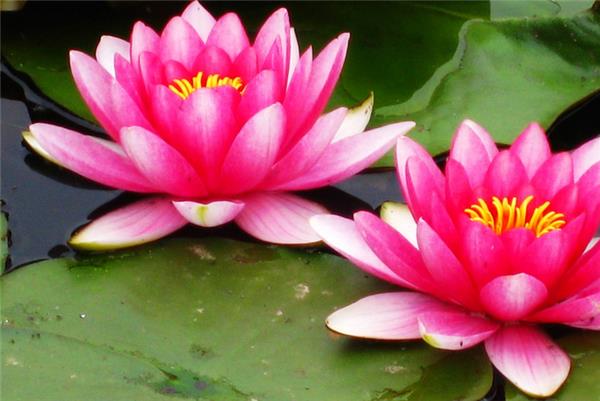
The water lily, also known as noon lotus and cress flower, is a perennial aquatic plant. The water lily is a precious flower among aquatic flowers. Its appearance is similar to the lotus, except that the lotus's leaves and flowers stand out above the water surface, while the water lily's leaves and flowers float on the water surface. Because it opens by day and closes by night, the water lily is praised as the "sleeping beauty among flowers." The water lily has a wide range of uses and can be used for food, tea making, cut flowers, medicine and other purposes. Its ornamental value is also very high. For a water-grown plant with so many advantages, are you tempted?
The above introduced some hydroponic plants. Of course, due to limited space, it cannot be exhaustive. It is hoped that you who are interested in hydroponic plants can continue to explore in depth, bring some hydroponic plants into your home, and make your home more full of charm.
Therefore, water hyacinth has the advantages of both high ornamental value and being convenient to grow.What hydroponic plants are there: the elegant water lily
The water lily, also known as noon lotus and cress flower, is a perennial aquatic plant. The water lily is a precious flower among aquatic flowers. Its appearance is similar to the lotus, except that the lotus's leaves and flowers stand out above the water surface, while the water lily's leaves and flowers float on the water surface. Because it opens by day and closes by night, the water lily is praised as the "sleeping beauty among flowers." The water lily has a wide range of uses and can be used for food, tea making, cut flowers, medicine and other purposes. Its ornamental value is also very high. For a water-grown plant with so many advantages, are you tempted?
The above introduced some hydroponic plants. Of course, due to limited space, it cannot be exhaustive. It is hoped that you who are interested in hydroponic plants can continue to explore in depth, bring some hydroponic plants into your home, and make your home more full of charm.