How to Grow Lucky Bamboo in Water: A Detailed Guide to Home Cultivation Methods
Whether you grow lucky bamboo at home or in the office, it is a great choice, and water cultivation is the most common method. But what exactly is the method for growing it in water? And what do we need to pay special attention to during the growing process?
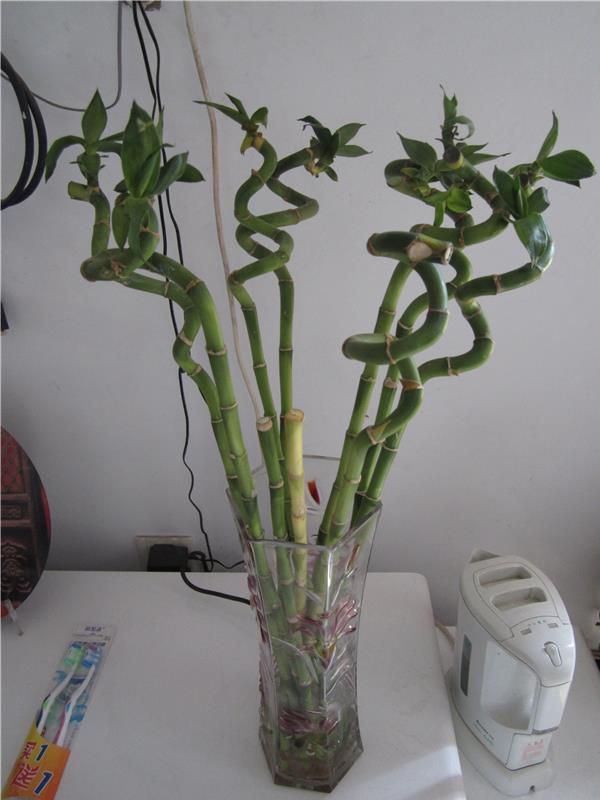
How to Grow Lucky Bamboo in Water
Lucky bamboo sometimes develops soft, drooping, shriveled leaves. This phenomenon is mostly caused by transplanting. For example, the roots of water-grown lucky bamboo are delicate and slender; if you move it from water into soil and the watering is not sufficient at that time, the above phenomenon will appear. Therefore, be sure to water thoroughly, especially in the early stage of planting, to promote good root development.
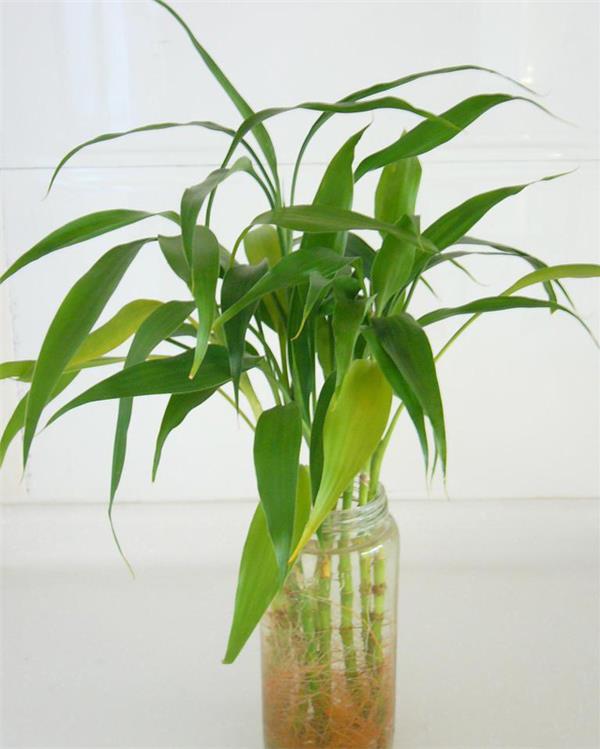
The most suitable time for water cultivation in a vase is from April to September each year, that is, the period from late spring onward, when the temperature is suitable and rooting and survival are easiest. At other times, if the temperature is above 15°C, it can still root, but it takes longer.
Cut the bottom of the root at an angle with a blade, do not use scissors, singe it over fire, then place it in water.
Put a little crushed aspirin in the water. This can promote rooting. Do not put it in the sun; keep it in a shady place. Mine has been growing for more than a year and is very bushy. I have not even changed the water. The leaves are broad and green.
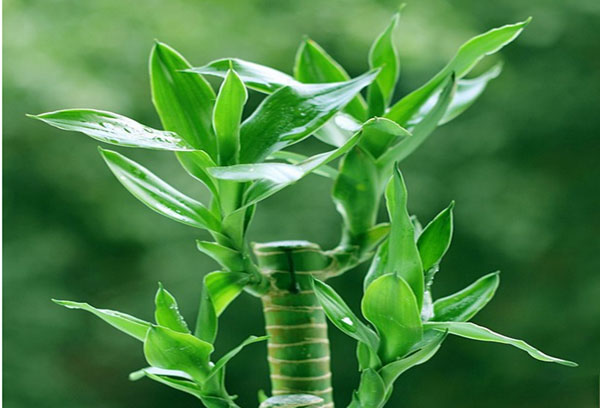
Common Problems with Water-Grown Lucky Bamboo
If lucky bamboo is not managed well, it is prone to physiological disorders such as leaf fading, loss of luster, and root rot. Lucky bamboo likes scattered light and fears direct strong light. If it is placed under blazing sun during care, the leaves will at best fade, becoming dull and lacking luster; at worst they will be scorched or become withered and burnt. If it is grown indoors in too dark a place for a long time, the plant is prone to grow leggy, and it will also lack luster, the leaf color will become pale, the markings will disappear, and the ornamental effect will be greatly reduced. Therefore, in daily care it is best to place it near an east- or north-facing wall opening with bright scattered light, so that the light is both bright and not direct, which is more favorable for its growth.
In water cultivation, besides controlling light and fertilizer, mastering the temperature conditions is also the key to growing lucky bamboo well. Lucky bamboo likes warmth and fears cold. If it is exposed to cold wind in winter, the leaves will turn yellow from the cold damage. After cold damage, if the stem is still green, it shows that it still has vitality and can sprout new leaves again after the temperature rises and warms up the following year. At this time, it is best to cut off the stem and insert it into a bottle again for water cultivation.
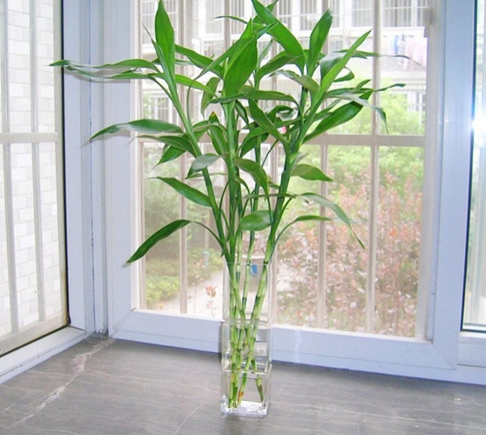
Precautions for How to Grow Lucky Bamboo in Water
1 During care, it should be placed in a bright, well-ventilated environment; too little light tends to make the branches and leaves turn yellow.
2 City tap water should be left to stand for two days, so that the chlorine content in the water is reduced and impurities settle out before it can be used for growing.
3 Once it turns yellow, cut off a section from the base with a sharp knife, and cut the base into a slanted opening with a sharp knife; the cut should be smooth to facilitate the absorption of water and nutrients, then insert it again.
4 In summer, when temperatures are high, the oxygen content in the water is low and the water easily deteriorates. Reduce the concentration of the solution and change the water frequently. Do not move the position or change the direction within 10 days; after about 15 days, silvery-white fibrous roots can grow.
5 After rooting, it is best to change the water less often, and only add water promptly after evaporation reduces the water level. Frequent water changes easily cause yellow leaves and withered branches.
6 After rooting, promptly apply a small amount of compound fertilizer or nutrient solution, and the leaves will be glossy green and the stems sturdy. If no fertilizer is applied for a long time, the plant will grow weak and spindly, and the leaf color will easily turn yellow. But do not apply too much fertilizer, so as to avoid "burning the roots" or causing leggy growth. In spring and autumn, applying compound fertilizer once a month is enough.
7 Be careful not to place lucky bamboo next to a television or in places constantly blown by an air conditioner or electric fan, so as to avoid dry and withered leaf tips and leaf edges. When the weather is dry, spray the leaf surface appropriately to keep the leaves spread out and the leaf color emerald green.
8 In water cultivation, besides controlling light and fertilizer, mastering the temperature conditions is also the key to growing lucky bamboo well. Lucky bamboo likes warmth and fears cold. If it is exposed to cold wind in winter, the leaves will turn yellow from the cold damage. After cold damage, if the stem is still green, it shows that it still has vitality and can sprout new leaves again after the temperature rises and warms up the following year.
9 The most suitable time for water cultivation in a vase
I believe that after reading the above article, everyone has gained some understanding of how to grow lucky bamboo in water. I hope the above content can help everyone. For more wonderful content, please continue to follow our website~
For more wonderful content, please continue to follow our website~