What causes yellowing leaves on a pothos plant
Pothos is a typical foliage plant. Its leaves are emerald green, and it looks very good placed indoors as decoration. Pothos is also often placed in offices to soothe tense nerves and rest tired eyes. Yellowing pothos leaves indicate that something has gone wrong with the way the pothos is being cared for, and it needs to be corrected promptly. We will handle this in three situations.
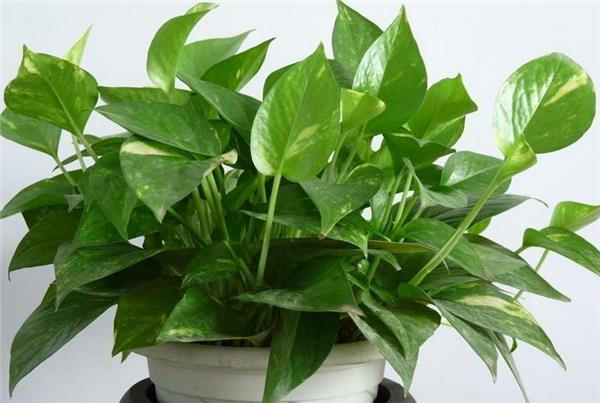
Why do pothos leaves turn yellow
1. Improper watering
Watering pothos too much or too little can both cause yellowing leaves. To tell the difference, observe how the yellowing appears: if the leaf tips or edges become withered and dry, the newly grown tender leaves grow normally, and the old leaves turn yellow and drop off, then it is underwatering; on the contrary, if the leaf surface is dull yellow and lusterless, and the newly grown leaf tips shrivel and stop growing, it may be overwatering. You can also make a judgment based on your own watering amounts.
2. Sunlight problems
Pothos does not like too much sunlight and prefers a cool, shady growing environment, which is also why it can grow well indoors. So if you happen to have placed your pothos somewhere that receives direct sunlight for a long time, you have probably found the reason for the yellowing leaves. But extremes meet: if your home happens to lack sunlight, the yellowing leaves may also be caused by a lack of chlorophyll synthesis.
3. Fertilizer application
The effect of fertilizing on yellowing pothos leaves must also be considered from two extremes. With too much fertilizer, the leaves become thick and fleshy, lose their luster, and the old leaves turn yellow and drop off; with too little fertilizer, especially a lack of nitrogen fertilizer, the leaf color fades, first transitioning to light green and then gradually turning yellow, with the leaves at the base turning yellow first while the top leaves still retain their texture.
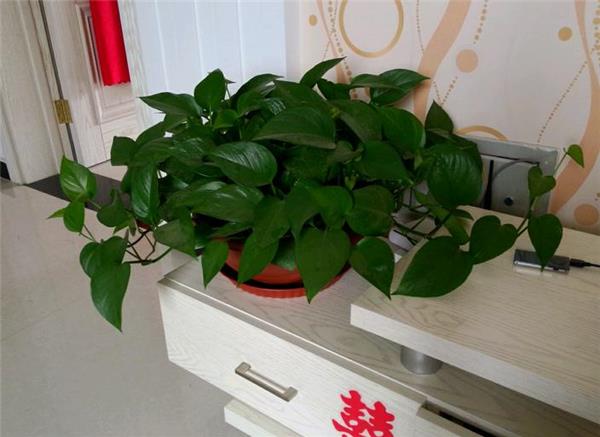
Solutions for yellowing pothos leaves
The solution for yellowing pothos leaves should be adjusted according to the cause of the yellowing. Since pothos can be propagated by cuttings, each node on its stem carries a leaf bud, and just one section can be taken and planted to grow. So when the leaves of a cultivated pothos turn yellow severely, you can remove the rotted roots, pick off the yellow leaves, and replant the cuttings; note that when growing in water, the water should be changed to fresh water. You can also cut off the vines whose leaves have not yet turned yellow and replant them. During planting, two to three nodes should be buried; for water culture, also two to three nodes, and the water should be changed once every three to four days (boiled cold water is best). Right after planting, it must not be exposed to strong direct sunlight; it can be placed in a location with weaker light, and in about 20 days the newly planted pothos will take root and grow. For more knowledge on indoor flower cultivation, please click to view the Flowers section of Tubatu.com.
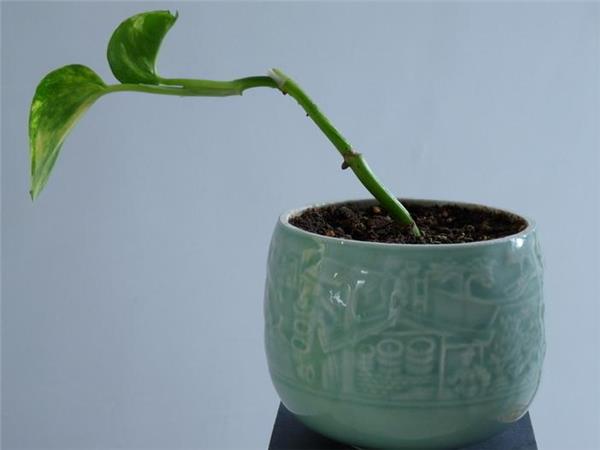
When cultivating pothos, pay attention to the following points.
1. Change the water frequently. If you grow pothos in water, changing the water frequently is very necessary, generally once every two to three days. The reason is that pothos has extremely high requirements for water quality, and adding nutrient solution is also essential, so that the pothos can shine with vitality.
2. Suitable temperature. The temperature for pothos to safely overwinter is above 10°C. With a room temperature above 20°C, pothos can grow normally. Too large a temperature difference will affect the growth of pothos. At the same time, be careful not to let the leaves get close to heating equipment.
3. Choice of water quality. Use clean tap water or purified water to grow pothos; the correct choice of water quality is important because it contains a large amount of minerals.
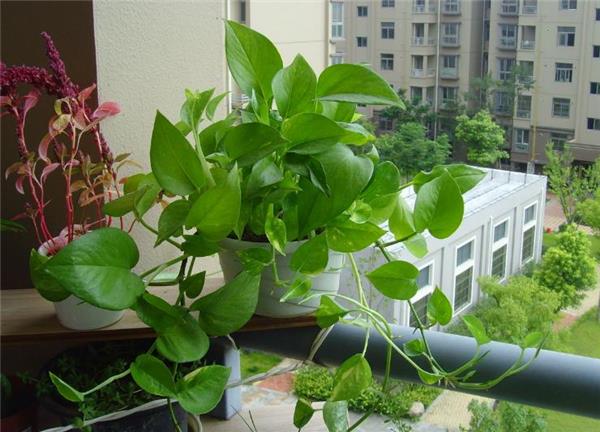
That is all for today's introduction on the causes of yellowing pothos leaves and the solutions. I hope it can help everyone!