How to Grow Succulents? Detailed Care Guide
Succulents have recently become popular. If you have never heard of succulents, then you are out of the loop. Succulents are loved by a whole crowd of consumers for their cute appearance, so how should succulents be grown?
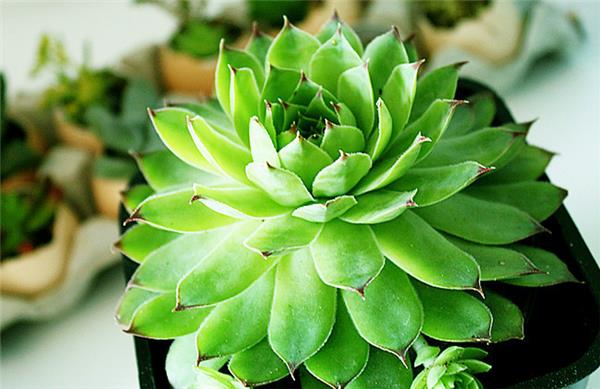
I. How to Grow Succulents
1. Sowing: The advantage is that you can obtain a large number of seedlings at one time. Among succulents, apart from a few species that can self-pollinate, most belong to insect-pollinated or bird-pollinated flowers, and must be artificially pollinated in order to set fruit. Succulent seeds have a short lifespan; for example, the seeds of Pachypodium have a lifespan of only a few weeks. Generally, the seeds of succulents stored under normal temperature conditions for 1 year quickly decline in germination rate. For this reason, many succulents are sown immediately after the seeds mature, or stored for sowing in the following spring. The sowing and germination time also differs among different families and genera; the earliest can germinate in 2 days, while the latest takes 25 days to germinate.
2. Leaf cuttings: Thick, fleshy leaves are often used, placed on a slightly moist sand bed or loose soil surface; they will soon take root, and adventitious buds grow from the base of the leaf to form small plants, such as Adromischus, Echeveria, and Kalanchoe daigremontiana.
3. Stem cuttings: In the process of propagating succulents, combined with pruning and shaping, branches are cut into segments as cuttings, such as Adenium obesum, Stapelia, Euphorbia milii, and Euphorbia tirucalli. For Adenium obesum, Pachypodium, and Euphorbia, whose cut wounds exude white milky sap, the wound must be cleaned thoroughly and dried slightly before cuttings are taken, for better results.
4. Root cuttings: For the relatively precious varieties of the Liliaceae genus Haworthia, the roots are very thick and well developed. A relatively mature fleshy root is cut off and buried in a sand bed with the upper part slightly exposed, maintaining a certain moisture and bright light; new buds can sprout from the top of the root to form a complete small plant.
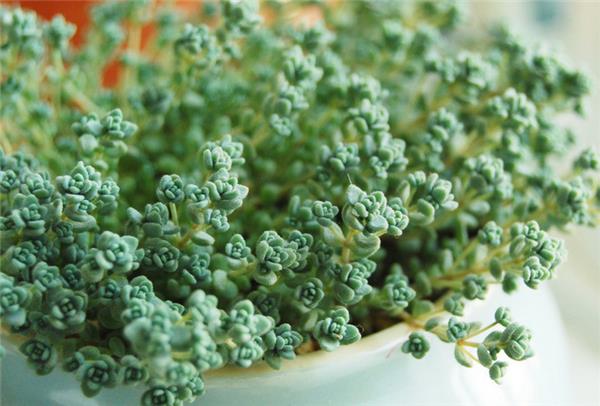
5. Grafting: In succulents, grafting is often used to propagate variegated and cristate varieties. For example, Euphorbia neriifolia is used as the rootstock to graft Euphorbia lactea cristata; Portulacaria afra is used as the rootstock to graft Portulacaria afra variegata; Pachypodium is used as the rootstock to graft Pachypodium cristata; Stapelia gigantea is used as the rootstock to graft Stapelia, etc., with good ornamental results. However, during the grafting process, because the plants contain white latex, they are highly sticky. Therefore, grafting operations must be fast and skillful in order to succeed.
6. Division: Division is the simplest and safest method of propagating succulents. As long as a succulent has a rosette leaf cluster or a clustering growth habit, it can be propagated by division through its offsets, runners, bulbs, tubers, and small plants, and this can be done when repotting in spring. Of course, among succulents, variegated varieties such as Sansevieria trifasciata 'Laurentii', Agave 'Kichioka', Agave 'Night Emporer', and Haworthia truncata variegata must be propagated by division in order to maintain the purity of the variety.
II. How Succulents Reproduce
1. Sowing: The advantage is that you can obtain a large number of seedlings at one time. Among succulents, apart from a few species that can self-pollinate, most belong to insect-pollinated or bird-pollinated flowers, and must be artificially pollinated in order to set fruit. Succulent seeds have a short lifespan; for example, the seeds of Pachypodium have a lifespan of only a few weeks. Generally, the seeds of succulents stored under normal temperature conditions for 1 year quickly decline in germination rate. For this reason, many succulents are sown immediately after the seeds mature, or stored for sowing in the following spring. The sowing and germination time also differs among different families and genera; the earliest can germinate in 2 days, while the latest takes 25 days to germinate.
2. Leaf cuttings: Thick, fleshy leaves are often used, placed on a slightly moist sand bed or loose soil surface; they will soon take root, and adventitious buds grow from the base of the leaf to form small plants, such as Adromischus, Echeveria, and Kalanchoe daigremontiana.
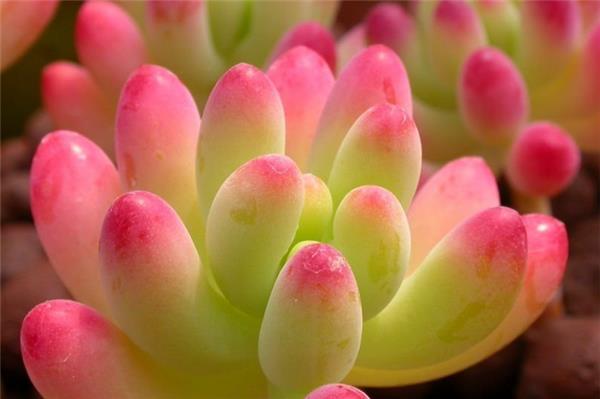
3. Stem cuttings: In the process of propagating succulents, combined with pruning and shaping, branches are cut into segments as cuttings, such as Adenium obesum, Stapelia, Euphorbia milii, and Euphorbia tirucalli. For Adenium obesum, Pachypodium, and Euphorbia, whose cut wounds exude white milky sap, the wound must be cleaned thoroughly and dried slightly before cuttings are taken, for better results.
4. Root cuttings: For the relatively precious varieties of the Liliaceae genus Haworthia, the roots are very thick and well developed. A relatively mature fleshy root is cut off and buried in a sand bed with the upper part slightly exposed, maintaining a certain moisture and bright light; new buds can sprout from the top of the root to form a complete small plant.
5. Grafting: In succulents, grafting is often used to propagate variegated and cristate varieties. For example, Euphorbia neriifolia is used as the rootstock to graft Euphorbia lactea cristata; Portulacaria afra is used as the rootstock to graft Portulacaria afra variegata; Pachypodium is used as the rootstock to graft Pachypodium cristata; Stapelia gigantea is used as the rootstock to graft Stapelia, etc., with good ornamental results. However, during the grafting process, because the plants contain white latex, they are highly sticky. Therefore, grafting operations must be fast and skillful in order to succeed.
6. Division: Division is the simplest and safest method of propagating succulents. As long as a succulent has a rosette leaf cluster or a clustering growth habit, it can be propagated by division through its offsets, runners, bulbs, tubers, and small plants, and this can be done when repotting in spring. Of course, among succulents, variegated varieties such as Sansevieria trifasciata 'Laurentii', Agave 'Kichioka', Agave 'Night Emporer', and Haworthia truncata variegata must be propagated by division in order to maintain the purity of the variety.
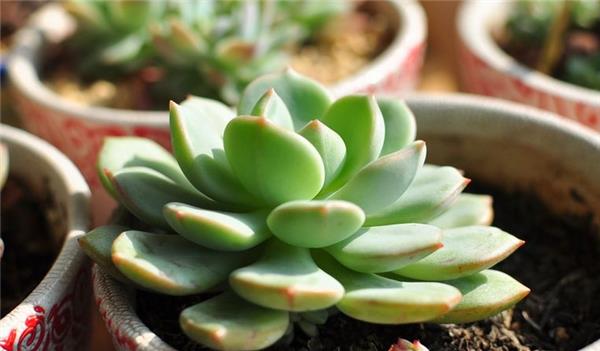
The above has introduced how to grow succulents. I hope you will take action and bring a succulent plant home right away, adding a touch of green to your home and purifying the air.
As long as a succulent has a rosette leaf cluster or a clustering growth habit, it can be propagated by division through its offsets, runners, bulbs, tubers, and small plants, and this can be done when repotting in spring. Of course, among succulents, variegated varieties such as Sansevieria trifasciata 'Laurentii', Agave 'Kichioka', Agave 'Night Emporer', and Haworthia truncata variegata must be propagated by division in order to maintain the purity of the variety.
The above has introduced how to grow succulents. I hope you will take action and bring a succulent plant home right away, adding a touch of green to your home and purifying the air.