Is the fragrance of hyacinth actually toxic?
Hyacinth flowers come in rich colors, including red, blue, white and many others, and their flower language is: sorrowful love, eternal remembrance, and so on. They are loved by many people, but the claim that hyacinths are toxic makes some of their admirers hesitate. So, is the fragrance of hyacinth toxic?
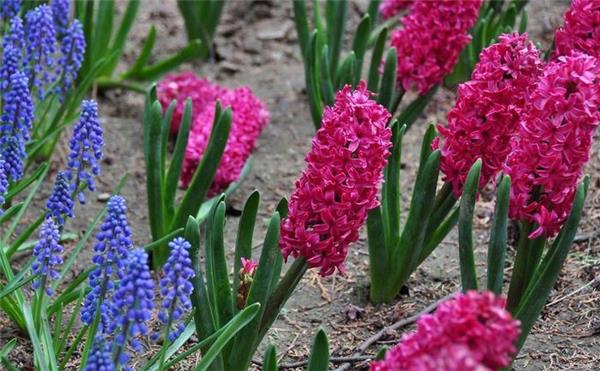
Is the fragrance of hyacinth toxic?
Nature really is a very strange master; when it bestows beauty on the world, it also brings thorns, poison, invasion and harm along with it. The hyacinth is just such a spirit that is beautiful yet toxic. When people hear that hyacinths are toxic, they may not quite believe it; this famous foreign love flower has long conquered the whole world with its beauty and conquered love as well. However, the hyacinth bulb is indeed toxic, and in severe cases of accidental ingestion it can even lead to paralysis or death.
Everyone knows that hyacinth fragrance is intense, and many friends with nasal allergies cannot even tolerate the scent when hyacinths are in full bloom. However, its fragrance is safe; it merely contains somewhat more aromatic ketones, which can be excreted from the body through human metabolism and have no negative effect on the human body. Still, everyone should be reminded not to place large numbers of hyacinths on the dining table for long periods, and it is best not to keep them indoors for long periods either, so as to avoid unnecessary harm to the body.
The floral scent of hyacinth will not harm the human body, but if you have allergic skin, then that cannot be guaranteed. As a famous foreign love flower, hyacinths of different colors carry different meanings of love. What draws the most attention are still purple hyacinths and blue hyacinths; these two colors are very brilliant, and although the flowers when in bloom are not as stunning as peonies, they can still fully attract everyone's gaze, while the faintly sorrowful flower language also increases people's tender affection for hyacinths.
As early as several decades ago, hyacinths had already been introduced for indoor cultivation, and after a long period of breeding, hyacinths can now also be grown simply in water. Hyacinths do not have very high requirements for soil or environmental temperature. If grown indoors, then it is fine as long as the temperature is not too low or too high, while outdoors it is enough to pay attention to basic cold protection and not let frost and snow directly harm the hyacinth. It is not a delicate plant, but it still needs our careful care.
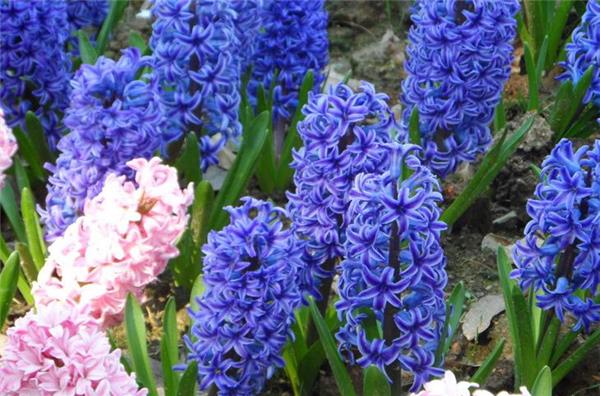
The fragrance of hyacinths and primroses can cause allergies in some people. Nowadays, there is a wide variety of flowers and trees on the market, with large numbers of southern plants and introduced foreign varieties appearing. These flowers and trees are basically harmless. If you are unfamiliar with certain flowers and trees and have doubts, as long as you pay attention to the following points, you can be completely "free from worry."
1. Prevent children from accidentally eating them or letting their skin come into direct contact with the plant sap;
2. Keep the room well ventilated regularly;
3. In the bedroom, try not to place too many flowers and plants.
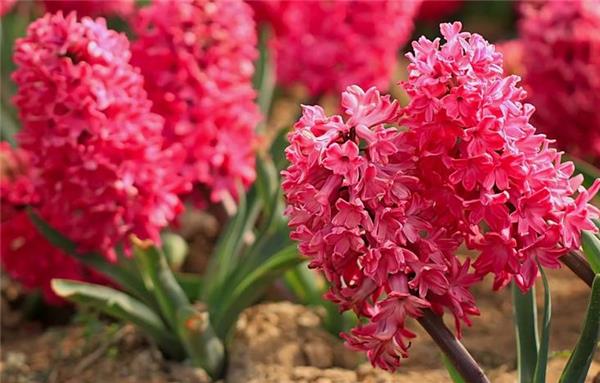
Selection and cultivation of hyacinths
Selection
When selecting bulbs, pay attention to choosing ones with bright skin color, firm texture, and no disease spots or insect holes. Usually, the color of the seed coat can basically tell you what color flowers it will produce. For example, if the outer skin is purplish red, it will produce purplish red flowers; if it is white, it will produce white flowers. However, some varieties developed through crossbreeding have more complex colors, and sometimes they cannot be clearly distinguished, so it is best to ask the seller clearly before buying. After the bulbs are purchased, in order to break their dormancy period, first place them in the lowest compartment of the refrigerator for cold storage for about one month, so that they can bloom smoothly later. But when taking them out of the refrigerator, it is best to move them to a cool place for seven or eight days before planting.
Cultivation
Many people grow hyacinths in a specially made glass bottle shaped like a gourd; on top you can admire the hyacinth flower cluster, and below you can see a bundle of thick white roots. This scene of flowers and roots thriving together is hard to see among other flowers and plants, except for orchids. Hyacinth is also called foreign narcissus or colorful narcissus. Hyacinth is relatively tolerant of low cold but afraid of heat. Hyacinth likes a cool, humid, sunny environment. Hyacinth is suitable for growing in well-drained sandy loam soil, and grows poorly in heavily clayey soil.
After hyacinths bloom, if the bulbs are stored well, planting them again the next year may bring them back into bloom, but because such bulbs have already degenerated, even if they may survive, the plants will become shorter and the flower stems will also tend to shrink, so they cannot continue to be kept; it is better to buy new bulbs for cultivation the following year.
In December, place the bulbs in a wide-mouthed glass bottle with a grid, and add a little charcoal to help disinfect and prevent rot. The bulbs only need to be soaked to the bottom of the bulb. Then place it in a dark place and cover the bottle with black cloth. After more than 20 days like this, the roots will sprout in a completely dark environment. At this point, take it outside to receive sunlight. At first, expose it to light for one or two hours a day, then gradually increase to seven or eight hours. If the weather does not change much, it may bloom by the Spring Festival.
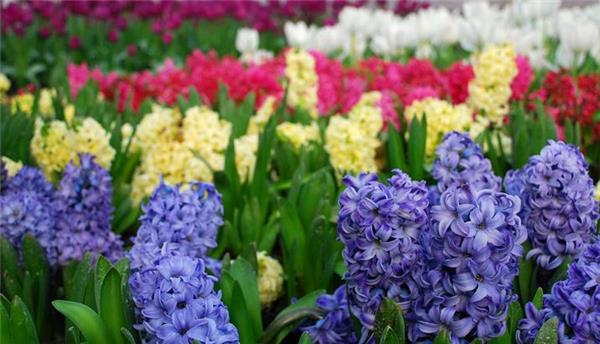
Many households also grow hyacinths in a specially made glass bottle shaped like a gourd; in the upper part you can admire its flower cluster, and in the lower part you can see a bundle of thick white roots. This scene of flowers and roots thriving together is hard to see among other flowers and plants, except for orchids. During the growing period, it needs constant watering. If it is left in the soil, after the flowering period cut off the flower stems and let the leaves wither naturally. It needs extra fertilizer every year, but some varieties will produce fewer and fewer flowers after being grown for several years. If it is to be stored after the flowering period, it needs to be pulled out; after the leaves dry naturally, cut off the leaves, and it is best to put it in a breathable bag with wood shavings and place it in a dry, ventilated, cool place.
Hyacinth likes a cool, humid, sunny environment. It is relatively tolerant of low cold but afraid of heat. It is suitable for growing in well-drained sandy loam soil, and grows poorly in heavily clayey soil. Hyacinth bulbs must grow to 19 cm before they can bloom. It blooms every year from March to April.
For hyacinth cultivation, first select robust and plump bulbs, dry them in the shade beforehand, and in December put them into an earthenware pot. Use 1 part coarse sand, crushed pond mud, and 1 part decomposed rice bran mixed into nutrient soil, bury the bulbs in the soil, cover the bulbs with 2-3 cm of soil, and place them in a sunny spot. At first, do not water too much. When the leaves emerge above the soil surface, apply phosphorus and potassium fertilizer once. After flowering, cut off the flower stems and apply fertilizer once more. They go dormant in July-August, when the bulbs will not grow larger, so they should be dug out promptly in June-July and placed in a cool place, not exposed to the sun, and then planted in pots again around the Mid-Autumn Festival or in December.
It can also be grown in water like narcissus. To grow hyacinth in water, in December place the bulbs in a wide-mouthed glass bottle with a grid, and add a little charcoal to help prevent rot and disinfect. The bulbs only need to be soaked to the bottom of the bulb, then place it in a dark place and cover the bottle with black cloth. After about more than 20 days of sprouting in a completely dark environment, put it outside to receive sunlight. At first, expose it to light for 1-2 hours a day, then gradually increase to 7-8 hours. In most cases, when the weather is good, it will bloom by the Spring Festival. After hyacinths bloom, if the bulbs are stored well, they can still bloom the next year, but the flowers will be shorter and the flower stems will also shrink; this is mainly because the bulbs have degenerated. Therefore, for hyacinth cultivation, it is better to plant for one year and then buy new bulbs.
After more than 20 days like this, the roots will sprout in a completely dark environment. At this point, take it outside to receive sunlight. At first, expose it to light for one or two hours a day, then gradually increase to seven or eight hours. If the weather does not change much, it may bloom by the Spring Festival.
Many households also grow hyacinths in a specially made glass bottle shaped like a gourd; in the upper part you can admire its flower cluster, and in the lower part you can see a bundle of thick white roots. This scene of flowers and roots thriving together is hard to see among other flowers and plants, except for orchids. During the growing period, it needs constant watering. If it is left in the soil, after the flowering period cut off the flower stems and let the leaves wither naturally. It needs extra fertilizer every year, but some varieties will produce fewer and fewer flowers after being grown for several years. If it is to be stored after the flowering period, it needs to be pulled out; after the leaves dry naturally, cut off the leaves, and it is best to put it in a breathable bag with wood shavings and place it in a dry, ventilated, cool place.
Hyacinth likes a cool, humid, sunny environment. It is relatively tolerant of low cold but afraid of heat. It is suitable for growing in well-drained sandy loam soil, and grows poorly in heavily clayey soil. Hyacinth bulbs must grow to 19 cm before they can bloom. It blooms every year from March to April.
For hyacinth cultivation, first select robust and plump bulbs, dry them in the shade beforehand, and in December put them into an earthenware pot. Use 1 part coarse sand, crushed pond mud, and 1 part decomposed rice bran mixed into nutrient soil, bury the bulbs in the soil, cover the bulbs with 2-3 cm of soil, and place them in a sunny spot. At first, do not water too much. When the leaves emerge above the soil surface, apply phosphorus and potassium fertilizer once. After flowering, cut off the flower stems and apply fertilizer once more. They go dormant in July-August, when the bulbs will not grow larger, so they should be dug out promptly in June-July and placed in a cool place, not exposed to the sun, and then planted in pots again around the Mid-Autumn Festival or in December.
It can also be grown in water like narcissus. To grow hyacinth in water, in December place the bulbs in a wide-mouthed glass bottle with a grid, and add a little charcoal to help prevent rot and disinfect. The bulbs only need to be soaked to the bottom of the bulb, then place it in a dark place and cover the bottle with black cloth. After about more than 20 days of sprouting in a completely dark environment, put it outside to receive sunlight. At first, expose it to light for 1-2 hours a day, then gradually increase to 7-8 hours. In most cases, when the weather is good, it will bloom by the Spring Festival. After hyacinths bloom, if the bulbs are stored well, they can still bloom the next year, but the flowers will be shorter and the flower stems will also shrink; this is mainly because the bulbs have degenerated. Therefore, for hyacinth cultivation, it is better to plant for one year and then buy new bulbs.