How Do You Care for Indoor Plants? Detailed Guide to Growing Methods and Precautions
Nowadays, as quality of life improves, people pay more and more attention to their living environment. Most people like to grow some flowers and other plants indoors, which not only cleans the air but can also be used for decoration or viewing. But do you know how to care for indoor plants? This article will introduce indoor plant growing methods and precautions.
Indoor Plant Growing Methods
Soil for indoor plant growing methods:
For most indoor plants, you can choose to mix garden soil, peat soil, leaf mold, sand and so on into a loose, fertile potting soil; for plants that can be grown hydroponically, you can choose hydroponics, such as: narcissus, lucky bamboo, pothos, and so on.
Water for indoor plant growing methods:
For plants, water is crucial. Many people cause the death of their indoor plants because of improper watering. Because indoor plants live in an environment with low light, they grow relatively slowly, so watering must be appropriate. It is better to water less than to overwater. Master the principle of "water only when dry, and water thoroughly when you do." Water a bit more in spring and summer, and never water in dribs and drabs or water too much.
Light and temperature for indoor plant growing methods:
There are many kinds of indoor plants, so they should be placed differently. For shade-loving foliage plants, they can be placed in a low-light indoor environment for a long time; while some indoor plants that like sunlight, such as: azaleas, Chinese roses, pomegranates, chrysanthemums, and so on, need to be placed regularly in a sunny place, but be careful to avoid direct strong light. Most indoor plants are afraid of lower temperatures, so in winter pay attention to maintaining room temperature, which must not be too low.
Fertilizing for indoor plant growing methods:
When growing indoor plants, if you do not fertilize for a long time, it will cause yellowing of the leaves; if you fertilize too much, the potted plants cannot absorb it and the root system will be burned, so fertilizing indoor plants must be controlled well in amount. Usually in summer and autumn, apply a thin fertilizer once every week, and avoid using too much concentrated fertilizer. Fertilize foliage plants and summer-flowering plants in summer and early autumn, and fertilize winter-flowering plants in late autumn and spring. Before fertilizing, remember to loosen the soil first.
In addition to this, you also need to pay attention to the following:
1. Dry air. When indoor air is excessively dry, flowers often show symptoms such as withered leaf tips or scorched leaf edges. You should take measures such as spraying water and covering with plastic film to increase air humidity.
2. Over-fertilizing. If you fertilize too much, new leaves will become thick and fleshy, and often uneven, while old leaves will dry at the tips, scorch yellow, and fall off. You should immediately stop fertilizing, increase the amount of water changed to let the fertilizer drain away, or immediately repot, rinse the bulbs with water, and then replant them in the pot.
3. Hot high temperatures. If flowers are placed in a high-temperature place and exposed to direct strong sunlight, it is very easy to cause the leaf tips and leaf edges of young leaves to scorch and wither, or leaves to turn yellow and fall off. They need to be moved promptly to a cool, well-ventilated place.
4. Excessive shading. If flowers are kept in a shaded place or a place with insufficient light for a long time, it will cause the branches and leaves to turn yellow.
5. Too dense and not ventilated. If too much nitrogen fertilizer is applied, the branches and leaves grow too luxuriantly, and if they are not pruned for a long time, the inner branches and leaves will not get enough light, which easily causes leaves to turn yellow and fall off. Fertilize reasonably and strengthen pruning so that they are well ventilated and receive light.
At the end of the article, we introduce three kinds of indoor plants and their growing methods.
African jasmine as an indoor plant
Jasmine flowers, with small and delicate buds and a fresh, elegant fragrance, are the reason many people like them. The volatile oils produced by this African jasmine have a significant sterilizing effect, and the fresh fragrance can help people relax, thereby aiding sleep.
Growing tips: African jasmine grows well in a warm climate environment, with an optimum growing temperature of 18°C to 32°C, and it needs sufficient water. In dry seasons, pay attention to watering more.
Spider plant as an indoor plant:
The spider plant has a unique shape and can be hung on the wall as a decoration. Not only that, the spider plant can also absorb 95% of carbon monoxide and 85% of formaldehyde in the air. It also performs photosynthesis under weak light to absorb toxic and harmful gases in the air. One pot of spider plant in a room of 8~10 sq m is equivalent to an air purifier, so the spider plant is also called the green purifier of indoor air.
Growing tips: Keep it in a cool indoor place, prevent direct sun exposure, manage it roughly, water thoroughly after the soil dries, and you can also water it every few days with fermented rice water.
Lucky bamboo as an indoor plant
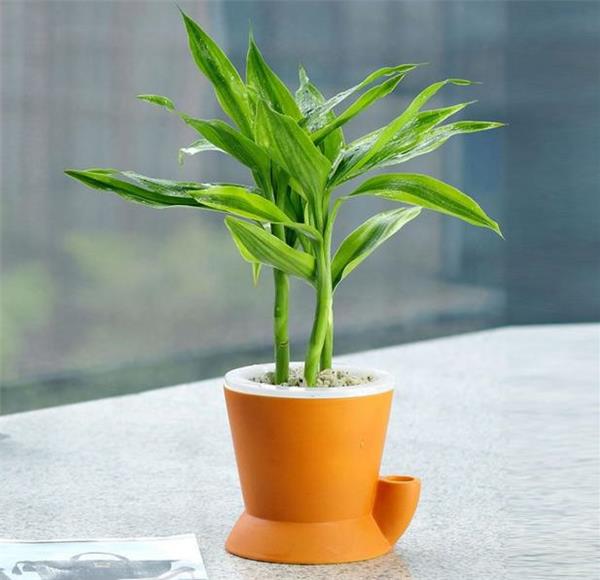
Lucky bamboo is a perennial evergreen grass that likes shade and moisture. Its stems are upright, the plant form is delicate, the leaves are long and lance-shaped, and the leaves are deep green. It grows robustly and is easy to keep alive in water. Lucky bamboo stays green in winter and summer. Whether potted or with stems cut and placed in a bottle for water culture, or processed into "fortune bamboo" or "curved bamboo," it all appears sparse, upright, and noble, with slender stems and leaves, soft and elegant, with a free and easy posture and full of bamboo charm, and has very high ornamental value.
Growing tips: After rooting, it is not suitable to change the water. After the water evaporates and decreases, add water promptly and fertilize irregularly.
That is all for today's introduction to indoor plant growing methods and precautions. I hope this article can help everyone!
After the water evaporates and decreases, add water promptly and fertilize irregularly.
That is all for today's introduction to indoor plant growing methods and precautions. I hope this article can help everyone!