How to grow pothos so it stays evergreen all year round
The pothos plant is rather lovely; once it grows, it spreads out in all directions like the hair of someone who has just woken up, and some people's pothos even sticks out at odd angles. So why is it that other people's pothos grows so smoothly and green, with leaves that look glossy and reflective, so full of life? Don't worry - let's take a look at what tricks they use.
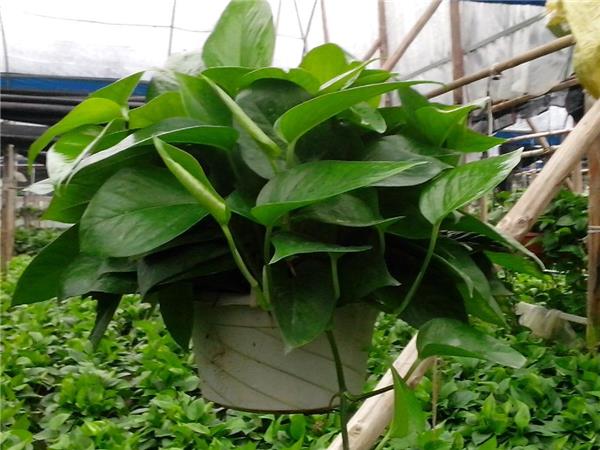
Before learning how to grow pothos, let's first look at what pothos is good for.
Growing pothos at home has many benefits, mainly in its ornamental value, removing odours, and absorbing harmful gases such as formaldehyde.
First, because its leaves are delicate and pretty and its stems are slender and soft, pothos has excellent ornamental qualities and can also add vitality and energy to a room, making it a great indoor plant decoration. Besides its role in ornamentation and beautifying the environment, pothos is also good at absorbing indoor formaldehyde; its trailing stems hang down naturally, so it can both effectively purify the air and absorb most of the harmful gases in a room, such as formaldehyde and benzene.
In addition, pothos is also known as an odour absorber. Because pothos has well-developed aerial roots, it has a strong ability to absorb odours produced in family life, such as cooking fumes and detergent smells, and many families place their pothos in the bathroom to purify the air.
Besides the benefits above, growing it can also effectively enhance the interests and personal qualities of family members, thereby bringing more shared enjoyment to family life.
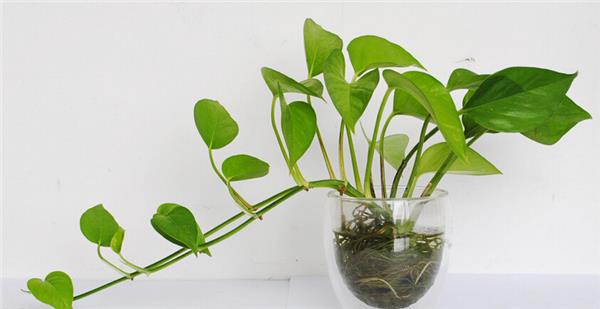
Now that you know these benefits of pothos, don't you want to grow a pot right away? But before you act, we still need to first understand how to grow it.
1. Soil culture
To grow a plant well, soil is very important. The reason many gardening enthusiasts fail to grow plants well and keep having them die is that soil is a very important part of it, so when growing spider plants, enthusiasts are advised, if conditions allow, to use nutrient soil, or their own soil with good drainage.
Having covered soil, next let's talk about the growing environment and watering. From the habits of pothos we can see that pothos tolerates shade but dislikes direct sunlight, so when choosing a growing environment, a ventilated place with diffused light is best. Watering is a very interesting matter, and many gardening enthusiasts cannot get it right. It should be said here that different soils, different pots, and different regions all require different amounts and frequencies of watering. Enthusiasts should mainly judge whether to water based on the moisture of the soil; a little dryness is not a problem, but do not let water accumulate every day.
2. Water culture
Actually, there are two kinds of hydroponics: one is pure hydroponics, and the other is filling a pot or teacup with vermiculite and then filling it with water. Of these two, the vermiculite method is relatively simpler. There is no special trick; the main thing is the environment, which can follow that of soil cultivation, and as for watering, that no longer applies, so enthusiasts can water freely.
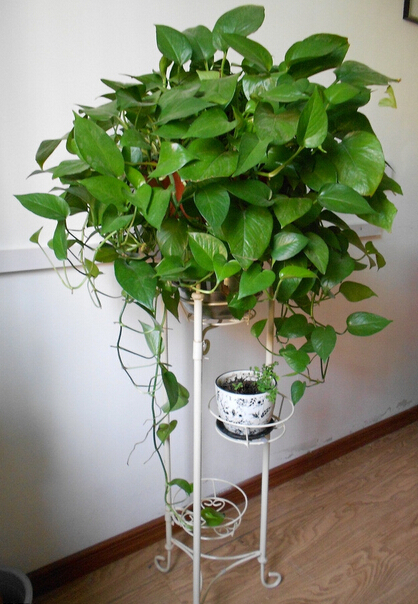
So why is it that, using the same growing methods, other people's pothos grows better looking than your own? Here, you need to pay attention to many details.
1. Pothos is afraid of sun. A colleague whose seat was by the window put the pothos by the window. In summer, sunlight fell on the pothos, and the leaves turned yellow beyond description - they simply never stayed green.
Correct approach: keep it cool and ventilated, place it indoors in diffused light, and avoid direct sunlight. If the indoor light is dim, you can move it to a place with strong light for one day about every 10 days; otherwise photosynthesis will be affected and it will not grow well.
2. Winters in the north are cold, and getting pothos through the winter is difficult. It requires an environment of at least 10 degrees Celsius. To help pothos get through the winter smoothly, you can move it to a fully enclosed balcony and let it get some sun appropriately, but not for too long, to avoid scorching the leaves.
3. Hydroponically grown pothos naturally does not need watering, but the water needs to be changed often, especially in summer, when it must be changed frequently. For changing the water, tap water that has been left standing for a few days is best.
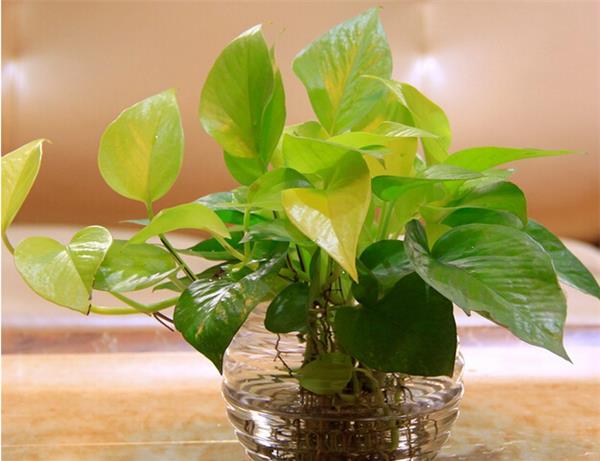
Little pothos has no small benefits. If you are tempted, go and grow a pot right away. With the introduction above, this time you should also have the confidence to grow a pot of pothos that is both pleasing to the eye and good for your health.