8518 Walnut: Outstanding Advantages and Detailed Cultivation Techniques
The 8518 walnut is a high-quality variety among walnuts and also a high-yield walnut variety with considerable economic value. However, to ensure its excellent nut quality and high fruit-setting rate, extra attention must be paid to cultivation.
The Outstanding Advantages of the 8518 Walnut
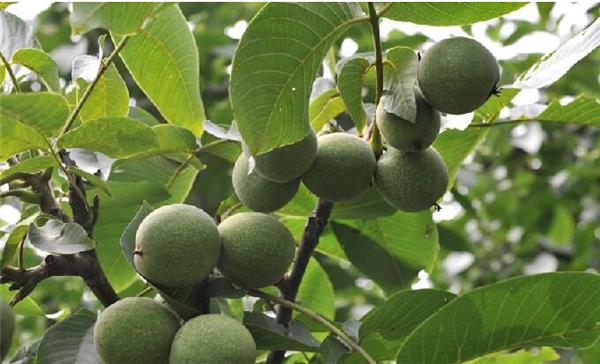
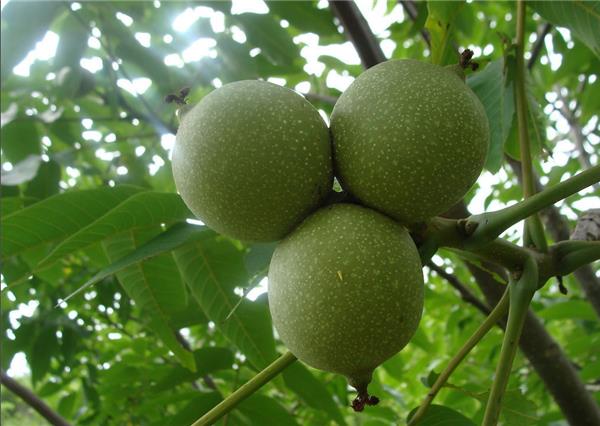
1. The 8518 walnut saplings have very strong precocity. Planted in the same year, some trees partially flower and some partially set fruit that same year. If planted early, the set walnuts can mature on the sapling. The 8518 original-stock walnut tree grows fast and has very strong high-yield potential. In the second year after the walnut saplings are planted out, most trees can bear fruit; under normal water and fertilizer conditions, they bear about 60 nuts in the third year. From this, the walnut saplings gradually enter the high-yield period year by year, and from the fifth year they enter the full-bearing period. On relatively barren hillside land, the yield per mu is generally 600-800 jin, while on plots with good water and fertilizer conditions, the yield per mu can exceed 1000 jin. It is currently the only walnut variety in China with a yield per mu exceeding one thousand jin.
2. The 8518 has strong disease resistance, grows fast, and has very strong high-yield potential. The 8518 has very strong precocity and strong resistance to natural disasters. Daily management of the walnut tree is simple, saving labor and money. The 8518 nuts store well and can be kept at room temperature for one year without deteriorating. The 8518 walnut nuts are of top quality, and all quality indicators meet the national premium-grade standards for walnut nut quality.
Cultivation Techniques for the 8518 Walnut
1. Planting time: 8518 grafted walnut saplings are suitable for growing on warm, deep-soil, well-drained sandy loam and black loam, and are best planted on sunny slopes and in wind-sheltered spots. To develop 8518 grafted walnut saplings in barren hill and hilly areas, terraced fields should first be built and large fish-scale pits dug to ensure soil and water conservation. As for planting time, in spring plant early after the soil thaws; in autumn, plant after leaf fall and before the soil freezes. In spring-drought areas, autumn planting has a higher survival rate than spring planting. The following spring they sprout early and grow robustly. Autumn-planted saplings should be earthed up to prevent the seedlings from drying out. Method: bend the sapling trunk into a bow shape and fix it, then earth up, mainly so that the trunk is not exposed. In the following spring, break the soil and straighten the trunk.
2. Planting method: 8518 grafted walnut saplings have very long taproots, so dig a pit 0.8-1 m deep and wide. First fill the bottom of the pit with topsoil and base fertilizer, about 20 cm below the pit mouth ground surface. When planting, after trimming the roots of the saplings that have been soaked so the root system has fully absorbed water, place them vertically into the pit with the roots spreading out in all directions, then fill with soil and firm it until level with the ground, then water thoroughly and seal the soil.
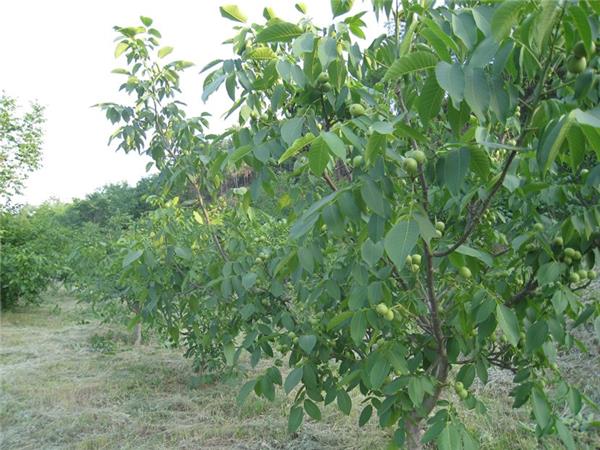
3. Planting density: For average soil, you can plant at a spacing of 3 m between plants and 4 m between rows. In this way, about 56 trees can be cultivated per mu. If it is relatively barren hillside land, you can appropriately plant more densely, using 3 m for both plant spacing and row spacing, to increase the yield per mu. The planting depth should be determined according to the depth of the walnut saplings in the nursery, generally about 5 cm deeper than in the nursery. If the spring is relatively dry, increase it by about 10 cm.
4. Later management: After the walnut saplings are planted, water them thoroughly once in time, which can effectively improve the survival rate of the walnut saplings. You can also use the method of covering the ground surface with plastic film to conserve soil moisture. In winter, be sure to pay attention to frost protection. You can use the method of wrapping with dry grass, or the method of bending the seedlings over and covering them with soil; both can effectively protect the walnut saplings from freezing through the winter.
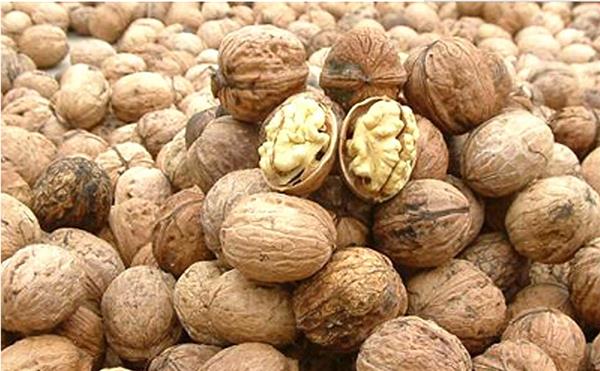
The 8518 walnut, as a nut, is very convenient to eat. Unlike other walnuts, it can be cracked open by pinching it with both hands, and it is very easy to remove the whole kernel. It does not need to be smashed with a hammer or clamped with a nutcracker.