[Management of Ash Trees] Maintenance and Management Techniques for Ash Trees
Ash trees are a tree species that combines landscape value and economic value, but only high-quality ash trees can produce their corresponding value, so the management of ash trees is also very important.
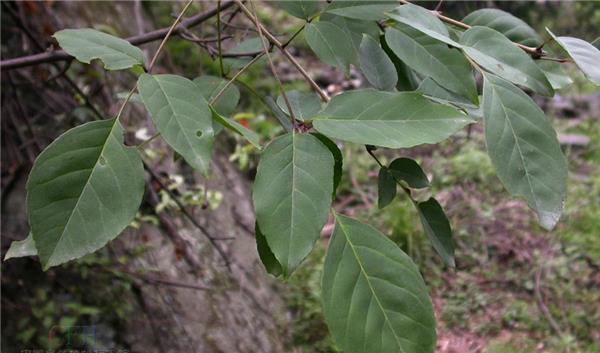
Management of Ash Tree Seedlings
1. Irrigation and drainage. During the germination period of ash tree seeds, the seedbed surface should be kept moist, and irrigation should be done in small amounts but frequently. After the seedlings emerge completely and the cotyledons fully unfold, they enter the period of vigorous growth; the irrigation volume should be larger and the frequency should be lower, irrigating once every 2-3 days, and each time watering thoroughly and sufficiently. Irrigation should preferably be done in the morning and evening. In autumn, when there is a lot of rain, drainage should be done promptly.
2. Pruning. Ash trees are false dichotomous branching tree species. To cultivate a tall trunk, the basic principle is to make the top new shoots transform into a sympodial branching pattern, so that the main trunk continues to grow upward and forms a tall trunk. The shaping methods adopt the natural open-center form, the main trunk sparse-layer form, and the multi-leader form. Because its trunk strength is relatively weak and its layering is not obvious, but its sprouting ability and suckering ability are both strong. It is tolerant of pruning. Its opposite buds often extend upward at the same time. If their vigor is even, it is easy to form a dichotomous tree shape, affecting height growth. To make it form a single-trunk tree shape, after sprouting, when the new shoots grow to 10 cm, one robust new shoot must be selected and retained for trunk cultivation, and the other weaker branch should be pinched to inhibit its growth and serve as an auxiliary nurturing branch. For new branches appearing on the lower part, some should be appropriately retained as auxiliary nurturing branches, and new branches near the base or below 1 m should all be removed from the base. In the second year's winter pruning, when the seedling height reaches about 2 m and is relatively thick and strong, the auxiliary nurturing branches retained from the previous year can be removed from the base, and then about 1/3 of the tip of the central main branch should be cut off. Of the opposite buds below the cut, 1 should be removed, and attention should be paid to making the retained bud direction opposite to that of the previous year, so that it grows continuously upward left and right alternately, which is convenient for forming a straight trunk.
3. Topdressing. Fertilization for ash trees should be mainly based on base fertilizer. To make the seedlings grow rapidly and become thick and strong, chemical fertilizers should be applied as a supplement during the peak growing season. During the seedling stage of ash trees, nitrogen fertilizer should be applied; during the rapid growth period, more nitrogen fertilizer, potassium fertilizer, or a combination of several fertilizers should be applied; in the later growth stage, nitrogen fertilizer should be stopped and more potassium fertilizer should be applied. Topdressing should be mainly based on quick-acting fertilizers, in small amounts and multiple times.
4. Thinning. To adjust the density of ash trees, thinning and replanting are needed. In nursery land for growing ash trees from seed, thinning is generally done twice: the first time when the seedlings have emerged completely and grown two pairs of true leaves, and the second time when the leaves overlap each other. During thinning, superior seedlings should be retained and inferior ones removed. It is best to carry out thinning after rain when the soil is moist.
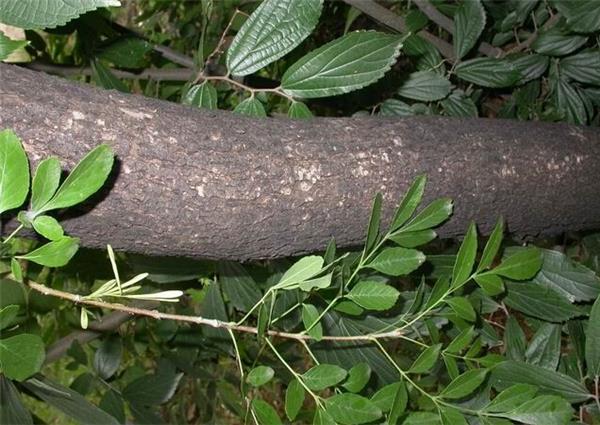
Prevention and Control of Common Pests and Diseases of Ash Trees
Brown spot disease: The pathogen harms ash tree leaves, causing early defoliation and affecting the current year's growth increment of ash trees. The pathogen appears on the upper surface of leaves, scattered as angular or nearly circular brown spots, with the center of the spots grayish-brown, 1-2 mm in diameter, and large spots reaching 5-8 mm. The upper surface of the spots is covered with brown mold spots, namely the fruiting bodies of the pathogen.
Control methods:
1. For sown seedlings, thinning should be done in a timely manner, and fertilizer and water management should be strengthened in the early stage to enhance the disease resistance of ash trees.
2. In autumn, clean up diseased fallen leaves on the ground of the remaining bed seedlings to reduce overwintering sources of inoculum.
3. From June to July, spray 1:2:200 Bordeaux mixture or 65% zineb wettable powder 600 times liquid 2-3 times, with good disease prevention effect.
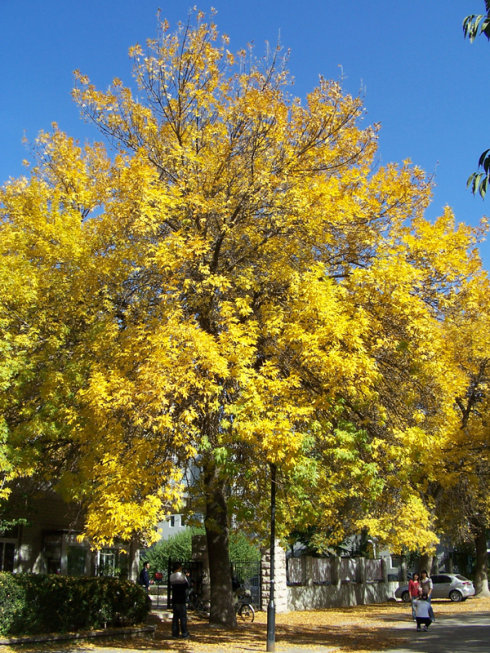
Control of ash shoot tip borer:
1. During the adult occurrence period, mobilize the masses to capture and kill them in the morning and evening.
2. Cut off egg-laying branch tips and branch tips damaged by larvae.
3. Before mature larvae enter the soil, release chickens and ducks in the woodland to peck and eat them.
4. When adults occur, spray 90% trichlorfon or 80% dimethoate each at 1000 times liquid.
5. During the larval damage period, spray 25% chlorbenzuron No. 3 at 1000 times liquid or spray 25% moth-aphid net wettable powder at 1500-2000 times liquid.
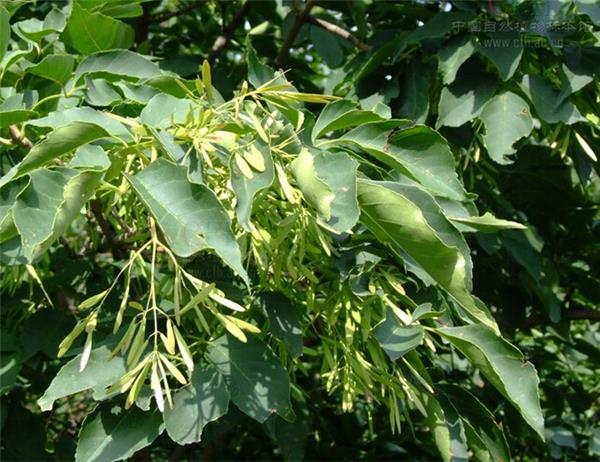
In the prevention and control of pests and diseases of ash seedlings, prevention of pest and disease occurrence should start from winter plowing, soil disinfection, careful selection of improved seeds, seed disinfection, rational fertilization, timely early sowing, and management. When pests and diseases are found, they must be eliminated as early as possible to ensure the healthy growth of ash trees.