How to grow black locust? A detailed guide to the basics of growing black locust
Black locust can be established by sowing, but sowing is generally done in March, when temperatures are low, which favors seed germination, and the seeds must also be pre-germinated before sowing.
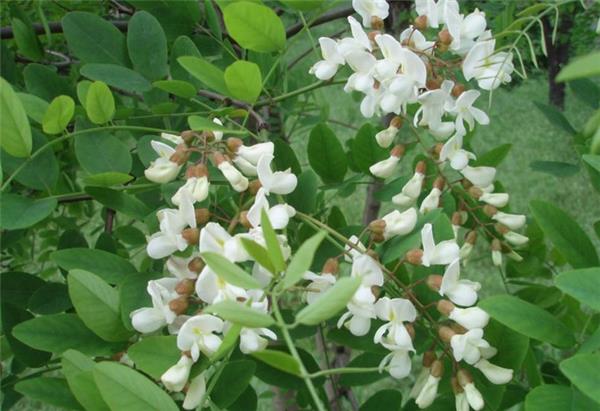
Seed treatment of black locust
Seed soaking: The seed coat of black locust is thick and hard with poor water permeability. To improve the germination rate, shorten the germination period and achieve uniform emergence, the seeds must be treated before sowing. Pour hot water at about 55°C into the container holding the seeds, stirring while pouring, until it is no longer too hot to touch, then soak overnight and scoop out the swollen seeds with a sieve. Treat the remaining unswollen hard seeds another 1 to 2 times with water at about 85°C, until the vast majority of seeds swell. If there are still hard seeds that are very difficult to swell, wrap them in gauze, place them in boiling water for 10 s, lift them out quickly, and then soak them in cold water overnight.
Pre-germination: To make the seeds germinate uniformly and emerge quickly, they should be pre-germinated before sowing. Put the swollen seeds in a bamboo basket, cover with a wet towel or wet cloth, and place in a ventilated, sunny or warm spot. Rinse the seeds with clean water twice a day. After about 5 d, when 1/3 of the seeds have split open and show white, they can be sown.
Sowing: Sowing is generally done in March, when temperatures are low, which favors seed germination. Before sowing, water the containers filled with nutrient soil thoroughly so the soil settles. For containers with a lot of nutrient soil, poke a hole with a stick and sow the pre-germinated seeds in the containers, sowing 3 seeds per container. Then evenly scatter fine silty sand over the containers, covering with soil just enough that the seeds can no longer be seen.
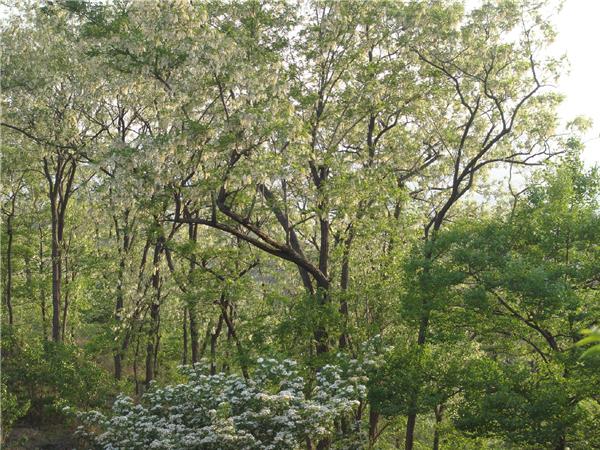
Seedling tending and management of black locust
1. Seedling-stage tending and management: When the seedlings grow to 3 to 4 cm, thin out the diseased and weak seedlings and separate those that are too dense. When the seedlings grow to 10 to 15 cm, carry out final thinning. Leave about 10 seedlings per linear meter; when thinning in double rows, be sure to stagger them. Leave about 12,000 seedlings per mu.
2. After the seedlings emerge fully, irrigate timely and appropriately according to soil moisture, with 2 to 3 irrigations over the year. If the seedlings are not lifted in autumn, irrigate once with antifreeze water before overwintering. In early June, apply a topdressing of urea once, 10 kg per mu. Irrigate once after fertilizing.
3. Control of damping-off at the seedling stage: Spray 0.5% to 1% equal-amount Bordeaux mixture or 1% to 2% ferrous sulfate, once every 10 days. For aphid control, use 40% dimethoate at 800 times dilution. To make the seedlings grow evenly, cut the tops of the saplings once at the end of July. Cut more on large seedlings and less on small seedlings; after cutting, the height should not be less than 80 cm.
4. Lifting seedlings from the nursery: Before lifting, cut the stem 15 to 20 cm above the ground surface, then lift the seedlings with a "U"-shaped seedling-lifting plow. The lifting depth should be such that the main root of the seedling is not less than 18 to 20 cm. Seedlings should be lifted, picked up and selected as you go; seedlings that cannot be planted the same day should be heeled in promptly.
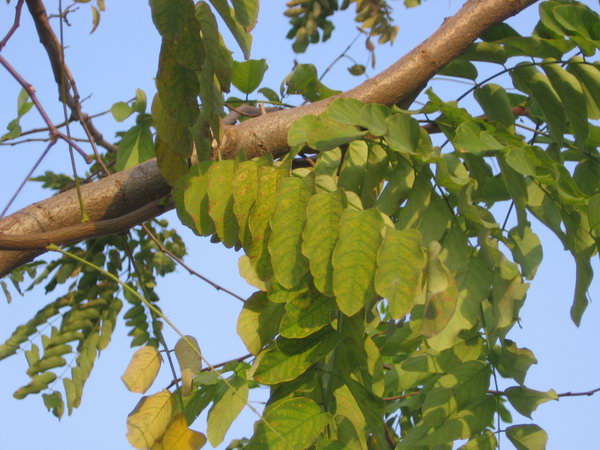
Shaping and pruning of black locust
Shaping: Under natural growth, black locust has strong branching ability and vigorous growth, often forming a broad ovate crown, but most trunks are low and have too many branches, forming "small old trees." Shaping is meant to make the trunk straight and tall. Starting from the winter after planting in the 1st year or the spring of the 2nd year, remove the side branches that compete with the main trunk, until after 5-8 years the trunk height is above 6 m, reaching the standard for civil-use timber.
Pruning: The timing and amount of pruning should be determined according to the purpose of the plantation. For ordinary plantations, pruning should be done after the young stand closes; for four-side greening and shelterbelt strips, in order to cultivate a taller trunk and prevent excessive shading, appropriate pruning should be carried out within the first 3 years. For black locust below 2 years old, the main trunk is relatively low, so generally select and retain vigorous, upright branches as the main trunk and remove the other branches as appropriate. After pruning the trunk to a certain height according to the crown-to-trunk ratio, remove the thick and strong competitive branches, water sprouts, upright branches in the upper crown, and some overly dense side branches, drooping branches and dead branches.
Pruning of sprouts: After pruning, the vigorous growing branches on the main trunk or main side branches should be pinched back or their tips cut. New buds and sprouts emerging at the base of the trunk where branches were removed and at the top of the main trunk that was headed back in winter should all be cut off early. Pruning should be done in summer, preferably from early June to early July, which has the advantages of small wounds and fast healing, and generally no longer triggers the mass sprouting of branches, which is beneficial to the growth of young trees.
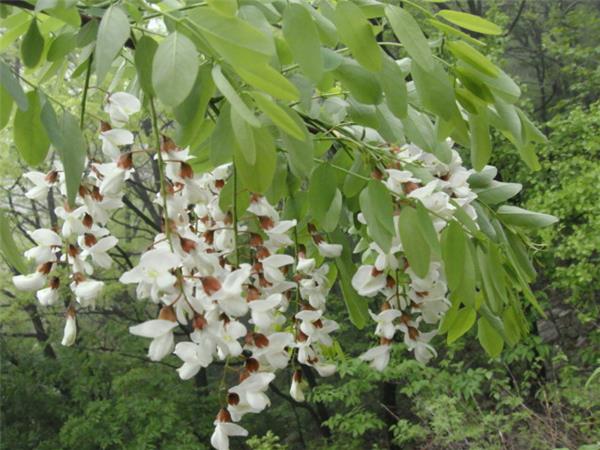
Finally, a reminder: black locust likes light and prefers a warm, humid climate. It grows well in places with an annual average temperature of 8 to 14°C and annual precipitation of 500 to 900 mm, so to ensure its healthy growth, we should also pay more attention to these conditions.