How to Grow Pothos? The Big Reveal of Pothos Growing Methods
How to grow pothos - through discussing pothos growing methods, we learn from one another, and that way the pothos grows beautifully. Through growing pothos, we can also make many friends.
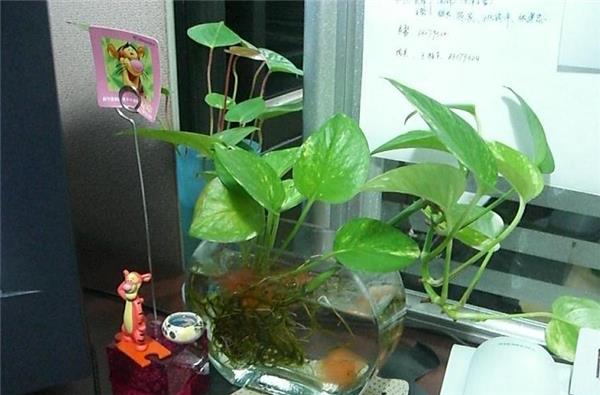
I. How to Grow Pothos
1. Pothos grows best in loose, organic-rich, slightly acidic to neutral sandy loam. Repot once every three years. Pothos is a shade-loving plant that dislikes direct sunlight and prefers diffused light; it is fairly shade-tolerant. It grows and develops best when it receives four hours of diffused light.
2. Propagate by cuttings or by layering the stems. Choose a vigorous pothos vine and cut it into sections of two nodes each, taking care not to damage the aerial roots, then insert them into plain sand or coal cinders to a depth of 1/3 of the cutting. Water thoroughly and place in a shaded spot. Spray with Xin Gao Zhi Mo (a new high-fat film) to retain moisture; the survival rate is over 90%.
3. Pothos likes fairly high air humidity and a moist environment. Midsummer is the peak growing season for pothos; you can mist the aerial roots and leaf surfaces several times a day. This washes dust off the leaves, helps the pothos breathe, keeps the foliage emerald green, lowers leaf surface temperature, raises the humidity of the microclimate, and helps the leaves grow better. For fertilizing pothos, use mainly nitrogen fertilizer with potassium as a supplement. Spray with Xin Gao Zhi Mo to retain fertilizer and moisture. In winter, when room temperature is low and the pothos is dormant, water less and just keep the potting soil from drying out completely.
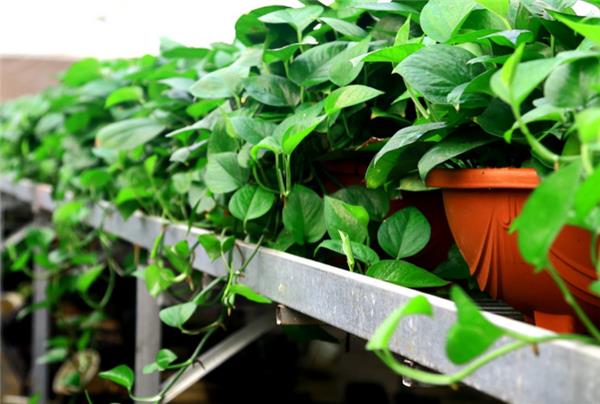
4. The most suitable growing temperature for pothos is 20°C-28°C during the day and 15°C-18°C at night. In winter, as long as the indoor temperature does not drop below 10°C, pothos can overwinter safely; if the temperature falls below 5, it easily loses leaves, which affects growth. During the growing season, spray Zhuang Jing Ling (a stem-strengthening agent) at the right time to make the stems thick and strong, the leaves plump, the foliage fresh and tender, and the plant lush.
5. Shaping and pruning. Plant 4-5 plants per pot, or insert 4-5 cuttings directly, and set a coir pole in the middle of the pot so the pothos can twine upward. Do shaping and pruning in spring. When the stems have covered the coir pole and the tips extend about 20 cm beyond it, cut 40 cm off the stem tips of 2-3 of the plants. After the cut stems sprout new buds and leaves, cut back the stem tips of the remaining plants. For potted plants that have lost all their leaves, or the lower half of their leaves, due to winter cold or other reasons, cut half of the stems back by 1/2 and the other half back by 2/3 or 3/4, so the cut points are at staggered heights; the new leaves that grow below the cuts will then quickly cover the coir pole.
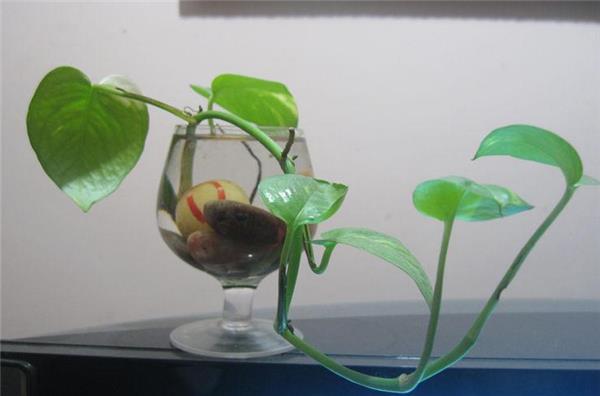
II. What Are the Benefits of Growing Pothos?
Placing pothos in the bathroom absorbs foul odors very well
Growing pothos at home has many benefits, mainly its ornamental value, removing odors, and absorbing harmful gases such as formaldehyde.
First, because its leaves are delicate and lovely and its stems slender and soft, pothos is highly ornamental and can add vitality and energy to a room, making it an excellent indoor plant decoration. Besides its role in ornament and beautifying the environment, pothos is also good at absorbing indoor formaldehyde; its trailing vines hang down naturally, effectively purifying the air and absorbing most of the formaldehyde, benzene and other harmful gases indoors.
In addition, pothos has earned the title of odor absorber. Because pothos has well-developed aerial roots, it has a strong ability to absorb cooking fumes, detergent smells and other odors produced in family life, so many families place their pothos in the bathroom to purify the air.
Beyond these benefits, growing plants can also effectively enhance the mood and character of family members, bringing more shared enjoyment to family life.
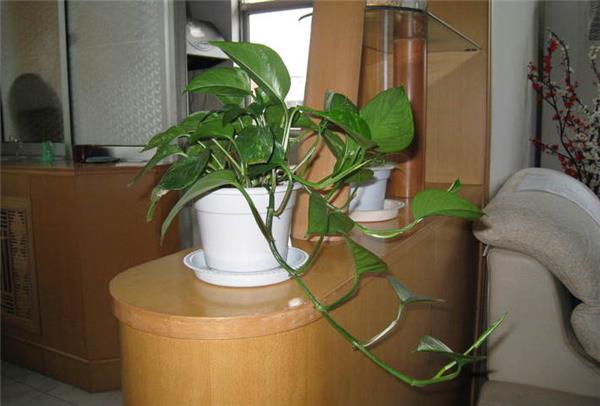
The above answers the question of how to grow pothos. Of course, you can also combine your own growing experience with what is introduced here to make your pothos cultivation more scientific.