What are the differences in planting techniques for American red maple in different seasons?
Because American red maple has relatively strong vitality and adaptability, it can be planted in both spring and winter, but the technical requirements for planting differ from season to season.
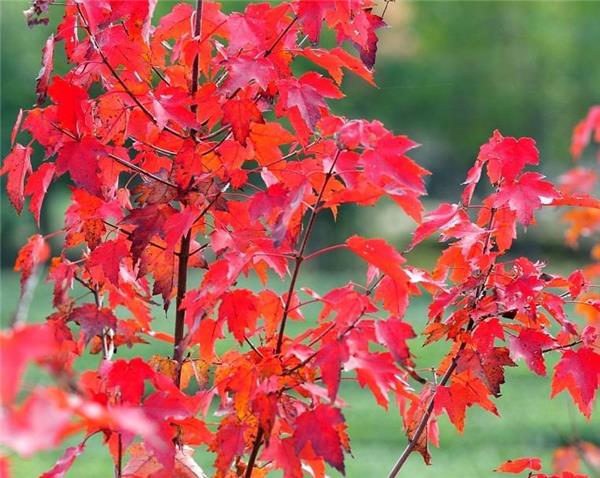
Spring planting techniques for American red maple
Preparing the land: this includes deep plowing and fine rotary tilling. If conditions allow, organic fertilizer can be applied reasonably. Pig manure is applied at 2 cubic m per mu before land preparation.
Planting: then plant at a reasonable spacing between plants and rows. For planting depth, it is recommended that the ground surface be level with the graft union. However, for seedlings with a graft union above 10 cm, it is recommended that the planting depth be level with the original soil line. Then firm the soil by stepping on it and water thoroughly. On the second day, check whether the seedlings are standing upright and promptly straighten all of them. On the third day, water again. After that, normal management can begin.
Winter planting techniques for American red maple
Heeling in: if the local temperature is below minus 3°C, it is best not to plant cuttings during this period and to heel them in instead. The heeling-in method is: dig a pit 30 cm deep, place the small seedlings inside, fill with sand, and then water. After that, use leaves, dry grass or other frost protection measures to keep them warm. The advantage is air permeability, and the covering depth is about 30 cm.
Field planting: the planting site needs to be turned over and the seedbed leveled. After planting, water thoroughly with a heavy watering (flood irrigation), then check whether the small seedlings have exposed roots; if roots are exposed, cover them promptly and firmly with soil. According to local temperature changes, cover the small seedlings completely with soil. After the following spring when the temperature warms up, promptly remove the soil covering the small seedlings so they can grow well.
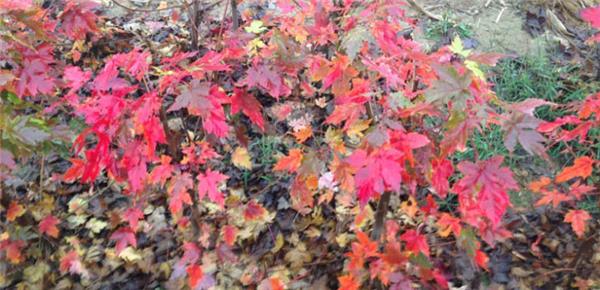
Seedling-stage management of American red maple
1. After American red maple seedlings emerge, their early growth is relatively slow and their resistance is poor, so they should be sprayed with water frequently to maintain soil moisture, and weeds should be removed promptly. When hoeing weeds, cultivate the soil promptly and build up as much soil as possible to prevent lodging.
2. When the seedlings reach 5 cm in height, thin them to a set stand, generally after thorough watering, removing weak, diseased and small seedlings at a spacing of 10-15 cm between plants, keeping the seedlings robust and uniform. In places where seedlings are missing, choose a rainy day to transplant replacement seedlings with soil balls.
3. When American red maple seedlings grow to a height of 10-20 cm, they can be divided and transplanted. They can be planted directly in the nursery, or divided into nutrient pots or forest seedling plug trays.
4. In early June, apply urea as a top dressing together with watering, at 15 kg per mu; in mid-July, apply another top dressing of urea at 10-15 kg per mu, and appropriately control water later. If pests such as slug moths are found, spray 2.5% deltamethrin 4000-fold solution for control.
5. In the same year, American red maple seedlings can reach 0.6-1 m in height, and in the following spring they can be divided and transplanted.
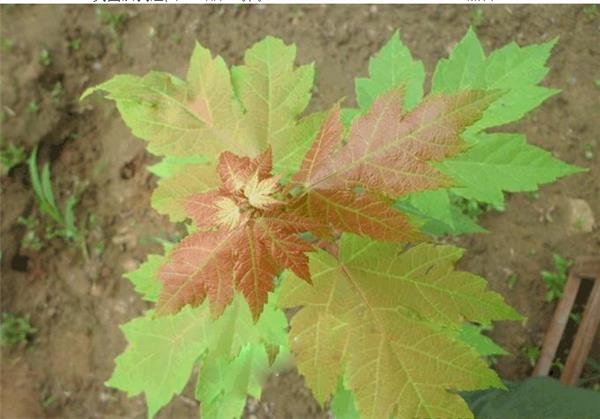
Pest and disease control techniques for American red maple
The main insect pest of American red maple in spring is a small beetle. This beetle hides by day and comes out at night; no trace of it can be seen during the day, and it only comes out at night to harm the seedlings. This pest has a certain regional limitation and may not exist in other areas.
When the insect pest occurs, many small sieve-like holes eaten by the insects appear on the leaf surface, accompanied by leaf crinkling and yellowing. I am not clear what species this insect is; by eye it should be a type of scarab beetle, but it is extremely easy to kill. Almost any type of insecticide can eliminate it, and this insect is highly seasonal, appearing only once a year and lasting about ten days.
For this pest, prevention should be the main approach, and its prevention and elimination are also very simple: just spray pesticide once after 2 p.m. For those already damaged by the pest and showing leaf crinkling and yellowing, it is recommended to use some foliar fertilizer with a leaf-unfolding effect together with the pesticide spray. Prevention can also be done by applying pesticide together with the spring bud-breaking irrigation, so that the seedlings absorb the pesticide and the pest dies after eating any part of the seedling.
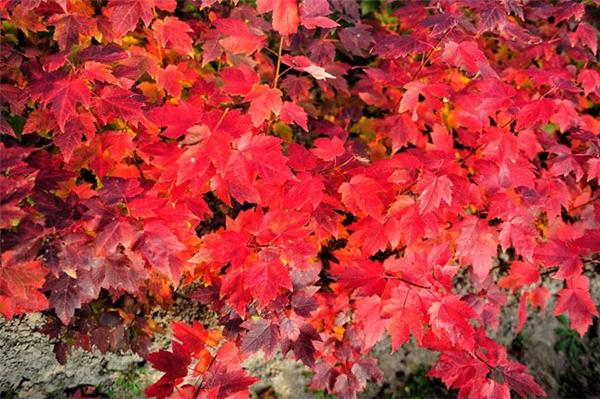
Finally, everyone should also be reminded that although evaporation is low in winter and the water requirement of American red maple is relatively small, this affects the cold resistance of American red maple and its growth and development the following year. Therefore, in early November, newly planted American red maple should be watered once, that is, "winter watering," to ensure the normal growth of American red maple.