What to Do When a Rubber Plant Drops Its Leaves? Cause Analysis and Solutions
To add a little charm to the home, people often keep some flowers and plants indoors, and the rubber plant (Ficus elastica) becomes their choice. Although the rubber plant does not need much careful attention, it can still run into problems. So, what should you do when a rubber plant drops its leaves?
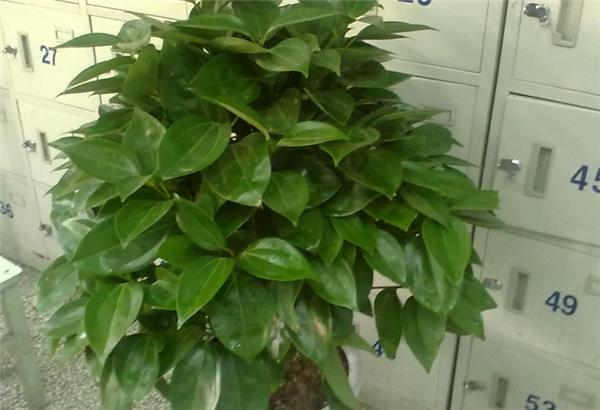
1. What to Do When a Rubber Plant Drops Yellow Leaves
Unlike other plants, the rubber plant tolerates moisture but not cold. Leaf drop in rubber plants generally occurs in summer and winter. In winter, the rubber plant should be moved indoors to prevent frost damage, preferably onto an enclosed balcony, so it is kept as far as possible from the biting cold. In summer, move the rubber plant outside so it can absorb more sunlight and avoid root rot caused by air conditioning blowing on it all day. If your rubber plant drops yellow leaves, check whether either of these two points applies. If not, then it is time to water and fertilize the rubber plant, and if necessary, replace the soil to prevent bacteria in the soil from contaminating the plant a second time.
When a rubber plant drops yellow leaves, it means the tree has a problem absorbing nutrients. Check whether the roots have rotted. Once the roots are affected, replace the soil promptly and also cut off the rotted roots. From then on, treat the rubber plant well, loosening the soil and watering it at intervals, preferably about once every half month. At the same time, remove all the yellow leaves from the rubber plant and prune back some of the stems and leaves. For fertilizing, it is best to use the phosphorus used for fertilizing crops. A rubber plant that has recovered needs plenty of ventilation, a suitable temperature and sufficient light. In winter, it is best to place it on a balcony with the glass closed. Keeping the rubber plant well supplied with fertilizer and water is the most crucial point in growing it. A growing rubber plant needs repotting every year, and as its roots grow larger, the pot must get bigger each year too. After 6 years of growth, it can be repotted once every three years, with the exact timing depending on how fast the rubber plant grows.
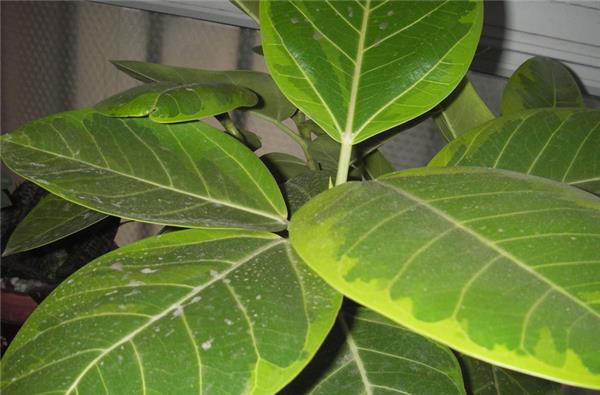
While purifying secondhand smoke from the air, the rubber plant can also purify dust in the air. In enclosed home spaces where the environment is generally poor, the rubber plant can be said to render great service. Treat the rubber plant you grow as well as possible and fertilize it more. In addition, pruning the rubber plant also has its finer points. When pruning its branches and leaves, be careful not to cut off the topmost leaves. The branches and leaves cut from around the sides can also be used for cuttings; rubber plant cuttings are extremely vigorous, and with just a little care, these branches will all survive. After pruning, the rubber plant needs fewer nutrients, so do not rush to water and fertilize; wait until new branches and leaves grow at the pruned spots before fertilizing.
2. Exploring the Causes of Yellow Leaf Drop in Rubber Plants
1. Insufficient light
Insufficient light is one of the causes of leaf drop in rubber plants. The rubber plant is a sun-loving, shade-tolerant plant. Leaving it in a dark place for a long time where it cannot get sunlight easily causes leaf drop. Place the rubber plant in a spot with plenty of sunlight and keep good light levels; in winter, it is best if it can get sunlight all day long.
2. Temperature too low
Too low a temperature is also a cause of leaf drop in rubber plants. The rubber plant likes high temperatures, high humidity and plenty of sunlight, and its suitable growing temperature is 20-25°C. Especially in winter, once the temperature falls below 10°C, the rubber plant will generally begin to drop its leaves. At this point, move the rubber plant indoors or to some other warmer place to grow it, but be careful that it still gets sunlight.
3. Improper watering
Watering the rubber plant too often, or not watering it for a long time, can both cause leaf drop. During its growing period, the rubber plant must be watered frequently, especially in the hot midsummer season, when, because of the high evaporation, it needs not only watering at the roots but also frequent spraying of the leaves. However, if the potting soil is too wet, the roots rot easily, so you must wait until the potting soil is dry before watering again.
4. Pest infestation
Rubber plants sometimes also suffer from pest problems. Red spider mites on the leaves and scale insects on the branches and leaves can both cause leaf drop in rubber plants. When a rubber plant drops its leaves, check whether it is a pest problem and deal with it promptly.
The above explores the solutions and causes for leaf drop in rubber plants, and we now have corresponding measures for it. So, has learning about leaf drop in rubber plants made you more practiced at growing them?
We now have corresponding measures for leaf drop in rubber plants. So, has learning about leaf drop in rubber plants made you more practiced at growing them?