How to prune a rubber plant (Ficus elastica)? A detailed guide to pruning methods
The rubber plant is a tough plant; even with less-than-ideal care, it can still grow well, so many people choose the rubber plant as their home decor plant for this very reason. However, the rubber plant needs pruning, so how should the rubber plant be pruned?
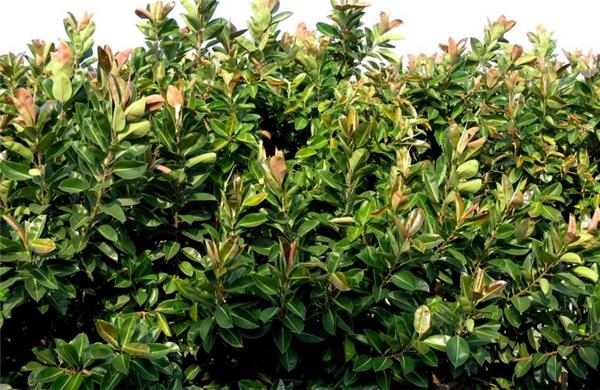
I. Pruning the rubber plant
The rubber plant is not cold-tolerant; it grows fastest at a temperature of 30°C and is not afraid of summer heat. In winter, the room temperature should be kept above 15°C; below 10°C it will suffer frost damage. It likes sunlight and is not shade-tolerant; indoor display should not exceed 7 days, otherwise the internodes will elongate, the leaves will droop, and the tender branches will also wither. It requires loose, fertile humus soil; it grows poorly in cat soil, can tolerate mild alkalinity and slight acidity, is not drought-tolerant, and grows normally in dry air.
In order to control the growth rate of the rubber plant, do not start by putting it in a large pot; change the soil once a year, cut off the surrounding roots, and still plant it in the original flower pot; after 2-3 years, move it to a flower pot one size larger.
The rubber plant likes plenty of water and fertilizer; it will not rot its roots because of too much water, nor burn its roots because of too much fertilizer. However, too much fertilizer and water will cause the branches to grow excessively; if the winter room temperature is relatively low, it will suffer frost damage, and the plant shape will also be relatively loose, so the amount of watering should be controlled; during the growing season, water alternately dry and wet, and in winter water thoroughly after the soil dries out. When potting, if you can get horse hoof pieces and apply them to the bottom of the pot or around it, then there is no need for additional fertilizer. In winter, place it near a south-facing window to get more sunlight.
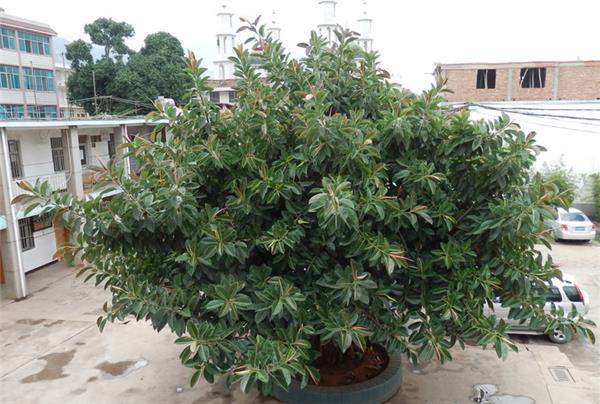
The rubber plant's terminal buds have strong sprouting ability, while the lateral buds have weak sprouting ability. If it is not pruned, the terminal buds can sprout continuously, causing the main branch to keep lengthening, while the axillary buds remain dormant, cannot send out lateral branches, and therefore cannot form a rounded crown, instead growing into a single bare stem, which is quite unattractive. Therefore, when the cutting seedling grows to about 50 cm, the upper branch tips should be cut off, and the retained stem height is best at 60 cm. After topping, the axillary buds below will soon sprout. If the main trunk is thick and strong, 5-6 lateral branches may sprout at the same time, often appearing too dense; it is best to keep only the lateral branches extending in three different directions, cut off the excess lateral branches, and let the 3 remaining lateral branches form the backbone branches of the tree body, that is, the lateral main branches. After the lateral main branches grow for 1-2 years, their length can reach 60-80 cm, and they should be shortened in time, with the retained branch length being 40-60 cm; in the same way, leave 3 secondary lateral branches at their tips, remove the excess axillary buds, thereby forming the second tier of backbone branches, and thus forming the basic tree shape of "three forks and nine tops."
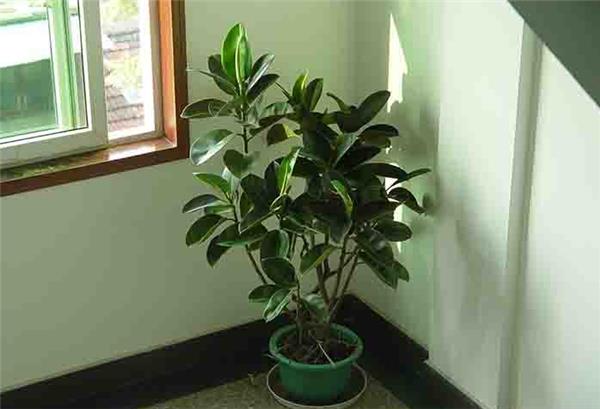
II. Pruning season for the rubber plant
Pruning the rubber plant should pay attention to "prune branches in winter, control laterals in summer." That is, in winter, carry out heavy pruning for strong trees and light pruning for weak trees, focusing on removing the upright, strong competitive branches from the base. For rubber plant pruning in summer, carry out heavy control of strong vigorous branches, control the strong and keep the weak, adjust the tree vigor to be balanced, and grasp the principles of cutting back strong laterals, heavy pruning of vigorous branches, light pruning of weak branches, and keeping more small branches, so as to achieve the pruning goals of highlighting the main trunk and promoting faster tree growth.
III. Pruning height for the rubber plant
The pruning cut of the rubber plant should be smooth, and cracking must be strictly prevented. The stubble height is best at 1 cm-2 cm. Too high or too low will affect wound healing and tree growth. The pruning season for the rubber plant is best in early spring, late autumn, and winter. Early spring is best before the sap flows. If pruning is done when the tree is sprouting, the tree body's water transpiration is fast, water is lost, and nutrients are consumed in large amounts, which is not conducive to tree growth. If pruning the rubber plant in summer, be careful not to prune branches on cloudy and rainy days, so as to avoid the wounds soaking in water and becoming infected with disease.
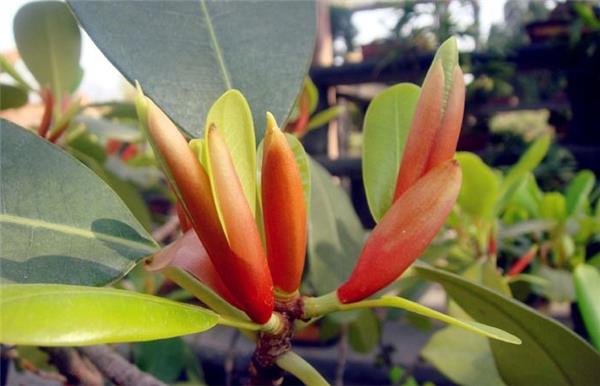
The above has introduced the rubber plant, a common plant. We have gained an understanding of rubber plant pruning and can be more calm and confident in cultivating the rubber plant. For busier friends, if they want a plant for decoration, the rubber plant is a good choice.