How to care for a bromeliad (Guzmania) and how to fix rot
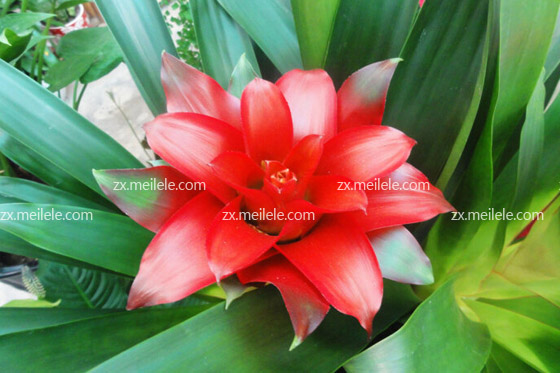
Red bromeliad, also known as bromeliad, is an indoor ornamental flower for winter and spring, evergreen all year round, with beautiful and varied inflorescences and rich colors. Commonly cultivated varieties include bright red, pink, golden yellow, and rose red. Because the bromeliad's flowering period is relatively long, many people keep and grow it at home. For novice plants, their cultivation methods are all different. So, how do you care for a red bromeliad and what should you do if it rots? Today, everyone, let's join the editor and find out.
Temperature for growing a bromeliad (Guzmania)
The bromeliad is a plant that likes a warm and humid environment. Its suitable growing temperature is 21-28°C during the day and 18-21°C at night. But its maximum temperature cannot exceed 35°C, because high temperatures are very unfavorable for its growth temperature, and when it is below 10°C, its growth rate will become slow. Leaves or bracts turn red, fade to white, and so on.
Light for growing a bromeliad (Guzmania)
In summer, the bromeliad should be placed under tree shade and must not be exposed to the sun. In winter, it should maintain at least 4-5 hours of light every day. If it is cloudy, then light can be used instead of sunlight for lighting. Generally, the light for a bromeliad is best at 18000-25000 lux. When the light is too strong, the leaves are easily sunburned, and when it is too weak, growth will be poor.
Soil for growing a bromeliad (Guzmania)
The bromeliad likes to grow in loose, fertile, humus soil. If you are cultivating it at home, you can choose 2 parts peat soil mixed with 1 part fine sand to make a culture soil for growing it. If it is a flower bought at a flower shop, then there is no need to change the soil.
Fertilizing a bromeliad (Guzmania)
The bromeliad's flowering period is in winter, so it needs enough fertilizer. Generally, apply a thin organic liquid fertilizer once a week. For example, soaked liquid of bean cake or sesame paste residue (a concentration of 20% is suitable), or soybean soaking liquid or fermented rice washing water can also be used.
Watering a bromeliad (Guzmania)
The bromeliad is a plant that relatively likes a humid environment, so in normal times its pot soil should be kept moist. On cloudy and rainy days, there is no need to water it. When growing it at home, it is best to use water that has been left to stand, and do not directly use tap water for watering. The bromeliad is a flower that can be enjoyed both for its flowers and its leaves. It is best to spray clean water on the leaf surface once a day to remove dust, make the leaf color bright, and at the same time it also helps photosynthesis and promotes robust growth of the plant.
What to do if the bromeliad (Guzmania) rots
Generally, bromeliads rotting is mostly prone to happen after they have bloomed. This situation is generally quite normal. At this time, the flower stem should be cut off in time, leaving the green leaves to continue normal cultivation, because several small shoots will sprout from its base. Wait until the small shoots grow a little bigger and have several roots, then they can be separated from the mother plant and planted on their own. The remaining small shoots continue to be cultivated. This is the propagation method.
Summary: The above is the related information the editor brought to everyone today on how to care for a bromeliad and what to do if it rots. After reading the editor's introduction, I believe everyone has a certain understanding of the cultivation method of the bromeliad. The bromeliad, also known as pineapple flower, is an indoor ornamental flower for winter and spring, evergreen all year round, with beautiful and varied inflorescences and rich colors. Commonly cultivated varieties include bright red, pink, golden yellow, and rose red. Because its flowering period is relatively long, it is very suitable for home cultivation.