How to Propagate a Rubber Plant? A Detailed Guide to Propagation Methods
Many plant enthusiasts want to know what the propagation methods for the rubber plant are. Understanding the propagation methods of the rubber plant helps us grow it, because understanding makes the process more scientific.
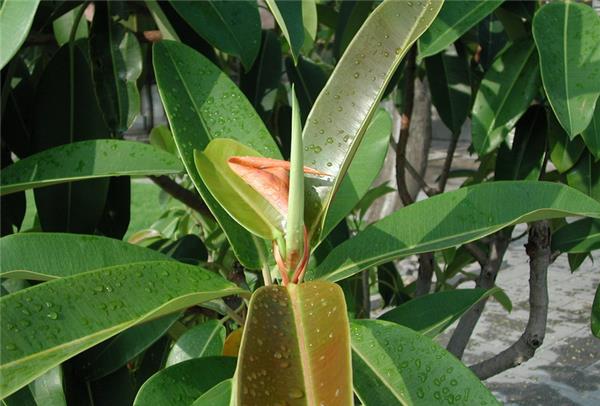
I. Propagation Methods for the Rubber Plant
The propagation methods for the rubber plant are generally divided into two types: cutting propagation and air layering propagation.
Rubber Plant Cutting Propagation
Rubber plant cutting propagation is simple to carry out, roots very easily, and grows quickly. The cutting time is in late spring and early summer, and it can be combined with pruning. For the cuttings, one-year-old semi-lignified middle branches are mostly used. After the cuttings are taken, to prevent too much milky sap from flowing out of the cut and affecting survival, the wound should be sealed promptly with clay or plant ash. The length of the cutting is based on retaining 3 buds; cut off the lower leaf, bring the upper two leaves together, and tie them with thin plastic cord to reduce leaf evaporation. Insert the cuttings in a cutting bed with plain sand or vermiculite as the substrate. After insertion, keep the cutting bed at fairly high humidity, but do not let it become waterlogged; the suitable temperature is 18-25°C. Sprinkle water on the ground frequently to increase air humidity, and do a good job of shading and ventilation. Roots will form in about 2-3 weeks. After potting, place it in a slightly shaded spot, and gradually increase light once new buds sprout.
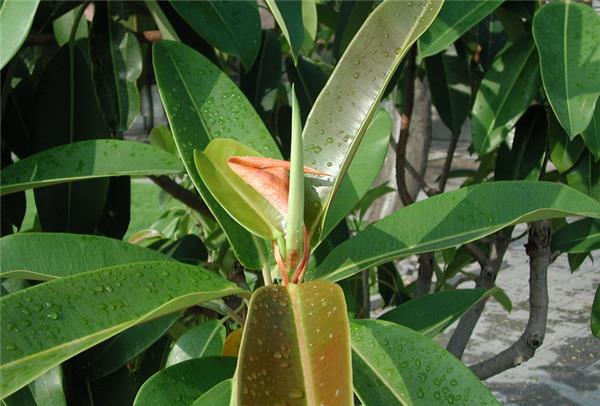
Rubber Plant Air Layering Propagation
For home growing, air layering is relatively convenient and has a fairly high success rate. Layering is generally done in June. Choose a rubber plant branch that is 2 years old, of appropriate size, well developed, and with firm tissue. At the part where soil will be wrapped, make a light ring girdle about 1 cm wide, and apply 30-50 ppm naphthaleneacetic acid solution. Use moist soil or a moss mixture or fully water-absorbed vermiculite to wrap the girdled part, then bind it on the outside with plastic film, tie the lower end tightly, and leave an opening at the upper end to allow ventilation and watering. Pay attention to routine care; once roots have formed, it can be cut off and potted for growing.
II. Growth Habits of the Rubber Plant
The rubber plant likes a warm, humid environment with limited sunlight, and it can also tolerate slight shade, but it is not cold tolerant. It requires fertile, loose soil, and grows well in neutral or slightly acidic soil. When potting, it is best to use a prepared soil made of leaf mold, grass ash soil, plus about 1/4 river sand and a large amount of base fertilizer. Keep the soil moist normally, and apply a dilute liquid fertilizer once every 15-20 days.
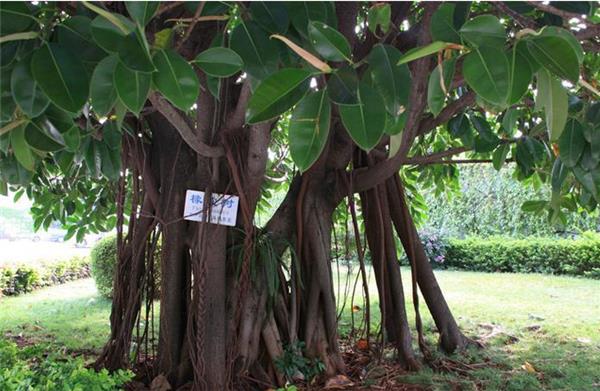
In summer and low-temperature seasons, the rubber plant grows relatively quickly and should be given more water, but avoid water accumulation in the pot. After autumn begins, gradually reduce fertilizing and watering to promote full plant growth and help it overwinter. Because the rubber plant likes sunlight, it should be placed outdoors in a sunny spot from spring to autumn; if left in a shaded place for a long time, the leaves are likely to turn yellow and drop. It likes sunlight, but is also fairly shade tolerant. When watering, often use overnight tea; the whole plant should be misted frequently, and the leaves should often be wiped clean with a damp cloth, which benefits photosynthesis.
Because the rubber plant is not cold tolerant, in summer it must be moved outdoors to a sunny spot for care, maintaining room temperature above 10°C, and the minimum temperature should not fall below 5°C; if the temperature is too low and the potting soil is wet, the leaves will turn black and drop and the roots will rot, and the whole plant may even die. From the end of April to early May of the following year, move it to a courtyard or balcony for care. In southern regions, note that when moving it from indoors to outdoors during seasonal changes, it must not immediately receive strong direct sunlight, that is, the changes in light and temperature should not be too great. When room temperature is low in summer, water more to keep the potting soil slightly moist.
The rubber plant has glossy leaves, is verdant and pleasant, and its plant is short and sturdy, with a strong presence, making it suitable for placement on a balcony to green the environment.
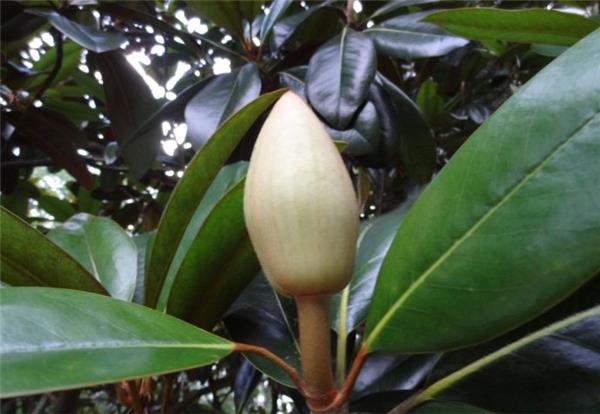
The above has provided an understanding of the propagation methods of the rubber plant, and also examined its growth habits. These all help us in growing the rubber plant.