The Language of Hyacinths and a Detailed Explanation of the Four Key Points of Cultivation
Different plants carry different meanings, and the conditions they need for cultivation are all different; the same is true of hyacinths. The flower colors of hyacinths are extremely rich, just like those of roses. So next, let's take a look together with the editor at the language of hyacinths, as well as the conditions to pay attention to during the hyacinth cultivation process.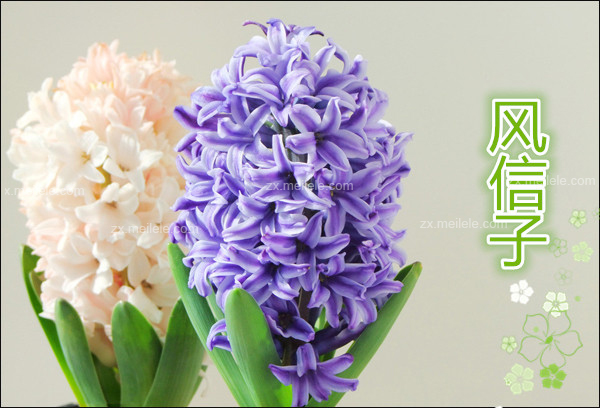
The Language of Hyacinths
Hyacinth flower language: victory, competition, joy, affection, happiness, deep passion, admiration, stubbornness, life, pride, eternal remembrance.
Purple hyacinth: sorrow, jealousy, melancholic love (if you receive my love, you will surely be happy), apology (I am sorry, please forgive me), regret.
White hyacinth: tranquility, quiet love (love one dares not reveal), secret love.
Light purple hyacinth: gentle temperament, romantic feelings. Sorrow.
Blue hyacinth: constancy, chastity, as happy as if seeing you, noble and intense.
Pink hyacinth: admiration, romance.
Red hyacinth: thank you, a love that moves me (your love fills my heart).
Dark blue hyacinth: somewhat melancholic because of love.
Yellow hyacinth: happiness, bliss, very happy to be with you.
Peach-red hyacinth: passion.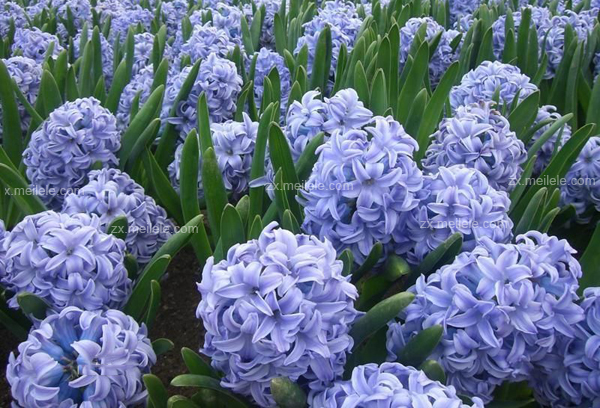
The Four Key Points of Hyacinth Cultivation
1. Bulb Selection
The nutrients a hyacinth needs when flowering mainly come from the nutrients stored in the scale leaves of the bulb. As long as you choose a bulb with an undamaged skin, fleshy scales that are not excessively shriveled, and that is fairly hard, heavy and plump, it will produce abundant and beautiful flowers.
2. Soil Requirements
The hyacinth's requirements for soil are fertile soil, high organic matter content, good granular structure, and a pH level of 6 to 7. Friends who are not sure what to do can prepare a growing medium in the ratio of 5 parts leaf mold : 3 parts garden soil : 1.5 parts coarse sand : 0.5 part bone meal.
Before planting, chemical agents such as formalin can be used; at a soil temperature of 10 to 15°C, apply the agent to the soil surface and immediately cover with plastic film. After 3 days of warm weather, remove the film, let it air for 1 day, then plant, keeping the soil moist.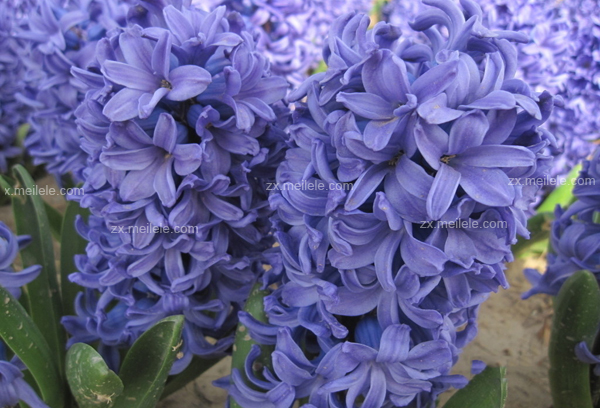
3. Light
A hyacinth needs only above 5000Lx to maintain normal physiological activity. If the light is too weak, it will lead to conditions such as spindly plants, overly long stems, small flower buds, early fading of flowers, and yellowing leaves; provide supplemental light at a distance of about one meter from the hyacinth. But too strong light can also cause scorching of leaves and petals or shorten the flowering period.
4. Temperature and Humidity Regulation
When the temperature is above 35°C, flower bud differentiation will be inhibited, growth will become deformed, and the rate of blind flowers will increase; when the temperature is low, the flower buds will suffer cold damage. Soil humidity should be kept between 60 and 70%; if humidity is too high, root respiration will be inhibited and the roots will easily rot; if humidity is too low, the aboveground parts will wilt and may even die. Air humidity should be kept at around 80%, and humidity can be increased by misting and sprinkling water on the ground, or reduced by measures such as ventilation.
Summary: The above is an introduction to the language of hyacinths, along with a brief introduction to the issues that need attention during the hyacinth cultivation process. Friends who need it can refer to it as relevant. Finally, I wish everyone a happy life every day and good health.
More Information
| What does a white rose mean | What plants protect against computer radiation | Geranium | How to grow and care for azaleas and points to note | Spider plant with golden centers |
| Lavender flowering period | Indoor foliage plants | Boston ivy | How to fold a lily | Effects and uses of mint | How to grow mimosa |
| How to grow succulents | Osmanthus | Effects and uses of gynostemma | Handmade roses | Effects and uses of honeysuckle | Kumquat |