Aspidistra Pictures, Growing Methods and Precautions
Aspidistra is a perennial evergreen herbaceous plant, also known as cast iron plant, with alternate names such as large-leaf evergreen, bamboo-leaf tray, nine-dragon tray, and bamboo-joint stem-extender, belonging to the Liliaceae family and the genus Aspidistra. Aspidistra contains a large amount of chlorophyll and various amino acids and other components beneficial to the human body, and has a special preservative effect, so every year during the Dragon Boat Festival, people use Aspidistra leaves to wrap zongzi. Today, let's enjoy Aspidistra pictures together with the editor, and learn about the Aspidistra growing methods and precautions.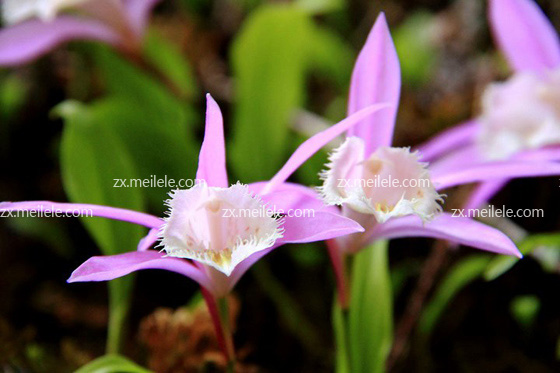
Aspidistra Introduction
Aspidistra is also known as cast iron plant, with alternate names such as large-leaf evergreen, bamboo-leaf tray, nine-dragon tray, and bamboo-joint stem-extender, belonging to the Liliaceae family and the genus Aspidistra. It is a perennial evergreen rhizomatous herbaceous plant. Its rhizome is nearly cylindrical, with a diameter reaching 5 to 10 mm, bearing nodes and scales. Leaves are solitary, spaced 1 to 3 cm apart, oblong-lanceolate, lanceolate to nearly elliptic, 21 to 46 cm long, 8 to 11 cm wide, with acuminate apex, cuneate base, more or less undulate margins, green on both surfaces, sometimes slightly with yellowish-white spots or stripes. The rhizome of Aspidistra can be used as medicine and is a very widely used medicinal material. It can be harvested throughout the year, used dried or fresh. It has the effects of promoting blood circulation and dissipating blood stasis, tonifying deficiency and relieving cough. It helps to treat traumatic injuries, rheumatic muscle and bone pain, lumbago, cough due to lung deficiency, and hemoptysis.
Aspidistra Growing Methods
Propagation: Aspidistra is propagated by division. It can generally be divided in spring when the temperature rises and before new buds sprout, in conjunction with repotting. It is best to carry out division in February or March each year.
Cultivation site: When cultivating Aspidistra, if cultivating in the north, greenhouse ground cultivation should be carried out, while in the south it can be cultivated in the open ground. The cultivation site should receive no less than two hours of direct sunlight per day.
Substrate: The substrate for growing Aspidistra is best chosen as sandy loam rich in humus.
Planting: The planting density is 9 to 12 plants per sq m, and Aspidistra seedlings should be planted at equal spacing.
Watering: Aspidistra prefers moist soil, but during cultivation, do not let the soil become waterlogged, as that easily causes the rhizome of Aspidistra to rot.
Fertilizing: Before planting, apply leaf mold as base fertilizer to Aspidistra at a rate of 2 kg/sq m, and the base fertilizer should be evenly deep-dug into the soil. During the vigorous growth stages in spring, summer and autumn, apply dilute liquid fertilizer once a week to Aspidistra plants, while in winter topdressing should be stopped.
Light: Aspidistra can also grow well in a bright place without direct sunlight. When planting, a shade net can be used to provide shade. In summer and autumn when the temperature is relatively high, do not expose Aspidistra to direct sunlight, otherwise yellow patches that cannot fade easily will appear on the leaves, slowing its growth rate and reducing its ornamental value.
Ventilation: During the vigorous growth period of Aspidistra, keep the growing environment properly ventilated. Since Aspidistra grows slowly in winter, this operation can be omitted at that time.
Temperature: Aspidistra likes warmth and fears severe cold. The ambient temperature for its growth should be maintained between 15 and 25°C, and in winter the temperature must not be lower than 5°C.
Production cycle: From planting new Aspidistra plants to harvesting finished products takes about 6 months. Afterwards, finished products can be harvested successively. After about 3 years, old plants should be renewed, and at that time the clustered Aspidistra can simply be divided and replanted.
Aspidistra Growing Precautions
1. During the growing season, Aspidistra must be watered sufficiently to keep the soil for growing Aspidistra moist, and water should often be sprayed on the leaf surface to increase humidity, so as to facilitate its sprouting and the growth of new leaves. After late autumn, the amount of watering can be appropriately reduced, and in winter no watering is needed.
2. In spring and summer, Aspidistra is in its peak growing season. At this time, fertilizer can be applied regularly once or twice a month to ensure that the leaves of Aspidistra remain clear and bright. It can be cultivated year-round in a bright indoor space, and whether grown indoors or outdoors, Aspidistra must not be placed in direct sunlight. If Aspidistra is exposed to sunlight for a short time, it can also cause leaf scorch.
Summary: The leaves of Aspidistra are upright and neat in shape, and the leaf color is deep green and glossy. It grows vigorously, has strong adaptability, and is extremely shade-tolerant, making it an excellent shade-loving foliage plant for indoor greening and decoration. Aspidistra also has the function of absorbing formaldehyde and freshening the air. It also has a certain absorption effect on carbon dioxide and hydrogen fluoride, and can also absorb a certain amount of dust. Because Aspidistra is relatively shade-tolerant, highly adaptable, and not easily attacked by pests, it is very suitable for arrangement and placement in homes and offices.