Which Vining Vegetables Grow Vertically? Detailed Guide to Planting Considerations and Benefits
Vertical gardening, also known as intensive gardening, is not a new idea, but in recent years it has gained momentum as more ideas about how to grow have emerged. This approach makes a lot of sense, especially for gardeners with limited space or when outdoor gardening is too much to handle.
To successfully “grow vertically,” here are a few points to keep in mind:
Choosing the right crops and cultivars is key; unlike bush-type plants, vines, ramblers and trailing plants easily grow upward from the ground.
If the pot is too small, using a container that can accommodate the adult plant is also key to stunted growth.
It is important to place plants where they do not shade other crops; a wise strategy is to place them away from sun-loving species and shade dwellers.
Watering is also something to consider, and you may have to do it more frequently, because the soil surface of vertically grown plants tends to be more exposed and therefore dries out quickly.
With very few precautions, vertical gardens offer countless benefits.
The Benefits of Vertical Gardening
First and foremost: increased yields. Making the most of space means harvesting more. Maintenance and harvesting of vertically grown plants is also physically easier to reach at higher levels, so bending and kneeling are kept to a minimum.
In addition, because the leaves and fruit are high off the ground, they are less prone to disease; growing upward provides better air circulation, which means plants dry faster after watering, thereby reducing the risk of moisture-loving fungi such as powdery mildew and rust.
Usually, disease symptoms and evidence of pests are also more visible, so they can be addressed early. In addition, when plants do not spread out on the ground, more leaf surface is exposed to sunlight, which can lead to healthier growth.
When it comes time to choose plants for your vertical garden, considering their growth habit is the most important factor affecting success.
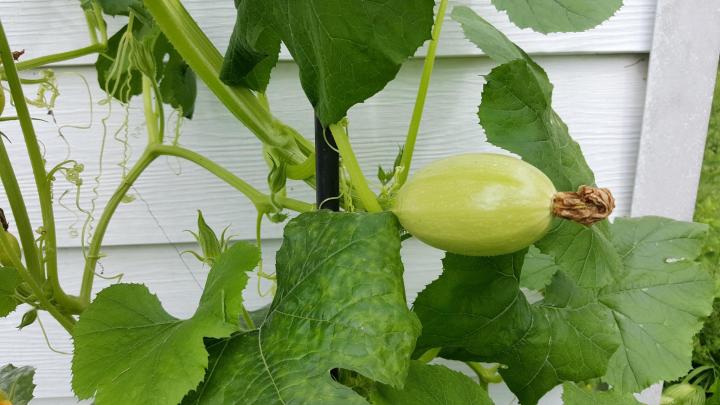
Spaghetti squash growing on a vine.
Recommended Vertical Garden Plants
Crops and varieties that are easy to train on vertical structures include:
Cherry tomatoes: 'sungold', 'black cherry', 'gardener's delight', 'blondkopfchen'
Cucumbers: 'Burpee Hybrid II', 'County Fair 83', 'Dasher 11', 'Saladin'
Green beans: “Romano Italian”, “Meraviglia di Venezia”, “Bacau Gold”
Melons: “Delicious 51”, “Tigger”, “Sleeping Beauty” (muskmelon), “White Wonder”, “Yellow Doll” (watermelon)
Peas: 'Double', 'Sweet Garden', 'Maestro', 'Sugar Snap', 'Super Sugar Snap'
Squash: acorn, Delicata, Yellow Summer, zucchini