When do lilacs generally bloom each year
Before learning how to plant and care for lilacs, let us first look at the different varieties of lilacs and when their flowering periods generally occur.
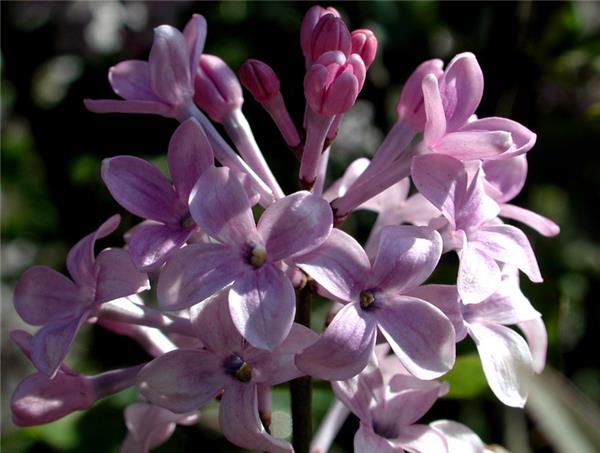
What month do lilacs bloom
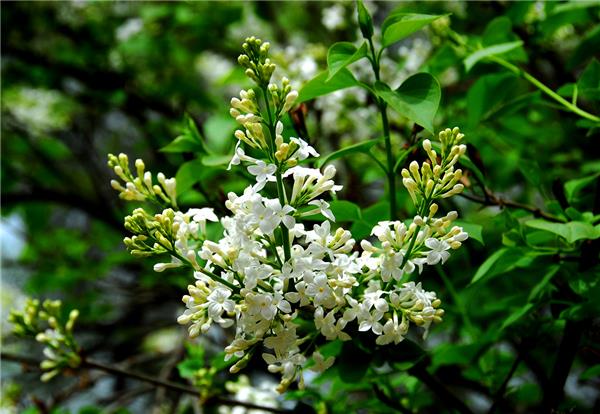
White lilac blooms from April to May.
Blue lilac blooms from April to May.
Small-leaf lilac blooms from late April to early May; and again from late July to early August in autumn.
Purple lilac blooms from April to May, with purple flowers. Amur lilac blooms in June, with white flowers. Four-season lilac blooms from May to October.
For all types of purple lilac, seedlings grown from seed only bloom after 3-4 years; those propagated by cuttings or layering can bloom 2-3 years after rooting.

Grafting propagation methods for lilacs
1. Cleft grafting: generally carried out in early spring before bud break. The scion should be 8 cm to 10 cm long, with 2 pairs of buds, and the lower part of both sides of the scion cut into a slope. Use a 1-2 year old lilac seedling as the rootstock, cut off the top 5 cm to 10 cm above the ground, then split a vertical slit downward from the cut surface of the rootstock, and insert the scion.
2. Bud grafting: choose plump leaf buds from vigorous current-year branches as the scion, and use a 1-2 year old lilac seedling as the rootstock. When grafting, cut off the leaves on the scion, leaving only the leaf stalk, then make a horizontal cut 1 cm above the bud, and from 1 cm to 1.5 cm below the bud make an upward flat cut, removing the xylem inside the bark layer. Make a horizontal cut on the rootstock 5 cm to 10 cm above the ground, then from the middle of the cut make a vertical downward cut about 3 cm long, forming a "T" shape. Then gently peel open the bark, insert the scion into the "T" opening, making sure the scion and rootstock fit tightly together, and finally bind with plastic film strips.
3. Approach grafting: cut a matching surface of the same size on both the lilac scion and the rootstock, and bind the two tightly together. After callus tissue forms at the cut, cut off the top branch of the rootstock 1 cm above the joint surface, and cut off the scion 1 cm below the joint surface, so that they become a new plant.
Notes on growing lilacs
1. During the young stage, do good wind protection work before typhoons arrive. You can use ropes and bamboo poles to secure the trunk of the lilac plant, to reduce the shaking of the lilac plant by typhoons and thereby reduce damage.
2. Each year in July, September and October, weed around the lilac plants and cover the plants with grass, but do not use a hoe to turn the soil, as this would damage the lilac roots. Weeds elsewhere on the forest floor are cut and used as ground cover, and can also serve as green manure, replacing natural vegetation as ground cover. Weeding work continues until the tree canopy closes and can suppress weed growth.
3. When planting 3-4 year old large seedlings, after planting, heavily prune the above-ground branches and trunk, that is, cut the trunk 30 cm above the ground. After cutting the trunk, vigorous branches will quickly grow, making the canopy full, and lush flowers can bloom the following year.
4. Lilacs like sunlight, tolerate slight shade, like moisture, dislike waterlogging, tolerate cold and drought, and generally do not need much watering. They require fertile, well-drained sandy loam. If planted in a shaded environment, the branches become thin, long and weak, the flower clusters short and loose, and the flowers lack luster. If planted on poor, thin soil, although they can still grow, the flowers are few and sparse, and the growth is weak. Therefore, they should be planted in a sunny, fertile place with deep soil.
5. Each spring when the weather is dry, water thoroughly once each when the buds sprout and before and after flowering. Lilacs do not like heavy fertilizer, and too much fertilizer must be avoided, otherwise it easily causes excessive vegetative growth and affects flowering. Generally, applying well-rotted compost once every year or every other year before winter is enough to replenish the nutrients in the soil. Only then will the lilacs bloom normally.
6. Repot every 2-3 years. When repotting, prune the root system, remove some old roots and overly long roots, pick out 1B2 of the old soil, and replace with new growing medium, to promote root development and lush leaves and flowers.

In addition, in terms of watering, light, temperature, pests and diseases, we must also carefully protect and care for lilacs, otherwise it is very likely that we will not be able to enjoy the beautiful figure of lilacs when they bloom, which would be a great pity.