What is white lilac? Detailed introduction to white lilac knowledge
White lilac gets its name because its flowers bloom white; it is like an elegantly plain and pure white maiden in the lilac family. However, white lilac is actually a variety derived from the common purple lilac. Let's get to know this pure little girl in floating white garments.
Introduction to white lilac
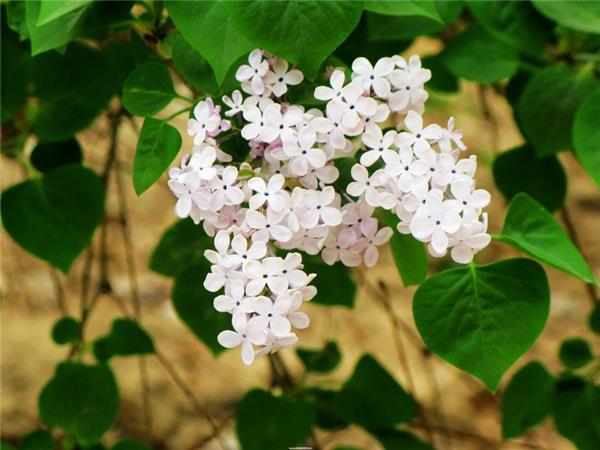
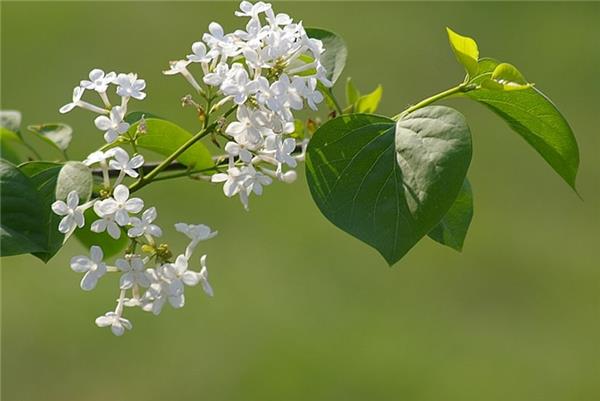
Morphological characteristics: White lilac is a variety of the common purple lilac. Its main differences from the common purple lilac are that its leaves are smaller, the leaf surface has sparse hairs, and the flowers are white. It is a perennial deciduous shrub or small tree, 4-5 m tall. The flowers are white, with single and double forms, four-lobed at the tip, tubular, borne in panicles. The flowering period is April to May.
Growth habits: It likes light, tolerates slight shade, tolerates cold, tolerates drought, and prefers deep, fertile, well-drained soil. White lilac is propagated by cuttings or grafting; seed propagation easily produces variation.
Horticultural uses: White lilac's flowers are dense and pure white, elegantly plain and fragrant, and it is often planted in courtyards for ornament. It can also be used as a cut flower. Lilac has the nickname "flower of heaven," perhaps because of its noble fragrance, and it has been treasured since ancient times. Therefore, the flower language of lilac is also glorious enough to match the nickname "flower of heaven." People born under the blessing of this flower are blessed by the gods and have a glorious life.
White lilac flower language: youthful laughter.
The uses and effects of white lilac
1. When white lilac is used as an ornamental garden plant, it often makes people look up involuntarily and stop to admire it. It is a plant with great ornamental value. At the same time, as a cut flower, it can be preserved for a relatively long time, and its floral fragrance lingers for a long time without dissipating. It is a good choice for giving as a gift, because its flower language is also very good. Secondly, white lilac also has medicinal value. It mainly treats indigestion and improves eyesight. This mainly means treating accumulations and hernia. For external use, it can also treat eye opacity, carbuncles, sores and boils, and tonsillitis.
2. Tracing back, white lilac is actually a traditional Chinese medicine. However, what is traditionally used is medicinal clove. What is generally used to treat illness is medicinal clove, mainly treating hiccups, vomiting, nausea, dysentery, cold pain in the heart and abdomen, hernia, ringworm, etc. The root of medicinal clove has the effect of clearing heat and detoxifying, but it may not necessarily eliminate the problem completely. Its nature and flavor are recorded in the Compendium of Materia Medica as pungent, hot, and toxic; its functions and indications are recorded in the Kaibao Materia Medica as treating wind-heat toxic swelling; the general method of use is external application, decocted in water for fumigation and washing.
White lilac propagation methods
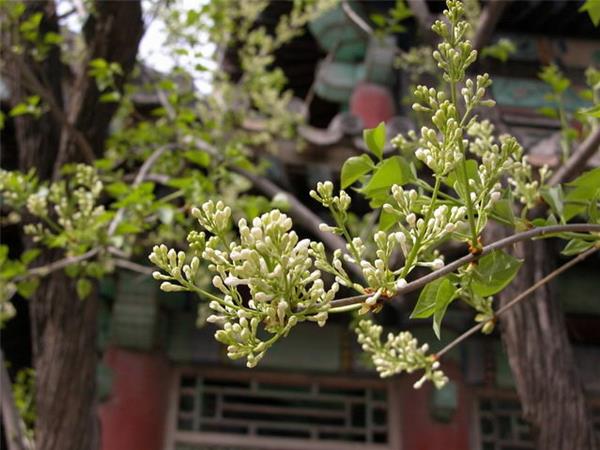
White lilac can be propagated by various methods such as division, layering, grafting, cuttings, and sowing. Generally, sowing and division are more often used.
1. Sowing is carried out in early April. First soak the seeds in hot water at 40-50°C for 1-2 hours, then remove them and mix them with sand in a ratio of one part seeds to two parts sand, place them in a sunny spot, cover with a straw bag or burlap bag, and water frequently to keep the straw bag or burlap bag moist. After about one week, the seeds can germinate, and then they are sown.
2. Division can be done in March or November. Simply separate the clustered stems and branches growing from the base of the mother plant and transplant them separately. Cuttings are best done in autumn.
3. Grafting mostly uses privet or water wax tree as rootstock, using the high grafting method, generally grafting at 120-150 cm above the ground on the rootstock. The grafting buds and scions should be selected from mother plants of excellent varieties. Also be careful to prune off newly sprouted branches and buds from the rootstock at any time, so as to avoid consuming nutrients and causing poor development of the grafting buds and scions, letting the secondary overtake the primary.
4. Layering propagation is best done in February. When layering, thick branches should be ring-barked. After layering succeeds, it can bloom in 2-3 years.
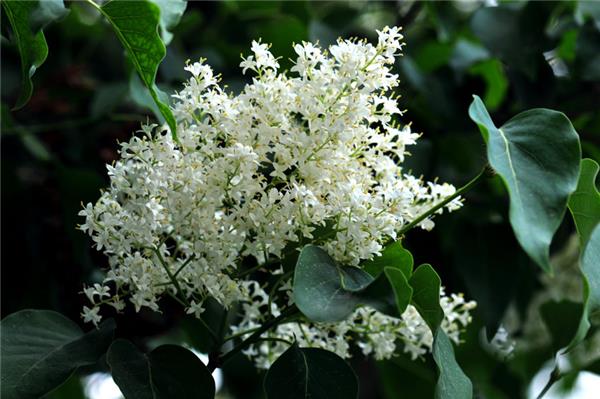
Finally, a reminder: compared with potted white lilac, white lilac is more suitable for planting in the ground, and white lilac grown this way will have fuller flowers and cleaner flower color. When transplanting white lilac, keep as much soil around the roots as possible, as this makes it easier to survive.