Planting and Care Methods for the Chinese Honey Locust Tree and an Analysis of Why It Withers
The Chinese honey locust tree (Gleditsia sinensis) can generally be planted by sowing seed. It is a relatively fast-growing tree species, and its planting and care are relatively simple, but there are many points to note, and it requires care and thoroughness.
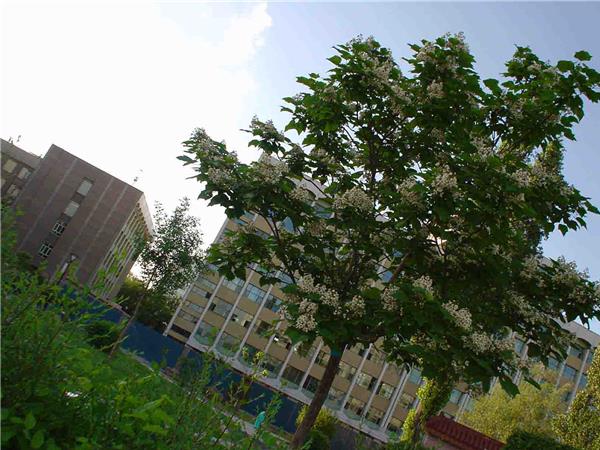
Planting Techniques for the Chinese Honey Locust Tree
Seed collection: Select a vigorous mother tree 30-100 years old, in its full fruiting period, with a straight trunk, fast growth, good development and plump seeds, and collect seeds in mid-to-late October. The harvested fruits should be spread out and sun-dried; once dry, smash or crush the pods, remove the fruit skin, and winnow to obtain clean seed. After the seeds are dried in the shade, put them in bags for dry storage.
Raising seedlings: The seedling bed should be chosen in a place with fertile soil and convenient irrigation, and the land should be carefully prepared. Apply 3000-5000 kg of organic fertilizer per 667 sq m, and build flat beds or raised beds. Use drilling (row sowing), with a row spacing of 20-25 cm, sowing 10-15 seeds per meter of sowing furrow; after sowing, cover with 3-4 cm of soil and keep the soil consistently moist. When the seedlings are about 10 cm tall, thin and finalize them, with a plant spacing of 10-15 cm; in the same year the seedlings can reach 50-100 cm in height. If cultivating 2-year-old large seedlings, transplant them to a new bed at a row and plant spacing of 0.5 m x 0.5 m in late autumn after the leaves fall.
Afforestation: Artificial afforestation of the Chinese honey locust tree is carried out by direct sowing, seedling planting, root-sucker division planting and other methods. Forest land with fewer than 9000 plants (clumps) per hectare should be replanted or newly established.
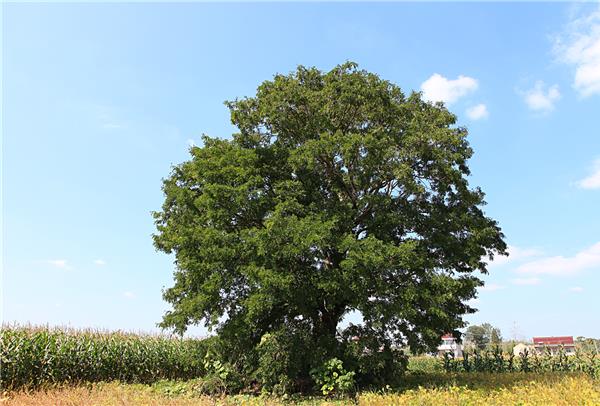
Care Work for the Chinese Honey Locust Tree
Fertilizing: Applying post-harvest fertilizer in good time helps the orchard continue to increase production the following year. This year, affected by the climate, some trees are in poor vigor; if fertilizer is not applied in time, the root system's nutrition cannot keep up, seriously affecting the trees' overwintering and spring root growth. Because the period from harvest to leaf fall is the nitrogen nutrient storage period, and the nitrogen level in this period plays an important role in the differentiation of high-quality flower buds the next year and in whether high yields can be achieved. Therefore, seize the time, the earlier the better, and insist on applying fertilizer well for quality. Deep application in furrows is advocated to improve fertilizer efficiency. If broadcasting on the surface is adopted, watch the weather and apply promptly before or after rain. The main fertilizer is ammonium bicarbonate, and the amount applied depends on the tree and the site, 1-2 jin per tree.
Spraying: To protect the leaves so they have strong photosynthesis, which helps nutrient accumulation. Therefore, according to the dynamics of pests and diseases, strengthen inspection and apply pesticides in good time. Autumn is the peak period when the red-necked longhorn beetle bores into and damages the fruit tree's branches and trunk; once found, hook it out and catch it. At the same time, spray the fruit tree trunk a second time with dimehypo pesticide, to thoroughly eliminate the longhorn beetle damage.
Pruning: The focus of autumn pruning is: remove dead and withered branches, cut off diseased and pest-infested branches, overlapping branches and weak lower branches, and thin out excess upright branches and part of the water sprouts. This not only lays a good foundation for winter pruning, but also improves ventilation and light penetration, reduces nutrient consumption, promotes flower bud differentiation, and makes them robust and plump, creating conditions for more fruit and high yields next year.
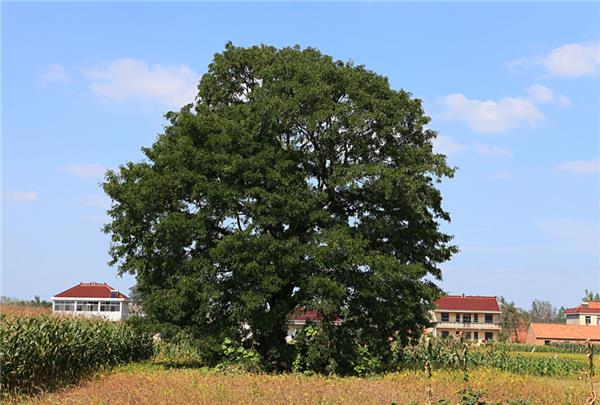
Causes of Withering in the Chinese Honey Locust Tree
1. Poor root growth vigor. The growth of the tree's branches and leaves is less luxuriant than in previous years. This may be because the tree is older and its own ability to absorb water and nutrients is poorer; in addition, the soil structure of the growing site is not loose, and its aeration, water retention and fertilizer retention capacity are poor, resulting in poor root growth vigor. Loosen the soil and tend the tree to enhance soil aeration; the depth of loosening should be such that it does not damage the roots. In addition, water the tree in good time according to its growth to meet the roots' water requirements.
2. Insufficient soil fertility; strengthen soil and fertilizer management.
3. Damage from pests and diseases. For diseases harming the tree's leaves, spray with a 2000-fold dilution of 20% wettable carbendazim powder; for pests harming the tree's leaves, spray with a 1000-fold dilution of 40% omethoate emulsifiable concentrate; for pests harming the tree's branches and trunk, plug the borer holes with cotton balls soaked in a 1000-fold dilution of 80% dichlorvos emulsifiable concentrate, or drill a hole at a 45° downward slant at the damaged site, with a hole diameter of 6-8 mm and a depth of 6 cm, and insert a tree trunk insecticide directly, or cut off the affected branches and burn them.
4. Prune out inner-canopy branches, diseased and pest-infested branches, and dead branches.
5. Growing environment factors. If the air pollution at the tree's growing site is severe, once it rains and forms acid rain, the tree may bloom but bear no fruit, and may even wither.
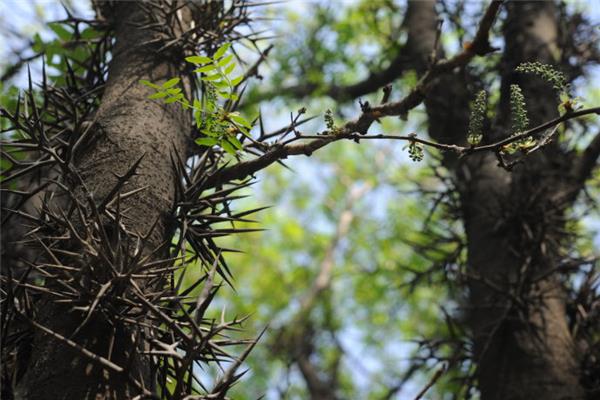
In addition, during the planting and care of the Chinese honey locust tree, we should also loosen the soil for it in good time and keep it moist. After the seedlings emerge, the soil should also be loosened, otherwise it may cause problems such as root rot in the Chinese honey locust tree, preventing it from growing healthily.