How to Grow Azaleas? A Detailed Guide to Cultivation Methods
Azaleas bloom beautifully with vivid colors and have excellent ornamental value, but not everyone can succeed with growing azaleas right away. Before growing azaleas, we still need to know how to grow them properly.
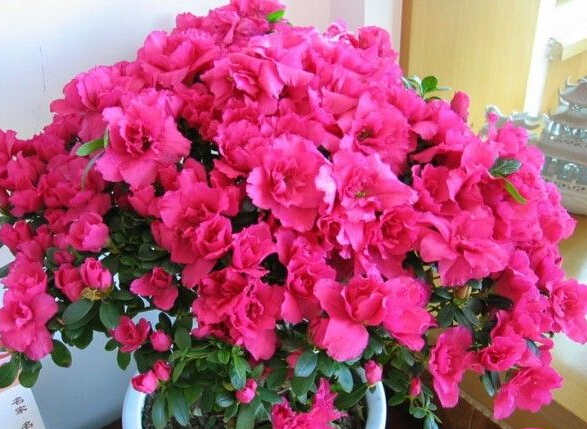
How to Propagate Azaleas
Cuttings: Generally in May to June, select semi-lignified branches of the current year as cuttings. After planting, set up a shade frame. At a temperature of around 25°C, roots will form in 1 month. Western azaleas root more slowly, taking about 60-70 days.
Grafting: More commonly used for propagating Western azaleas, often by cleft grafting of tender shoots. The grafting time is not restricted. Two-year-old Rhododendron molle is mostly used as rootstock, with a survival rate of over 90%.

How to Grow Azaleas
Soil: Generally, the cultivation methods for plants and flowers cannot do without a good soil environment. For azalea cultivation methods, the soil environment is even more important. There are many ways to mix the growing medium for cultivating azaleas. Due to different cultivars, the primary requirements are still the following conditions: loose, well-drained, well-aerated, acidic soil, rich in humus, and with sufficient base fertilizer.
Watering: After planting and repotting, water thoroughly once to allow the roots to fully contact the soil, which helps the roots survive and grow. Whether watering or fertilizing, do not use tap water directly. It should be acidified (by adding ferrous sulfate or vinegar) and used after the pH reaches around 6. Because azalea roots are fine, be careful not to water too much or too little when watering; just the right amount is best. Also, watering is best done in the morning and evening, which helps azaleas absorb water well.
Fertilizing: The azalea is a very undemanding flower; it does not need much fertilizer to grow. So when fertilizing, be careful not to apply too much. Over-fertilizing will make it difficult for azaleas to absorb nutrients and cause them to die. Proper fertilizing is what allows azaleas to grow well and produce beautiful flowers.
Sunlight: In azalea cultivation methods, another very important and indispensable aspect is the absorption of sunlight. For plants and flowers, promoting photosynthesis is essential. So the growth of azaleas cannot do without sunlight either, but they should not be exposed to the sun all day. Suitable sunlight can make azaleas bloom into even more beautiful and charming flowers.
Pruning: For how to grow azaleas, be sure to pay attention to removing buds promptly during the bud stage, so that nutrients are concentrated and supplied to promote larger flowers and richer colors. Pruning branches is generally done in spring and autumn. Cut off crossing branches, overly dense branches, overlapping branches, and diseased or weak branches, and promptly remove spent flowers.
How to Prevent and Control Azalea Pests and Diseases
Brown spot disease: This is the main disease of azaleas. In the early stage of the disease, small brown spots appear on the leaf surface, then gradually expand into dark brown large patches, with many small black or grayish-brown dots scattered on the lesions. Affected leaves turn yellow and fall off very easily, which not only affects blooming in the current year but also greatly affects flower bud development the following year. The disease is more severe during the plum rain season. After onset, promptly remove diseased leaves and spray 50% thiophanate 800-fold solution for control.
Lace bug: The adult is small and flat, 3.5-4.0 mm long, dark brown. When the forewings are folded, they form an "X"-shaped pattern, and the wing surface is densely covered with reticulated markings. Nymphs are dark brown with obvious spine-like structures on the body. Adults and nymphs gather near the main and lateral veins on the underside of host leaves to suck and cause damage. Yellowish-white spots appear on the damaged leaf surface, and many dark brown insect droppings and (shed) skins can also be seen on the leaf underside. Spray 50% carbaryl wettable powder 500-700-fold solution; or 50% phoxim or 50% fenitrothion emulsion 1000-1500-fold solution for control.
Leaf gall disease: It mainly occurs on tender leaves, tender buds, and tender stems. Early lesions are pale red. Later they turn yellowish-brown, and a white powdery substance appears on the surface. In the later stage, the lesions turn brown to black. The lesions merge with each other, the entire leaf swells, or becomes deformed and curled, and finally withers and falls off. Before the white powdery substance is produced on the diseased parts, remove the diseased leaves and destroy them. Spray 65% zineb 600-fold solution for control.
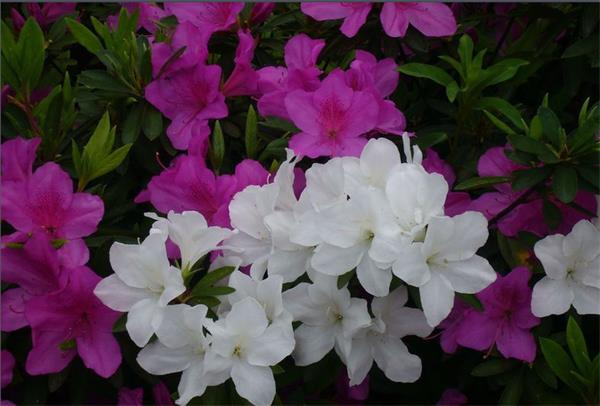
Finally, a reminder: if summer direct light is too strong, there is freezing damage from severe cold, too much watering, overly concentrated fertilizer, being kept indoors for too long, being placed in a place with poor air circulation or in a dark and damp place, or exposure to acid rain, all of these can cause azaleas not to bloom or to drop leaves, so pay careful attention.