Peach tree grafting methods and post-grafting management measures
Peach trees can be grown through sowing, cuttings, layering and grafting, but orchards generally use grafting to grow peach trees, because grafted peach trees are relatively easy to get high yields.
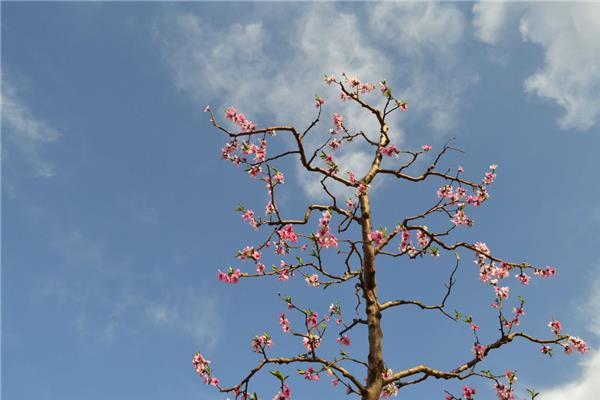
Peach tree grafting propagation methods
1. Cleft grafting: carried out in March when the buds have begun to sprout. Cleft grafting is commonly used, and one- or two-year-old seedling rootstock is best.
2. Bud grafting: carried out in July-August, mostly using the "T"-shaped graft. One-year-old vigorous seedling rootstock is best. For propagation by sowing, the flowering period of peach is March-April, and the fruit ripening period is June-August. Harvest ripe fruit, pile and mash them, remove the flesh, air-dry and collect pure seedling seeds for autumn sowing. Before sowing, soak the seeds for 5-7 days. Autumn-sown seeds germinate early the next year, with a high emergence rate, and grow rapidly and vigorously. For sowing the next spring, the seedling seeds need to be stored in moist sand for more than 120 days. Use drilling; the drill width is 10 cm, the depth is 1-2 cm, and after sowing cover with 6 cm of soil. Sow 25-30 kg per 667 sq m. When the seedlings are 3 cm tall, thin and finalize the seedlings, with a plant spacing of 20-25 cm.
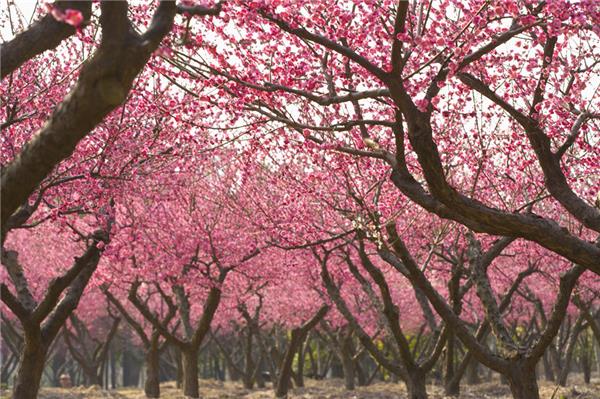
Post-grafting care and management of peach trees
Fertilizer and water management: After harvesting the fruit, peach trees should be top-dressed promptly and given foliar spraying. Top-dressing is mainly nitrogen fertilizer. For foliar feeding, spray 0.3% potassium dihydrogen phosphate once about every 15 days, for a total of 2-3 sprays. At the same time, after harvesting the fruit, deep digging should be carried out together with applying base fertilizer; the base fertilizer is mainly organic fertilizer, applied at 2-3 times the yield. Peach trees are relatively drought-tolerant, and there is more rain in the middle and later stages of growth; if there is no particularly severe drought, watering can be omitted to avoid excessive vegetative growth and affect flower bud differentiation. However, before the soil freezes, freezing water must be applied. Peach trees are not tolerant of waterlogging; short-term water accumulation in a peach orchard will cause yellow leaves, leaf drop, and even root rot and tree death, so during the flood season, attention should be paid to draining accumulated water.
Canopy cultivation: After transplanting a one-year-old grafted seedling, first head it back at 40-60 cm. Within the training zone above the heading height, generally select 3 main branches; the positions of the main branches should be evenly distributed, keeping about 45 cm from the central leader. They grow in a radial pattern. All the remaining branches are removed. During winter pruning the second year, cut the main branches back at 30-50 cm to prepare for promoting side branches. Other branches, sprouting shoots on the trunk, and buds on the rootstock must also be removed. In this way, a natural open-center crown form is formed.
Autumn pruning: After harvesting the fruit, most peach varieties are in a high-temperature and rainy season, with large new shoot growth and a strong ability to form secondary shoots, which easily causes internal canopy shading and affects flower bud differentiation, so autumn pruning should be carried out. For vigorous branches or branch groups on the upper part of the canopy, after thinning out the vigorous shoots, they can be twisted and bent down from the base; for competing branches, the twisting method can be used to control their growth and transform them into fruiting branches; overlapping branches, crossing branches and old, weak branch groups should be retracted promptly; overly dense branches, thin and weak branches, and useless upright vigorous branches should be thinned out; for upright vigorous branches kept where there is space, they can be bent down within the canopy to moderate their vigor.
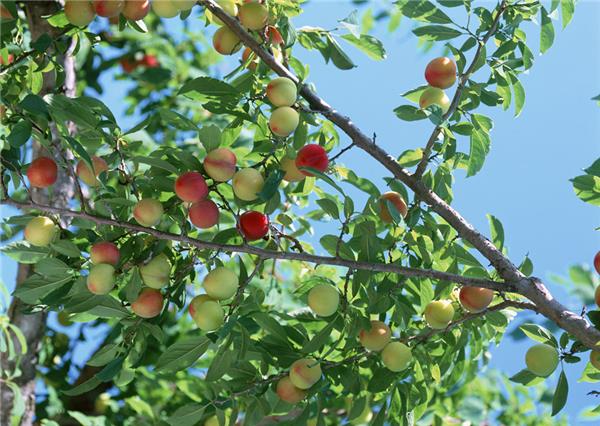
Pest and disease control: For aphids, use 10% imidacloprid 3000-fold solution, or 5% acetamiprid 1500-fold solution. For red spider mites, use 1.8% abamectin 3500-fold solution, or 15% pyridaben 1500-fold solution. For the pear fruit moth, use 4.5% beta-cypermethrin 2000-fold solution, or emamectin benzoate 4000-fold solution. For scab, use 50% carbendazim 1500-fold solution, or 12.5% diniconazole 3000-fold solution. For bacterial shot hole disease, use 30% Ludebao suspension concentrate 500-fold solution, or 65% zineb wettable powder 500-fold solution.
Deep digging around the root zone: This can be done together with top-dressing by deep digging around the root zone, to break up soil compaction, increase soil permeability, and help promote root growth. Also, expose the pupae dug out by deep digging to the sun to kill them or let birds eat them, so as to reduce the occurrence of insect pests the following year.
Orchard cleanup: After picking, the peach orchard should be cleaned up promptly; remove and deeply bury rotten fruit, pest- and disease-damaged fruit, fallen leaves, weeds and so on in the peach orchard, to eliminate sources of pest and disease spread.
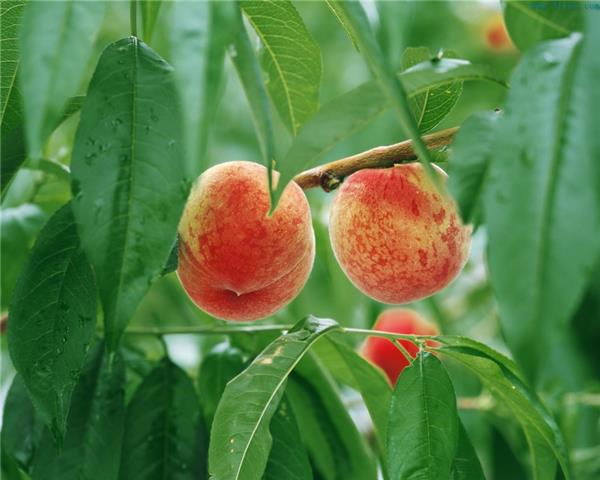
Peach trees are generally grown by planting in the ground, but now some dwarf varieties that have been artificially treated can also be grown in pots, and peach trees with proper care can likewise bear abundant fruit.