Detailed Explanation of Cedar Seed Sowing Methods and Precautions
Cedar seeds are relatively small, so you must be careful and thorough when selecting them, sifting out the empty grains before sowing. Let's learn some knowledge about this below.
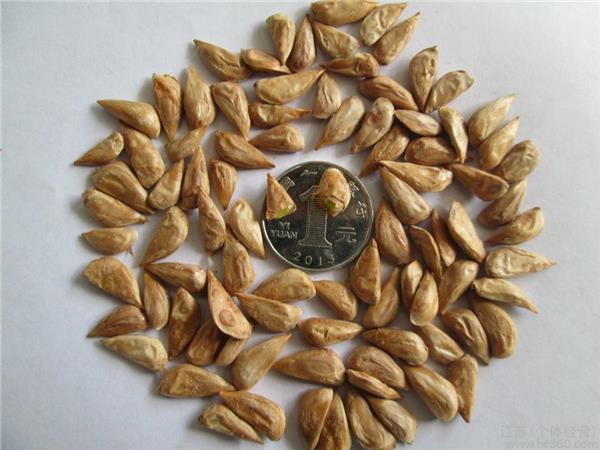
Cedar Seed Sowing Techniques
Seed treatment: Cedar seeds generally number about 6000-8000 per 1 kilogram, with many empty grains, so seed selection is needed to remove the empty grains. Before sowing, the seeds must undergo soaking and germination promotion. Soaking the seeds in cold water for 96 hours gives the best results; alternatively, soak them in 45-50°C warm water for 24 hours each time, then disinfect with 0.1% potassium permanganate for 30 minutes after soaking, then rinse clean with clear water, air-dry and sow. Never sow while still wet.
Sowing method: Sowing is generally carried out before the Spring Equinox, the earlier the better. Drilling is preferable, with a row spacing of 10-15 cm and a plant spacing of 4-5 cm; the seeds should be inserted upright in the sowing furrow, and the large end of the seed must face upward. The sowing rate is 15-20 kg per mu. After sowing, cover with yellow subsoil or burnt mud ash to a thickness of 1-2 cm. Then cover with a thin layer of rice straw, and use a watering can to sprinkle water on top to keep the seedbed surface moist. After about 3-5 days they will begin to sprout, and seedlings will emerge one after another in about half a month. The emergence period lasts over 1 month, and the germination rate can generally reach 90%.
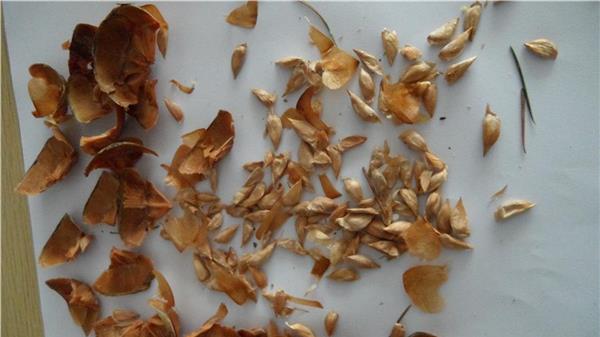
Seedling management: To prevent the newly emerged seedlings from being lost to rain damage, and to manage the temperature inside the shed properly, when the temperature inside the shed is maintained at 15-20°C, ventilation should be carried out; on sunny days when the outside temperature is above 15°C, the film can be uncovered during the day and covered again at night. When more than 70% of the seedlings have emerged, remove the rice straw in batches. Timely set up frames and add shade netting or reed screens for shading. Cedar has few pests and diseases, especially fatal ones, which are even rarer. In spring, the main prevention is against aphid damage. This pest is very common in the Yangtze River basin and will eat the tender tips of the cedar, causing the loss of apical growth dominance of the main trunk. Preventing this pest is very simple: if any sign of infestation is found, promptly spraying a phosphorus-containing insecticide will solve the problem.
Characteristics of seed-sown seedlings: Dense branches, layered one upon another; color closer to a powdery frost hue than cutting-grown seedlings; rapid growth, with a straight and strong main trunk.
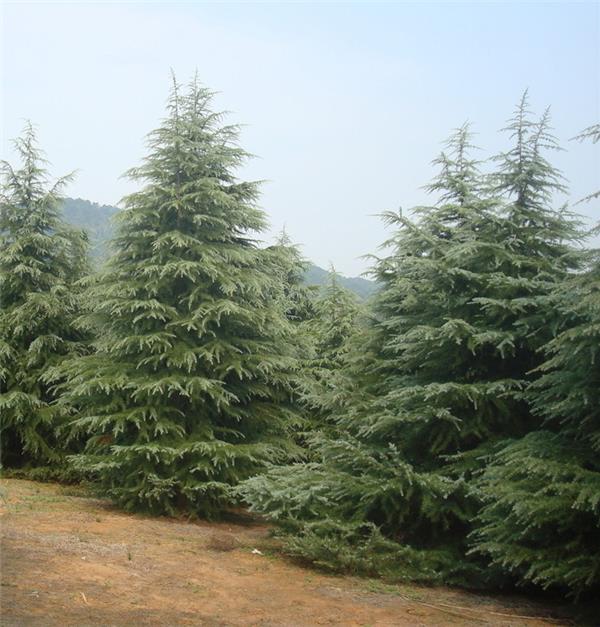
Precautions for Planting Cedar
1. Cedar is a shallow-rooted plant, so the planting hole must not be dug too deep. Deep planting goes against the normal growth pattern of the cedar. The cedar's root system grows best and is most active only near the soil surface.
2. After transplanting, cedar leaves turning yellow and growing poorly is generally due to iron deficiency. Foliar fertilization is generally used; in areas where pine needles turn yellow from severe iron deficiency, iron fertilizer must be applied in combination with soil application. Commonly used iron fertilizers include ferrous sulfate, ferrous ammonium sulfate, ferrous ammonium sulfate, and synthetic chelated iron such as ferric citrate, EDTA-Fe and EDDHA-Fe. In most cases, soil application is not noticeably effective; iron fertilizer can be mixed with organic fertilizer and applied in furrows or holes.
3. Cedar fears water but not drought. Cedar's fear of water is shown by the fact that even a single encounter with standing water can cause lifelong damage to the cedar. From then on its growth rate drops greatly, its color becomes tinged with yellow, and in severe cases the needles will shed in small amounts, and the cedar may even die quickly. For nursery planting, more deep ditches must be dug in the field to ensure that no water accumulates or ponds in the field even during the rainy season; for engineering planting of cedar, the cedar must be planted in a position relatively higher than the road surface and the green island surface. The surrounding area must be ensured to be free of standing water.
4. In early spring, the temperature above ground is high while the underground temperature is low; the above-ground part begins to grow first, while the underground part, affected by temperature, delays absorbing water and nutrients from the soil, leading to nutrient deficiency. The plant regulates its internal environment through its own signal transduction. It decomposes the chlorophyll in the leaves to supply nutrients to the growth center. That is, at this time the nutrients for plant growth come from the leaves rather than the roots. The leaves lose chlorophyll but retain xanthophyll and carotene, thus appearing yellow. If the external environment does not improve, twig dieback may occur.
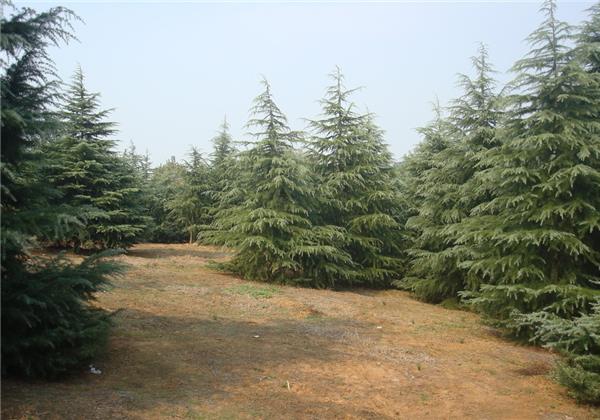
In addition to the knowledge introduced above, in the process of planting cedar we should also prune and care for it at the appropriate times. And besides sowing, cedar can also be propagated by grafting and cutting.