What are the functions, benefits and uses of vetiver grass?
It is no exaggeration to say that vetiver grass is one of the most useful grass species, because its functions are truly so wide-ranging that "the only limit is your imagination." Let's take a look below.
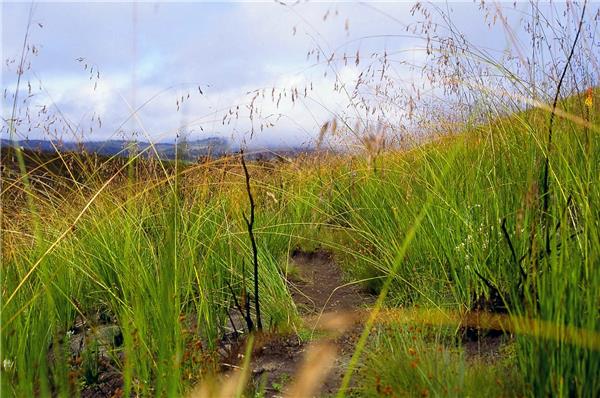
The functions and benefits of vetiver grass
1. Preventing landslides: Plant vetiver grass on slopes. When the grass matures, it forms a dense, gap-free hedge. When rainwater flows down the slope, the sediment in the water meets the hedge, and vetiver grass blocks the silt and slows the flow of water. This gives more water time to infiltrate into the lower layers of soil, while the remaining water seeps past the vetiver grass and flows away. The roots of vetiver grass can reach 3 m deep into the soil layer, which effectively stabilizes the soil and prevents soil from being washed away. After a certain period, sediment in front of the vetiver grass continuously accumulates, eventually forming a natural barrier. At the same time, vetiver grass can also be planted along roadsides on the back and side slopes to prevent shoulder collapse. Vetiver grass fixes the soil and also changes the water channels in roadbed sections.
2. Treating and controlling pollution: Vetiver grass is tolerant of salinity and alkalinity, and still performs normally when the exchangeable salt concentration reaches 33%. It can still grow normally in acidic soil at pH 3.8 and when the Al3+ concentration is as high as 68% (for ordinary crops, an Al3+ concentration of 15% is already quite high). It can grow normally under high concentrations of arsenic, lead, cadmium, aluminum, etc., and can be used for the remediation of acid sulfate soils. After soil is contaminated by heavy metals, radioactive substances, or pollution from mining and other industries, research facilities, underground burial sites, and waste, planting vetiver grass is extremely beneficial for soil reclamation. Vetiver grass is also an excellent plant for purifying eutrophic water bodies and has great application potential. In addition, vetiver grass is also used to purify landfill leachate, especially for manure and wastewater discharge from pig farms.
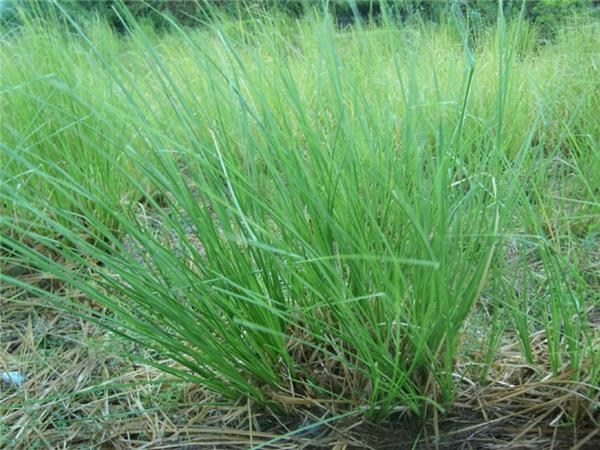
3. Restoration of degraded soil: Vetiver grass is planted in rows on the slopes of degraded red loam. The topsoil of the red loam has already been washed away and eroded, so the entire soil is dry, hard, and lacks vegetation cover. Planting vetiver grass reduces the rate of soil loss, allows water to infiltrate into deep soil, and provides sufficient water for tree growth. According to research by researchers, the hard soil layer, which is like rock, is composed of broken sand, clay, limestone, and minerals. The roots of vetiver grass can penetrate the hard stone layer, can fragment the stone layer, and at the same time can increase soil moisture.
4. Development and utilization as feed: Vetiver grass is an edible grass for livestock. When young and tender, both cattle and sheep like to eat it. Studies have shown that the stems and leaves of vetiver grass contain protein, amino acids, lipids, mineral elements, and other substances needed by animals, and can be developed and utilized as a feed ingredient. In addition, the waste material after vetiver grass is used as mushroom grass is also rich in nutrients, including high-quality fungal protein, which can likewise serve as a high-quality fungal protein feed. According to studies, the crude protein content of vetiver grass is 7.31%, crude fat is 1.97%, and crude fiber is 34.5%, which is higher than that of rice straw (crude protein 4.5%, crude fat 1.46%, crude fiber 32.4%). When fed to cattle, the intake rate of vetiver grass is over 90.9%, and when fed to fish, the intake rate is as high as 71%.
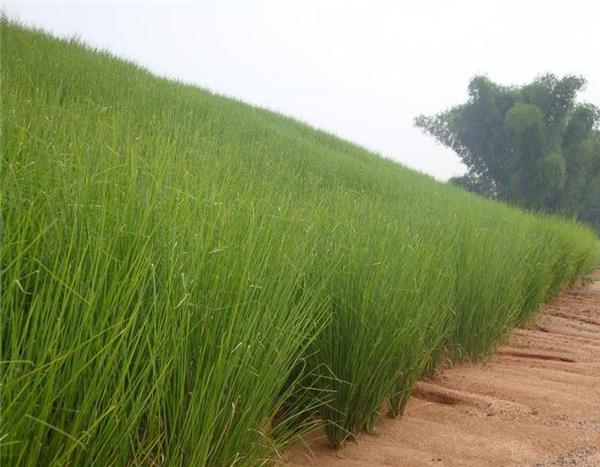
Vetiver grass planting methods
1. Land preparation: Vetiver grass seedling cultivation adopts the method of raising seedlings without making beds or ridges (flat planting method). Before planting, first clear weeds, stones, and other debris from the ground. For planting on sandy beaches, land is generally not plowed; when planting in other places, the land should be fully plowed 15-20 cm deep to change the soil structure, enhance water permeability, improve water storage and moisture conservation, and strengthen drought resistance, which is beneficial to the growth of the vetiver grass root system. When planting, dig holes in strips along the contour lines, with a plant spacing and row spacing of 30 x 30 cm. Dig the holes in a "V" shape, with a depth of 10-15 cm.
2. Planting: Trim the grass seedlings to a root length of 10 cm and a stem and leaf length of about 20 cm. When dividing seedlings, break off 3-5 plants together, plant them in the holes, then fill with soil and compact it so that the roots and soil are tightly combined, which helps survival. The planting time is from March to June each year. In places with good irrigation conditions, it can be postponed as appropriate. Generally, planting in March has the highest survival rate and better growth. If planted after July, the survival rate will decrease due to high temperatures and uneven rainfall, and more labor will be required for management. In addition, note that when planting in March, use 2-3 plants per hole, and after June, use 4-5 seedlings per hole.
3. Fertilization: Vetiver grass seedling fields only need a small amount of nitrogen fertilizer to grow well. No fertilization is needed before planting. When the vetiver grass seedlings turn green again, make small holes about 15 cm deep about 50 cm away from the clumps of seedlings and apply urea as a topdressing. The application rate is about 20 kg per mu. As a long-term fixed nursery, organic fertilizer should be applied.
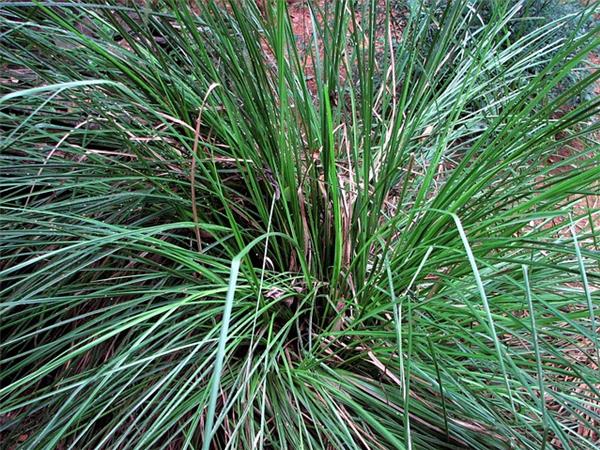
In addition to the functions of vetiver grass introduced above, vetiver grass can also be used to extract essential oil, make paper, weave handicrafts, be used as mushroom grass, and serve in medicinal health care, among other uses. It is a grass species with very high economic value. In addition, it can also be used to lay lawns, making it a grass species with multiple functions.
In addition to the functions of vetiver grass introduced above, vetiver grass can also be used to extract essential oil, make paper, weave handicrafts, be used as mushroom grass, and serve in medicinal health care, among other uses. It is a grass species with very high economic value. In addition, it can also be used to lay lawns, making it a grass species with multiple functions.