Xiangling walnut is an emerging superior variety among walnuts
Xiangling walnut is a walnut variety that is currently very popular and can bring high economic benefits to fruit growers. It is somewhat stronger than ordinary walnuts in cold resistance, drought tolerance, wind resistance, and disease resistance.
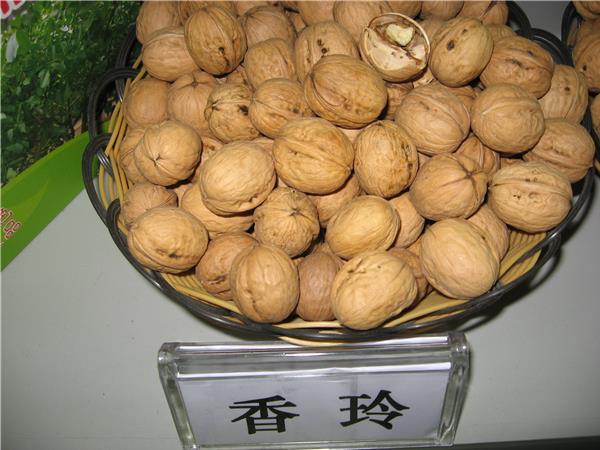
Introduction to Xiangling walnut
[Growth habits of Xiangling walnut seedlings] The plant grows moderately, the tree posture is upright and open, the branching angle is about 70°, the crown is semicircular, and the branching ability is relatively strong. The proportion of lateral mixed buds is 81.7%. One-year-old branches are yellow-green with short internodes. The mixed buds are nearly spherical, large and free, with a bud seat. The compound leaf is 38.8 cm long, and the compound leaf petiole is relatively thin; the leaflets are mostly 5-7 in number, the leaves are relatively small, green, and thin. Mixed buds form 2 years after grafting, male flowers appear after 2-3 years, each female inflorescence bears 2 female flowers, the fruit-setting rate is about 60%, double fruits are more common, and it belongs to the protandrous type and is a mid-season variety.
[Characteristics of Xiangling walnut seedlings] The plant has strong growth vigor and easily produces secondary shoots. The suitable tree shape is the trunk with scaffold branches in layers. In pruning, attention should be paid to summer pinching and short cutting of strong vigorous branches. During pruning, cultivate the main and lateral branches, control secondary shoots and water sprouts, thin out excessively dense branches, and properly handle downward-facing branches. For trees in the fruiting stage, pay attention to the renewal and rejuvenation of fruiting branch groups, adopt the method of removing weak ones and keeping strong ones, and combining thinning with retention to renew branch groups. At the same time, thin out dried branches, diseased and insect-damaged branches, overlapping branches, and thin weak branches. In the southwestern region, it sprouts in early March, the female flowering stage is in mid-April, and the male flower pollen dispersal stage is in late April. It is a protandrous variety, the fruit ripens in late August, the fruit development period is about 123 days, and normal leaf fall is in late October. This variety has strong cold resistance, drought tolerance, wind resistance, and disease resistance, and is suitable for development in areas with deep soil layers.
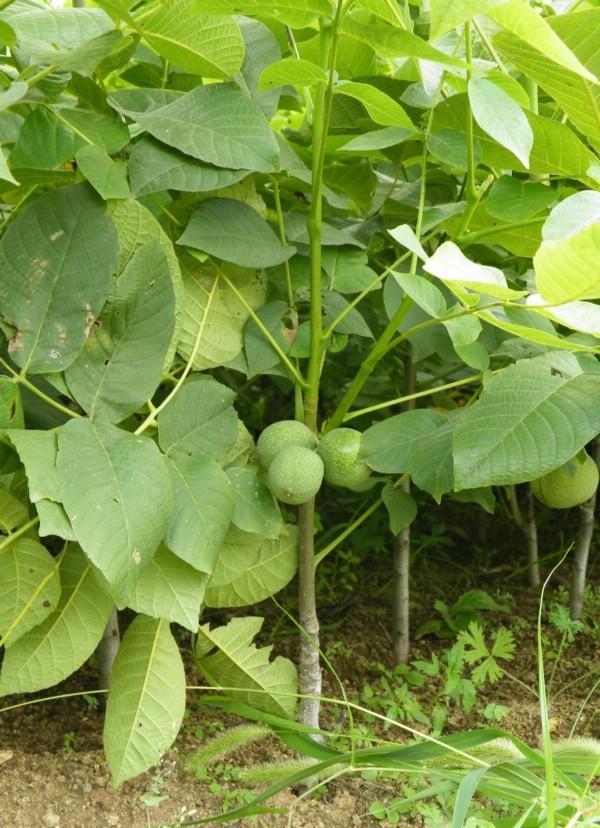
Effects and functions of Xiangling walnut
1. Medical research believes that the phospholipids in Xiangling walnut have a good health-protecting effect on cranial nerves. Walnut oil contains unsaturated fatty acids and has the effect of preventing and treating arteriosclerosis. Walnut kernels contain trace elements essential to the human body such as zinc, manganese, and chromium. During the aging process of the human body, the levels of zinc and manganese gradually decrease. Chromium has the function of promoting glucose utilization, cholesterol metabolism, and protecting the cardiovascular system.
2. Xiangling walnut also has a very obvious effect in relieving cough and calming asthma. In winter, it has an excellent therapeutic effect on patients with chronic bronchitis and asthma. It can be seen that regularly eating walnuts can both strengthen the body and resist aging. Some people often take tonics, but in fact eating a few walnuts every morning and evening is truly greatly beneficial, and often better than taking tonics.
3. Xiangling walnut is an excellent food therapy product. Whether used in medicinal formulas, or eaten raw alone, boiled in water, made into sugar-coated snacks, or cooked in dishes, it has good effects such as nourishing blood and replenishing qi, tonifying the kidney and replenishing essence, relieving cough and calming asthma, and moistening dryness and relieving constipation.
4. There are many ways to eat Xiangling walnut. Boil walnuts with an appropriate amount of salt water; drinking the water and eating the residue can treat symptoms such as kidney-deficiency waist pain, spermatorrhea, impotence, forgetfulness, tinnitus, and frequent urination. Boiling walnuts together with coix seed and chestnuts to make porridge can treat conditions such as frequent urination, spermatorrhea, loose stools, and dawn diarrhea. Making sugar-coated snacks with walnuts, sesame, and lotus seeds can nourish the heart and strengthen the brain, and can also treat night sweats. Eating walnuts raw with longan flesh and hawthorn can improve heart function.
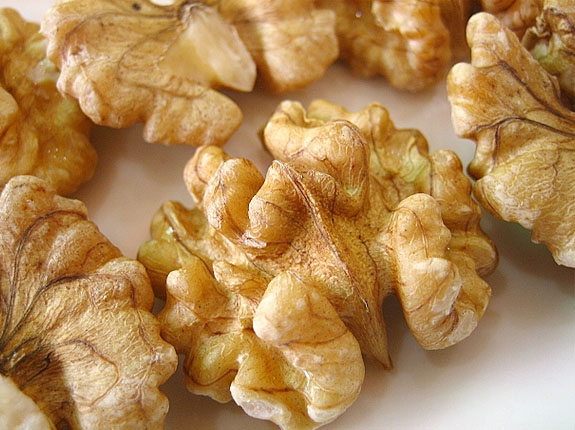
Grafting and care of Xiangling walnut
Treating the rootstock: Leave 2 compound leaves above the grafting site and cut the rootstock to facilitate "water release" and maintain a certain amount of photosynthesis. Then, at a straight and smooth site, cut the rootstock bark down to the xylem, about 3-4 cm long and about 2 cm wide.
Bandaging: Use a plastic strip about 2 cm wide to bind the bud tightly from bottom to top, with the bud exposed.
After grafting: Check for survival after about 10 days. The sign of survival is leaf petiole shedding or bud sprouting. Re-graft in time those that did not survive. Remove sprouts on the rootstock to promote the germination of the grafted bud. Generally, remove sprouts once about every 10 days.
Unbinding: When the new grafted shoot grows to more than 5 cm, the binding can be untied. Unbinding too early or too late will affect growth.
Pinching: When the new grafted shoot grows to about 30 cm, pinch it to facilitate safe overwintering.
Pest control: If pests such as wood-boring geometrid moths and slug moths occur, 2000-fold solution of fenvalerate can be used for control.
Cold protection: Field-grafted walnuts need winter cold protection in the same year. Before the soil freezes, those that can be bent down should be covered with soil for cold protection; those that cannot be covered with soil can be wrapped with plastic film, and in the spring of the following year during the sprouting period, they should be uncovered or unwrapped in good time.
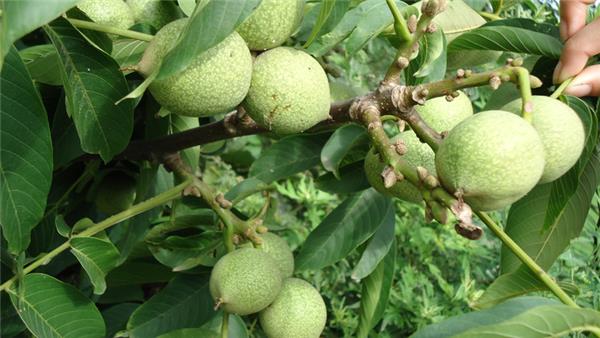
All right, that is the end of the introduction to Xiangling walnut. After reading the above introduction, has your understanding of Xiangling walnut also deepened a little further? If you are also interested in this kind of walnut tree, go ahead and try planting one. I hope the knowledge introduced above can also help you increase the probability of growing high-quality Xiangling walnuts.
I hope the knowledge introduced above can also help you increase the probability of growing high-quality Xiangling walnuts.