Apricot varieties whose roots can be used as medicine and methods for protecting the roots
Apricot root is a traditional Chinese medicinal material that can be used as medicine. Taken internally in reasonable and moderate amounts, apricot root can have a detoxifying effect. Isn't that impressive? So which varieties of apricot have roots that can be used as medicine?
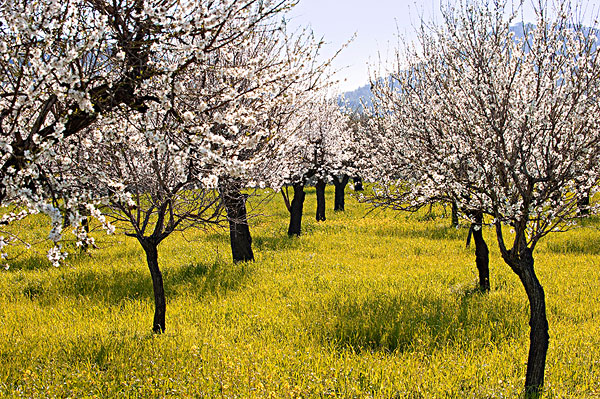
Apricot varieties whose roots and rhizomes can be used as medicine
1. Apricot, a small deciduous tree, 4-10 cm tall; bark dark reddish brown, longitudinally fissured. Leaves alternate, simple; leaf blade round-ovate or broadly ovate, 5-9 cm long, 4-8 cm wide. In spring it flowers before the leaves emerge; flowers solitary at the ends of branches, rather densely arranged, somewhat resembling a raceme; flowers nearly sessile, calyx base tubular, externally covered with short pubescence, upper part 5-lobed; petals 5, white or light pink, round to broadly obovate; stamens numerous, inserted on the rim of the calyx tube; pistil of a single carpel, inserted at the base of the calyx tube. Drupe round, rarely obovate, more than 2.5 cm in diameter. Seed 1, cordate-ovate, light red. Flowering period March-April, fruiting period June-July.
2. Wild apricot: the main features of this variety are that the leaf base is cuneate or broadly cuneate; flowers usually 2 in clusters, pale red; fruit nearly spherical, red; stone ovoid, free from the flesh, surface rough and reticulate, ventral edge usually sharp.
3. Siberian apricot, a shrub or small tree, 2-5 m tall. Leaves ovate or nearly round, (3-)5-10 cm long, (2.5-)4-7 cm wide. Flowers solitary, 1.5-2 cm in diameter; sepals oblong-elliptic, apex acute; petals nearly round or obovate, white or pink. Fruit flattened spherical, 1.5-2.5 cm in diameter, flattened on both sides, flesh thin and dry, splitting open when ripe, sour and astringent, inedible. Stone easily separated from the flesh, one side of the base asymmetric, smooth. Flowering period March-April, fruiting period June-July.
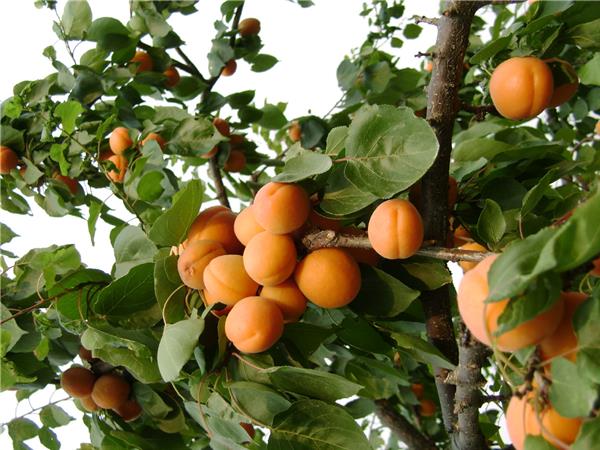
Factors affecting the absorption of nutrients by apricot roots
Soil temperature: within the suitable temperature range, as soil temperature rises, root respiration gradually strengthens, and the rate of nutrient absorption also continuously accelerates. When the temperature approaches 0°C or exceeds 30°C, the rate of nutrient absorption is greatly reduced. Covering an apricot orchard with plastic film during the low-temperature period in spring can noticeably improve the roots' ability to absorb nutrients.
Soil moisture: the growth of apricot trees and their absorption of nutrients cannot be separated from soil moisture. The decomposition and transformation of applied organic fertilizer in the soil, as well as the dissolution and movement of various fertilizers, are all related to soil water content. For example, excessive irrigation or too much rain can cause the loss of soil nutrients and poor soil aeration. The annual water requirement of an apricot orchard is 450-600 mm; more water is not beneficial.
Soil air: under conditions of circulating soil air and sufficient oxygen, apricot roots absorb vigorously, the amount of nutrients absorbed increases, and organic matter in the soil decomposes and transforms quickly. Under conditions of good soil aeration, the apricot root system is well developed, with many capillary roots (absorbing roots). If soil aeration is poor, the roots are short and thick, capillary roots decrease, and the ability to absorb nutrients and water is reduced. Poor soil aeration has a great impact on soil microorganisms.
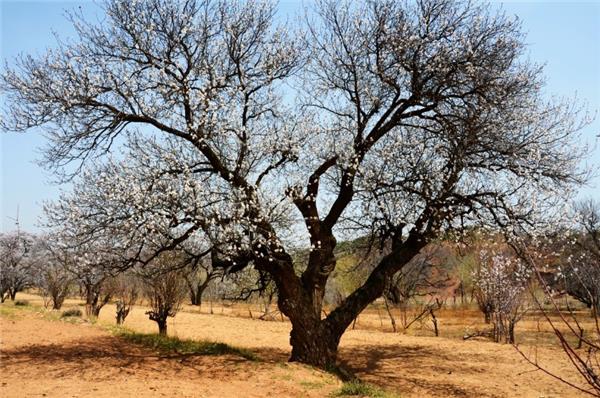
Control measures for apricot root rot
1. Strictly prohibit continuous cropping. This disease mainly occurs in continuous-cropping nursery land and in apricot orchards where seedlings are raised between apricot tree rows. Therefore, strictly preventing seedling raising between the rows of large trees can effectively prevent the disease.
2. Root irrigation of diseased trees. For plants that have already developed the disease, if they are large trees, dig a ring-shaped ditch 30 cm deep and 30 cm wide under the canopy at 50 cm from the trunk, scatter fungicide into the ditch, and then fill the original soil back into the ditch; if they are young trees, within the root range, use an iron rod to make holes deep enough to reach the root distribution layer, and inject the agent into the holes. Commonly used agents are: 2-4 Baume degree lime sulfur mixture and 200-fold copper sulfate solution. The dosage for large trees is 15-20 kg per tree, and for young trees 5-10 kg per tree.
3. Rotate the use of chemicals for treatment. After entering the hot and rainy season, irrigate the roots with 2-4 Baume degree lime sulfur mixture. In mid-to-late October, irrigate the roots of plants that developed the disease that year with 200-fold copper sulfate solution. Irrigate with the chemical again before and after leaf fall and again the following spring.
4. Prevent early. For apricot plants with a history of root rot, irrigate the roots with agents such as 200-fold copper sulfate from late April to early May. Seedlings cultivated in disease-affected areas should be disinfected before planting, and after planting should be irrigated at the roots for prevention, which can effectively prevent the occurrence of the disease.
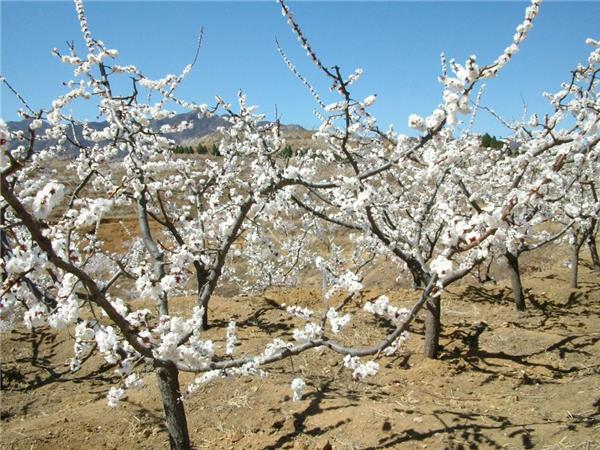
In addition, when controlling apricot root rot, it is also necessary, while strengthening disease control, to reduce the fruit load, increase fertilizer and water, strengthen underground management, and enhance tree vigor, thereby enhancing the tree's disease resistance, so as to ensure that apricot roots can effectively absorb components from the soil and grow healthily and vigorously.