A Detailed Guide to the Characteristics, Creation and Care of Fruit Tree Bonsai
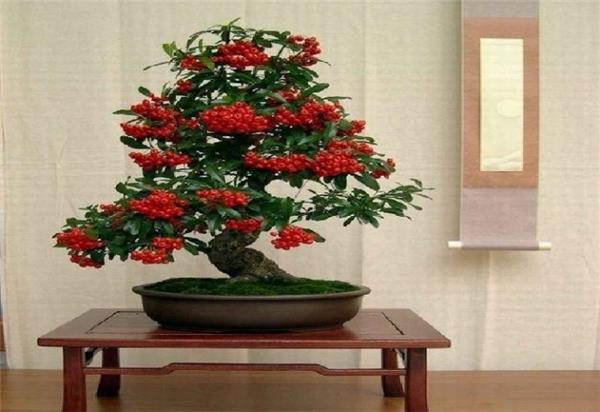
Fruit tree bonsai often offer a different ornamental effect from ordinary bonsai. They have a bit more vitality and liveliness than ordinary bonsai, rather than being so solemn and mature.
Characteristics of Fruit Tree Bonsai
Fruit tree bonsai must possess the plastic arts of roots, trunk, form and spirit, and must also bear a sufficient number of fruits. The quantity, layout, size and color of the fruits are an important part of the art of small fruit tree bonsai. Only by closely combining the two can the roots, trunk, branches, leaves, flowers, fruits and form become an ornamental whole, making it delicate and graceful with flowers in spring; loaded with fruit and brilliantly colorful in autumn; with sparse branches and a sturdy frame, upright and vigorous in winter; while summer happens to be the period of fruit development, with luxuriant branches and leaves, and the green branches and jade-green fruits take on a new look within ten days, full of the joy of life and the breath of nature.
In addition to studying the form of small fruit tree bonsai, attention must also be paid to cultivating flowers and fruits. The cultivation of flowers and fruits requires branches with a certain growth vigor, a certain number of leaves, and an adequate supply of nutrients. In addition, the flowers and fruits of some fruit trees, such as apple, pear, persimmon and hawthorn, are located right at the tips of the branches. All of this determines that small fruit tree bonsai cannot be pruned and wired at will like ordinary foliage bonsai. Its own rules determine that a bold and natural style must be shaped in terms of form and pruning.
Creation and Care of Fruit Tree Bonsai
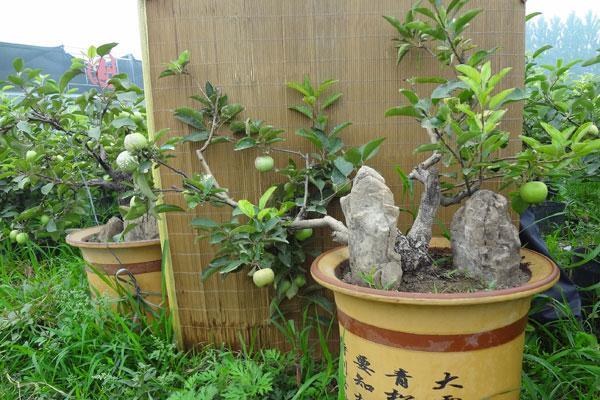
Preparing the potting soil: generally take 4 parts of matured garden soil, 2 parts of river sand and 1 part of plant ash, mix them thoroughly, then crush finely and sieve. The potting soil should be sterilized before use; generally, mixing in a small amount of sulfur powder evenly is sufficient. Each time the pot is repotted and the soil changed, a suitable pot can be replaced according to the growth rate of the fruit tree, the size of the root ball and the needs of the form.
Repotting: since the nutrients in the potting soil will be absorbed by the fruit tree or leached away by frequent watering, the pot needs to be changed once every two to three years to replace it with new nutrient soil. After the old soil ball is turned out of the pot upside down, the old roots on the surface of the soil ball and the large roots affecting its form should be cut off. When potting, first mix organic fertilizer with nutrient soil and fill the bottom, then pot with the soil ball, and fill around it with potting soil mixed with fertilizer. The pH value of the potting soil is generally between 4.5 and 7.5. According to the requirements of different tree species, prepare different nutrient soils rich in organic matter, preferably sandy loam rich in humus.
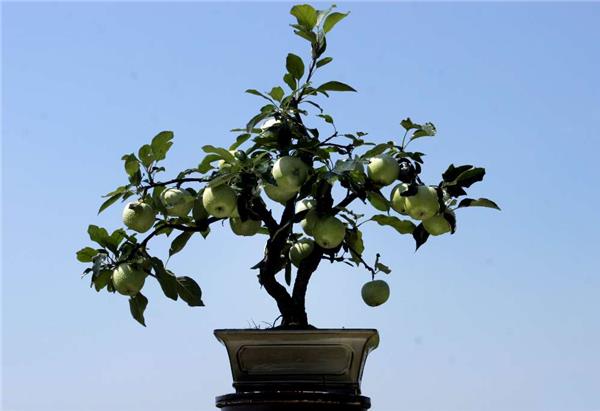
Water: the most suitable water content of the potting soil for root growth is about 60%-80% of the maximum water-holding capacity of the soil. The drought resistance of roots is much lower than that of leaves. Under drought conditions, the leaves draw a large amount of water from the roots, causing damage to or even death of the root system. Due to the limited volume of the pot and the large surface area for loss, the water in the pot is lost 4-5 times faster than the surface soil of a field orchard. With careless management, it is very easy to lose water. The smaller the pot, the larger the canopy, the higher the temperature, and the clearer and drier the climate, especially in the season of dry hot winds, the faster the water loss, and the more attention should be paid to replenishing water in the pot in time.
Aeration: the physical structure of potting soil is composed of soil particles and pores. The fine capillary pores are occupied by water, and the large non-capillary pores are occupied by air. The respiration, growth and other physiological activities of fruit tree roots all require an adequate supply of oxygen in the potting soil. Under oxygen-deficient conditions in the potting soil, the normal respiration and physiological activities of the fruit tree are blocked, and growth stops. At the same time, the accumulation of carbon dioxide and other harmful gases causes root poisoning, resulting in root death. The most suitable soil composition for fruit tree growth is that soil pores account for about 50% of the total soil volume, and the water and air in the pores each account for about half.
Pruning: when there are too many branches on a fruit tree bonsai, it is easy to cause scattered nutrients in the tree, insufficient internal light, and poor fruit quality. Therefore, before the fruit trees sprout in spring, crossing branches, overlapping branches, diseased and pest-infested branches and water sprouts should be cut off. This is basically the same as the pruning of other clivia gardens, and is called basic pruning. During the summer fruit growth period, the tree shape is controlled by pinching, bud removal and heading back, and the formation of apical dominance is prevented, so as to promote the growth and swelling of the fruit. In autumn, in order to improve the ornamental effect of the fruit tree bonsai, shaping should be the main focus; branches that affect the ornamental effect can be cut off, and leaves covering the fruit can be removed.
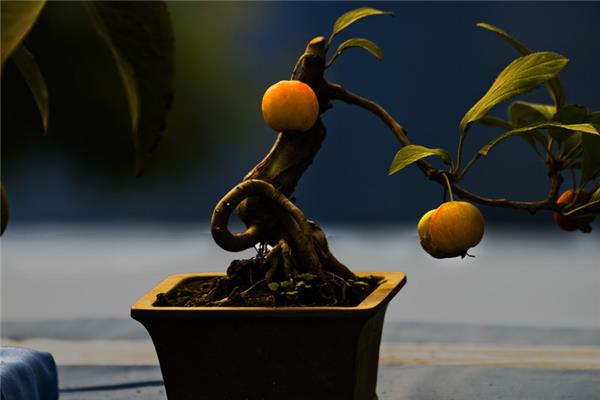
Placing a fruit tree bonsai in the study, bedroom or on the office desk is a very good choice. It not only pleases the eye, but can also effectively improve the feng shui of the room.
Placing a fruit tree bonsai in the study, bedroom or on the office desk is a very good choice. It not only pleases the eye, but can also effectively improve the feng shui of the room.