The Harm of Cicadas to Plants and Control Methods
The cicada is an insect that is neither liked by people nor by trees. When large numbers of cicadas attach themselves to a certain tree, they pose a threat and cause harm to that tree, so early control is necessary.
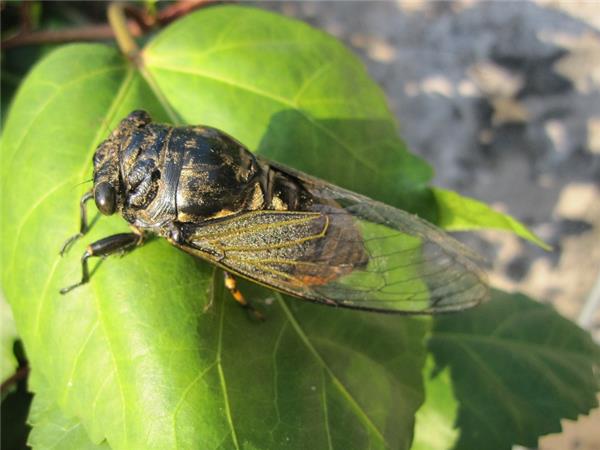
Harmful Characteristics of Cicadas
Whenever spring warms up, the nymphs move upward and feed on the sap of plant roots. When autumn passes and winter comes, they burrow deep into the soil again to avoid the cold. Female adults continuously pierce holes in branch tips to lay eggs, arranged in an irregular spiral pattern, causing the subcortical xylem of the branch tips to form diagonal cracks, resulting in the drying up of the upper branch tips. In areas where this insect occurs severely, by late autumn the entire tree is commonly seen covered with withered branch tips.
Morphological Characteristics of Cicadas
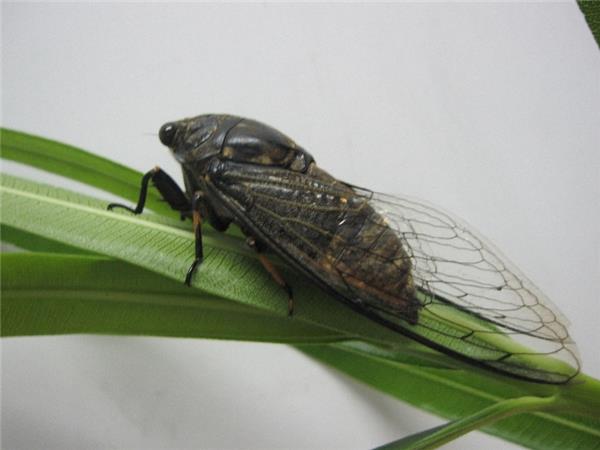
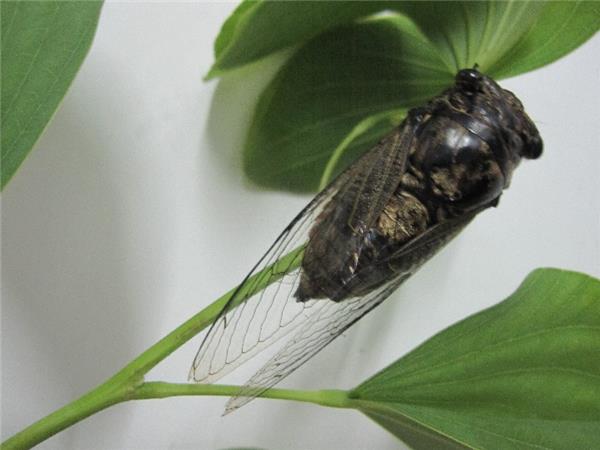
Adult body length 40-48 mm, black, glossy. The front edge of the head and the top of the frons each have yellow-brown patches. Forewings and hindwings are transparent. Males have a sound-producing organ. Females lack a sound-producing organ and have a prominent ovipositor. Eggs laid by females are elongated oval, about 22.5 mm long, milky white, glossy. Nymphs are yellow-brown, with wing buds, and are capable of crawling.
Living Habits of Cicadas
Cicada nymphs live in the soil throughout their lives. When about to emerge, they dig out of the soil surface at dusk and at night, crawl up trees, then grip the bark and molt to emerge as adults. At the end of June, nymphs begin to molt into adults, with a lifespan of about 60-70 days. In late July, female adults begin to lay eggs, with early to mid-August being the peak egg-laying period. Eggs are mostly laid on branch tips 4-5 mm thick. When laying eggs, the female adult first pierces the bark with her ovipositor, inserts the ovipositor into the branch tissue, creating claw-shaped egg holes, and then lays eggs inside the xylem. Each egg hole contains 6-8 eggs. On a single branch, the number of cicada eggs can reach more than 90. The eggs hatch by mid-June of the following year. After hatching, the nymphs drop from the branch to the ground and immediately burrow into the soil. The nymphs live in the soil for several years, molting a total of 5 times.
Control Methods for Cicadas
1. Thoroughly remove parasitic plants around the orchard edge. Cicadas most prefer to perch on trees such as Chinaberry (Melia azedarach), Chinese Toon (Toona sinensis), Tung tree (Vernicia fordii), and Eucalyptus. Host trees around the orchard edge must be thoroughly eliminated to avoid attracting them into the orchard or to cut off their migration and transfer, making it easier to concentrate and kill them.
2. In combination with winter and summer pruning, cut off branches that have withered due to egg-laying, in order to eliminate the large number of eggs that have not yet hatched and entered the soil. Cut branches should be collected and burned. Because of the long egg stage, taking advantage of this weakness in their life cycle and persisting for several years yields significant results. This method is the most economical, effective, safe and simple way to control this insect.
3. Mature nymphs have the habit of climbing trees at night to emerge. However, their feet have only sharp claws and no arolium, so they cannot crawl on smooth surfaces. Wrapping plastic film or transparent tape around the base of the trunk can prevent mature nymphs from climbing up the tree to emerge. Those around the trunk can be manually captured or killed, or chickens can be released to prey on them.
4. Control agents: Use 50% acetamiprid water-dispersible granules (Guoguang Chongke) at 3000 times dilution, 10% imidacloprid wettable powder (such as Guoguang Bike) at 1000 times dilution, 40% acetamiprid·emamectin emulsifiable concentrate (such as Guoguang Bizhi) at 1500-2000 times dilution, or acetamiprid water-dispersible granules (Guoguang Chongke) at 3000 times dilution + 5.7% emamectin benzoate emulsifiable concentrate (Guoguang Leke) at 2000 times dilution as a mixed spray, all of which can provide targeted control.
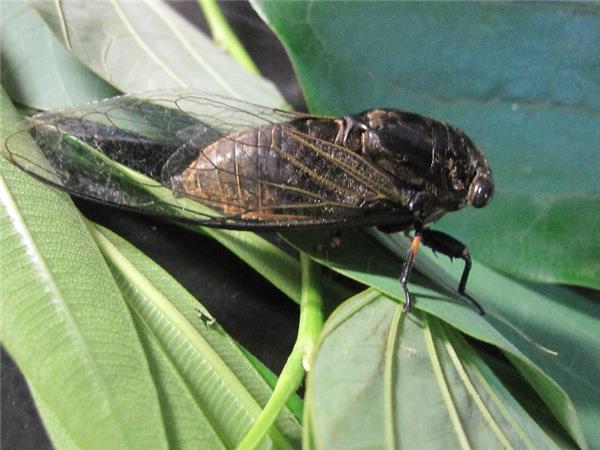
As with the control principles for all flowers, grass and trees, cicada control of course should also focus on prevention first, especially finding ways to eradicate their eggs and nymphs, to avoid the recurrence of cicada infestations next year.