Propagation Methods and Pest and Disease Control Techniques for Lysimachia nummularia
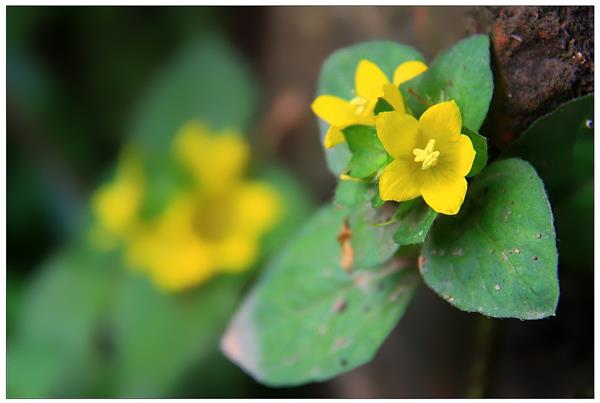
Lysimachia nummularia (creeping Jenny) is a fairly typical garden landscape tree species, belonging to the family Primulaceae, with golden-yellow flowers that are extremely bright and eye-catching when planted in masses.
Efficacy and Effects of Lysimachia nummularia
1. Lysimachia nummularia is the whole plant or the whole plant with roots of the Primulaceae plant Lysimachia nummularia. Its other names include Jinqiancao, Zhenjincao, Zouyoucao and Pudi Lian. Its efficacy is to clear heat and drain dampness, reduce swelling and detoxify, and dispel wind and cold. Its effects are to treat colds and coughs, headache and body aches, diarrhea, bladder cancer and prostate cancer.
2. The whole plant of Lysimachia nummularia can be used medicinally to treat urinary tract stones, cholecystitis, gallstones, icteric hepatitis, edema, traumatic injuries, venomous snake bites, and poisoning by toxic mushrooms and drugs; applied externally, it treats burns and scalds and suppurative inflammation.
3. Both Lysimachia nummularia and its alcohol extract have the effect of promoting blood coagulation. The crude extract also has the effect of promoting blood clotting, and during perfusion of frog legs it also constricts peripheral blood vessels. After intravenous injection of lysimachin in mice, the bleeding time was shortened by 45%. Intravenous injection in rabbits can greatly shorten blood clotting time and increase platelet count. When experimental dog femoral artery bleeding occurs, local application of Lysimachia nummularia powder combined with pressure has a certain hemostatic effect.
Propagation Methods of Lysimachia nummularia
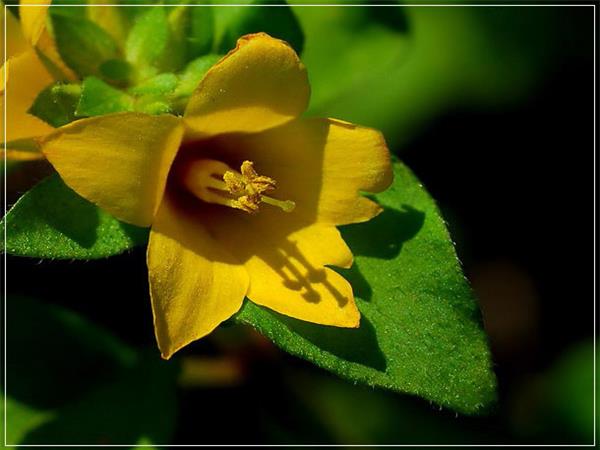
Division and hole planting propagation: Cut Lysimachia nummularia 'Aurea' plants into cuttings 7 to 10 cm long with 4 to 6 nodes, then combine two or three cuttings into a bundle; if the plants are relatively slender, 5 to 6 cuttings can be combined into a bundle, taking care to note the growth direction of each cutting's stem nodes. When planting, ensure that one third of the cutting, or at least 2 stem nodes, is buried in the soil, then firm it with the foot; for large areas, a iron roller can be used to press it down so that the cutting stem nodes make good contact with the soil. Note that the iron roller should not be too heavy; slight pressing is sufficient. The planting row spacing is 10 cm x 10 cm. If divided and propagated in July and August, it can cover the ground in about 40 days.
Layering propagation: Dig planting furrows in the seedbed at a row spacing of about 15 cm, with a furrow depth of about 2 to 3 cm. Cut the creeping stems into stem segments about 10 to 15 cm long (tender branches slightly longer), then combine 2 to 4 stem segments into a bundle and place them into the planting furrow, cover with soil and firm it. If layered and propagated in July and August, it can cover the ground in about 50 days.
Stem-cutting and broadcast propagation: First remove some of the plant's leaves as appropriate, then cut it into small stem segments about 2 to 3 cm long, and broadcast them on a moist seedbed, firming with the foot or lightly pressing with an iron roller. The adhesion of leaves to stem node roots often makes the small stem segments clump and bundle together; when broadcasting, take care to separate them as much as possible so as not to affect the propagation survival rate. If broadcast-propagated in July and August, it can cover the ground in about one month.
Pest and Disease Control of Lysimachia nummularia
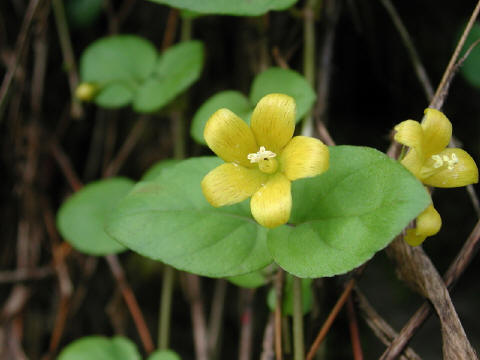
Disease control: According to experimental observations, Lysimachia nummularia is relatively susceptible to phytophthora blight during high temperature and high humidity in summer, with the disease period from June to August. This typical high-temperature, high-humidity disease seriously affects the promotion of Lysimachia nummularia. Its symptoms are brown rot of the leaves, yellowing and rotting of the stems, and a slimy feel. Initially affected parts show water-soaked dark spots, which later become yellow-brown patches, and finally the plant stems turn yellow, rot and die. Before planting, disinfect the seedbed soil with 50% amobam 500 to 600 times dilution. Control the amount of nitrogen fertilizer to prevent Lysimachia nummularia from forming dense clumps due to excessive growth. During high summer temperatures, ensure the seedbed is moderately dry and wet; do not water easily. Starting from mid-May, regularly spray 75% chlorothalonil or 80% zineb 800 to 1,000 times dilution, especially after rain in high-temperature weather, spray promptly for control. Prune in a timely manner, thin out branches promptly, and remove overly dense creeping stems and diseased lower leaves. After disease onset, promptly drench the roots or rhizosphere soil with 58% metalaxyl-mancozeb 800 to 1,000 times dilution, 80% zineb 600 to 800 times dilution, etc.
Pest control: The main pests harming Lysimachia nummularia are black cutworm, Bradybaena similaris, etc. Black cutworm and Bradybaena similaris cause holes and notches in the stems and leaves of Lysimachia nummularia, and in severe cases eat the leaves completely, thereby affecting the ornamental effect. Use 50% phoxim 1,000 times dilution to control black cutworm, and use Mida or Miewoling at 1 to 1.5 grams per sq m to control Bradybaena similaris, with good results.
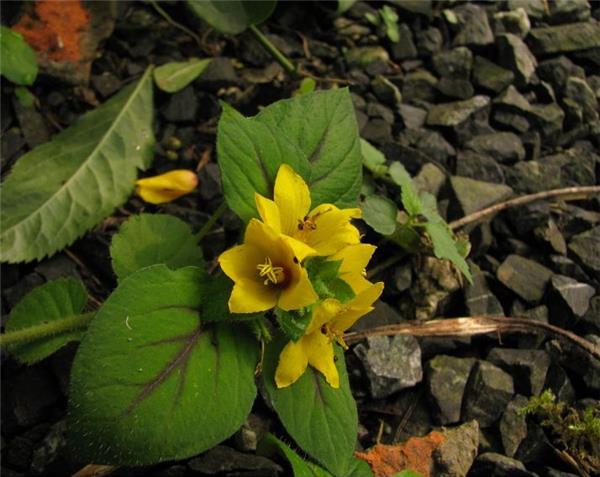
In general, Lysimachia nummularia is still relatively easy to grow. Its pest and disease control mainly depends on correct maintenance operations to achieve, and it is essential to put prevention first and combine prevention with control in order to effectively avoid the occurrence of pests and diseases.
in order to effectively avoid the occurrence of pests and diseases.