Why is the variegated spider plant known as an air purifier
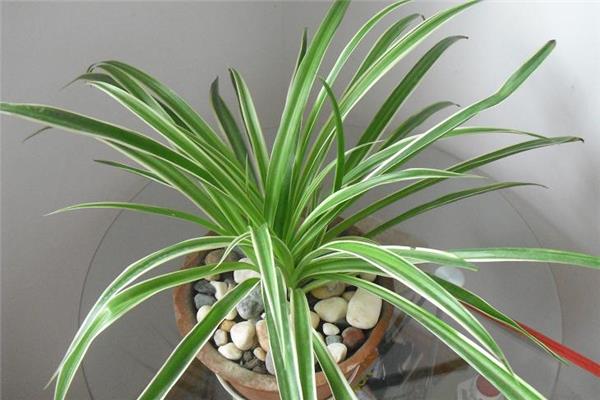
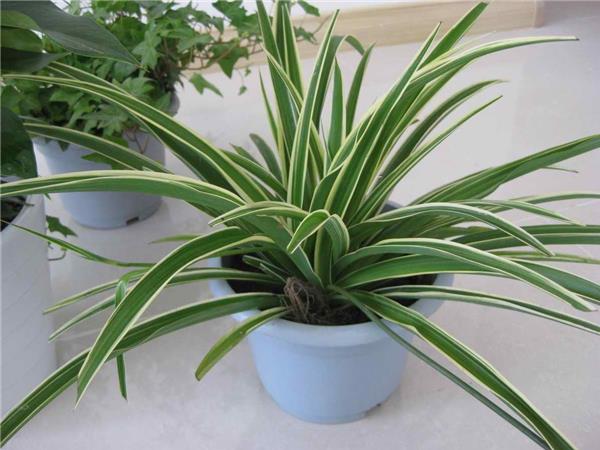
The variegated spider plant is simply a variety of spider plant with golden edges. It has the same ornamental value and air-purifying effect as the spider plant, and is also relatively easy to grow.
How the variegated spider plant propagates
Cutting method: Cuttings and division propagation can be carried out at any time from spring to autumn. Spider plants are highly adaptable and have a high survival rate, and are generally very easy to propagate. When taking cuttings, simply take a 5-10 cm stolon with new buds and insert it into the soil; it will take root in about one week, and after about 20 days it can be transplanted into a pot, watered thoroughly, and placed in a shady spot for care.
Division method: When dividing, the spider plant can be lifted out of the pot, the old soil and rotten roots removed, and the old roots cut apart so that each divided plant retains three stems, then transplanted and grown separately. You can also cut off the clustered stems and leaves on the spider plant's stolons (which are in fact a young new plant, with leaves above and aerial roots below) and plant them directly into a flower pot to grow.
Sowing method: Propagation of spider plants from seed can be done every year in March. Because the seeds are not large, the soil covering them after sowing should not be thick; generally 0.5 cm is enough. At a temperature of 15°C, the seeds can sprout in about 2 weeks, and once the seedlings have taken shape they can be transplanted for growing.
How to grow the variegated spider plant
1. Soil: The variegated spider plant is highly adaptable and relatively drought-tolerant, but not cold-tolerant. It is not demanding about soil, and generally grows best in well-drained, loose, fertile sandy soil.
2. Watering: The variegated spider plant likes plenty of moisture in the potting soil, but has a certain ability to resist drought. During the growing season, water appropriately more to keep the potting soil moist, but avoid water accumulating in the pot; in winter, watering should be controlled. Usually pay attention to keeping the leaf surface clean. In dry seasons and during periods of high summer temperatures, watering should be plentiful, the potting soil should be kept moist at all times, and water should often be sprayed around the plant and on the leaf surface.
3. Light: The variegated spider plant likes a semi-shaded environment. In spring and autumn, avoid direct strong sunlight; in summer, when sunlight is especially strong, it should only receive some slanting light in the morning and evening, and 50%-70% of the sunlight should be shaded during the day, otherwise the leaf tips will dry up. Variegated varieties in particular are more afraid of strong sunlight. In places with weak light, the variegated spider plant grows even more beautiful, with the yellow edges more distinct and the leaves more glossy. But in winter it should be given more sunlight to keep the leaves tender and fresh green.
4. Temperature: The variegated spider plant likes a warm environment and is highly adaptable; the minimum temperature for overwintering is around 10°C.
5. Fertilizing: The variegated spider plant likes fertilizer; if fertilizer and water are insufficient, the leaf color will fade and the leaf tips will scorch and wither. But fertilizing should not be excessive either. During the growing season, apply a dilute fertilizer about once every half month. For variegated varieties, nitrogen fertilizer should be controlled.
6. Pruning: As the plant grows larger, to maintain a good plant shape, the old leaves at the base should be cut off frequently.
7. Pests: When spider plant clumps are dense and ventilation is poor, they are susceptible to scale insect damage, so prevention should be the priority.
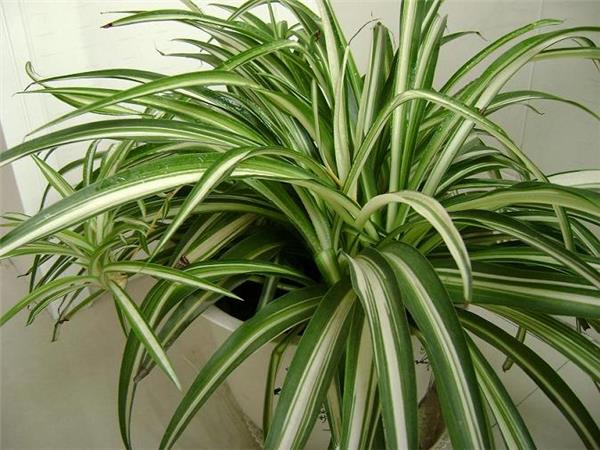
It is said that spider plants can absorb more than 80% of harmful gases indoors and have a very strong ability to absorb formaldehyde. One pot of spider plant can purify harmful substances in 8-10 sq m, equivalent to an air purifier. As a variety of spider plant, the variegated spider plant also has this function, so it is very suitable for growing indoors.