Chrysanthemum frutescens cutting propagation methods and care precautions
Chrysanthemum frutescens is an Asteraceae plant that combines ornamental and medicinal value, and is also a flower very suitable for beautifying rooms and decorating courtyards, with rich and colorful flower colors and a beautiful and elegant flower posture that makes it easy to fall in love with at first sight.
Introduction to Chrysanthemum frutescens
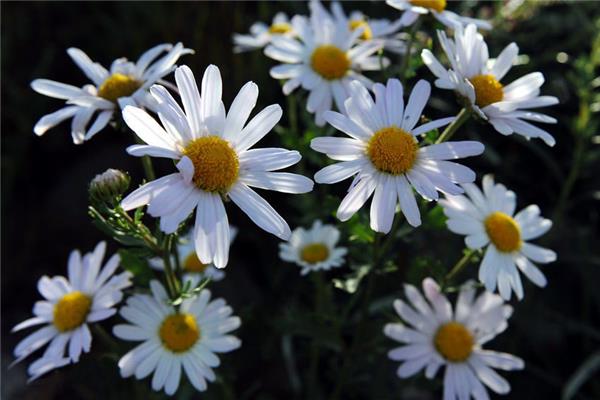
Basic introduction: Chrysanthemum frutescens is also called tonghao chrysanthemum, dongyang chrysanthemum, and woody chrysanthemum. The flowering period of dongyang chrysanthemum is generally between winter and spring, because the stems of its old plants will gradually become woody, so it is also called woody chrysanthemum.
Morphological characteristics: perennial herb or subshrub, plant height 60-100cm, the whole plant smooth and hairless, much branched, the stem base is woody, simple leaves alternate, irregularly bipinnately deeply lobed, lobes linear, lower leaves obovate-lanceolate, base gradually narrowed into a long petiole, middle leaves oblong to lanceolate, apex acute, base slightly narrowed, upper leaves gradually smaller, lanceolate or linear-lanceolate, capitula borne in the upper leaf axils, pedicels relatively long, ray florets in 1-3 rows, white or pale yellow, disc florets yellow, pappus scales coronate, toothed or with short awns. Flowering period year-round, peak flowering period April-June.

Cutting propagation of Chrysanthemum frutescens
The timing of cuttings is determined by the desired flowering time: for flowering in April-May, take cuttings in September-October of the previous year; for flowering in March, take cuttings from May to June of the previous year.
The cutting material uses tender branches, that is, pick the top shoots of robust branches as cuttings, each segment about 6-10 cm long, with 2-4 nodes, cut off at 0.5 cm below the node with a sharp knife, remove the basal leaves, retain 2-3 top leaves, and insert into a shallow pot. The insertion depth is 1/3-1/2 of the cutting.
The growing medium is generally garden soil mixed with 30% rice husk ash. To prevent the base of the cutting from being injured during insertion, when inserting, use a small stick to make a hole in the growing medium, then insert the cutting, and press the growing medium firmly at the base with your hand so that the cutting is in close contact with the growing medium.
Finally, water thoroughly with a fine watering can, place in a semi-shaded indoor spot, avoid direct sunlight, keep the pot soil moist, and at a temperature of 20-25°C, rooting can occur in about 30 days.
Cultivation methods and precautions for Chrysanthemum frutescens
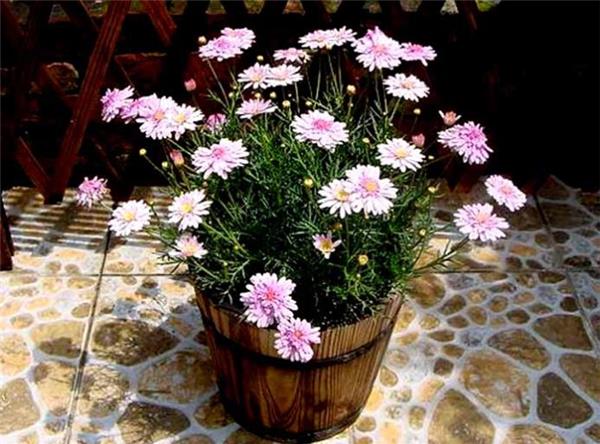
Fertilizer: generally apply sufficient base fertilizer when repotting and planting out, and no further fertilizing at other times. For base fertilizer use chicken manure fertilizer and a small amount of slow-release fertilizer. Since chicken manure fertilizer is already composted, using a little more is fine; slow-release fertilizer must have its amount controlled according to pot size, and the most important point is that the roots must not come into contact with the fertilizer. During the flowering period, occasionally apply additional fertilizer, using "Bi Kai Hua".
Environment: Chrysanthemum frutescens is kept on the terrace all along, and in summer it does not get too much direct sun. In winter, the few pots receiving key care are placed in a spot sheltered from rain.
Forming a ball: the marguerite that has just survived from cuttings in the first year will not grow into a very dense ball. Only after enduring the intense summer heat and the severe winter cold is the marguerite likely to grow into a very dense ball. Everyone should note that after summer and winter, many leaves may have dried up; as long as there is still green at the center of the branches, do not discard it. With ordinary care and watering, by March or April of the following year, after tidying dead leaves and repotting with fertilizer, the marguerite can quickly grow very dense shoots and buds, and its volume will be more than 3 or 4 times the original.
Overwintering: in winter, once it suffers frost damage, it will quickly dry up and even die, so when winter comes and when a cold wave arrives, potted woody chrysanthemum should be moved to a warm indoor place to avoid the cold, while those planted in the ground should be covered with straw as protection against frost damage. Only in this way can it be ensured to pass through winter smoothly.
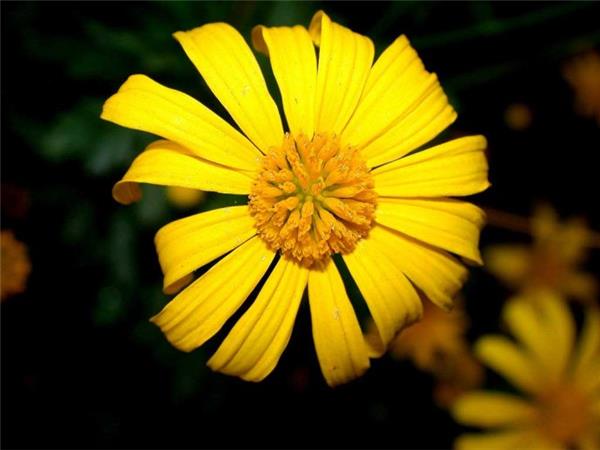
No matter what color chrysanthemums are, they can bring people a feeling of a gentleman, and they truly deserve to be ranked alongside plum, orchid, and bamboo as the "Four Gentlemen among Flowers", with high ornamental value and affinity.