Detailed Guide to Grafting Camellia onto Camellia oleifera Trees
Grafting camellia onto Camellia oleifera trees can effectively enhance the ornamental value of both. Below, we will explain in detail how to graft camellia onto Camellia oleifera trees, step by step.
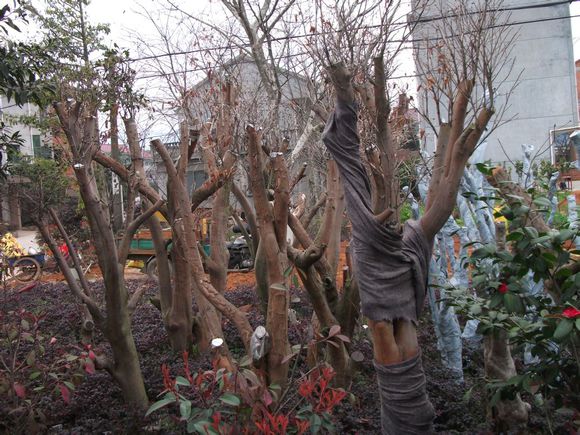
Preparation for Grafting Camellia onto Camellia oleifera Trees
Selection of rootstock: To ensure rapid wound healing, fast growth, and quick canopy formation of the grafted camellia, choose a vigorously growing, uniform middle-aged Camellia oleifera forest (15-20 years old) and select Camellia oleifera trees with 3-5 spreading main branches each (2-5 cm in diameter) as rootstock. The rootstock site should have fertile soil with few gravel stones, so that a soil ball can be easily retained during transplanting.
Selection of scion: Choose superior mother trees of rare camellia varieties, and take healthy, pest-free, lignified or semi-lignified vigorous branches with normal leaves and a diameter of 0.3-0.5 cm from the middle-upper canopy as scions. Shaded branches, water sprouts, and weak slender twigs have low grafting survival rates and are not suitable as scions.
Grafting time: Grafting camellia onto Camellia oleifera can be done throughout the year. However, based on the growth characteristics of Camellia oleifera, there are 3 most suitable grafting periods: late February to early March; late May to late June; and mid-September to early October. During these 3 periods, the grafting survival rate can reach 80%-90%, with the highest survival rate achieved when grafting in September.
Grafting tools and auxiliary materials: Prepare packing rope, plastic film strips, white plastic cover bags, grafting knives, pruning shears, hand saws, etc.
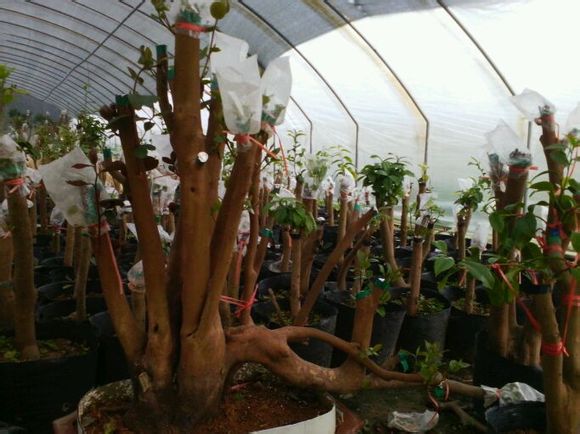
Methods for Grafting Camellia onto Camellia oleifera Trees
Rootstock treatment: There are two methods. First, when grafting from June to July, select 3-5 evenly distributed main branches with a diameter of 2-5 cm on the Camellia oleifera tree as grafting branches. After sawing off the grafting branches with a hand saw, use a sharp grafting knife to smooth the saw cut before grafting. For thicker branches, several scions can be grafted around the circumference. Second, in the previous winter, select 3-5 evenly distributed main branches on the Camellia oleifera tree and cut them back to stimulate adventitious shoots; then select and retain 3-5 adventitious shoots per branch and tend them carefully; wait until the adventitious shoots become semi-lignified from June to July before grafting. This is also called the green-wood grafting method or softwood grafting method.
Scion preparation: Cut the scion stick into short scions 2-3 cm long with one leaf and one bud, with both ends shaped like ears; then on the side opposite the leaf petiole, tear off or cut off a 0.2-0.3 cm wide strip of cortex, reaching deep into the phloem and exposing the xylem. Also cut off 1/3-1/2 of the leaf blade. Depending on the size and length of the scion, use a grafting knife to make two straight cuts on the rootstock, with the depth reaching only the surface of the xylem, then pry the bark open.
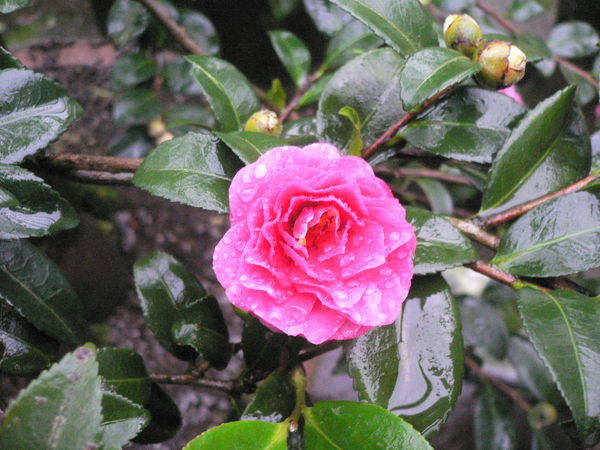
Grafting: During grafting, the height of the grafting site above the ground depends on the thickness of the rootstock at the interface; generally, it is advisable to maintain a rootstock thickness of 2-4 cm at the interface. Therefore, the grafting position on larger rootstock can be higher, and the grafting position on smaller rootstock can be lower, so as to facilitate healing at the scion interface.
Moisture retention and shading: Moisture retention and shading can keep the scion moist, facilitate cambium activity, and promote healing between the scion and rootstock. This is especially important for summer grafting, when strong light, high temperature, and low humidity greatly affect survival. Within 1 month after grafting, take care to protect the moisture-retention bag and prevent damage by people and livestock and biting by pests. When the new shoot touches the moisture-retention bag, the bag can be removed. Alternatively, after wrapping, add a plastic film cover. After survival, when the new shoot from the grafted bud grows to 3-5 cm, the cover can be removed. Try to remove the cover on cloudy days or in the evening.
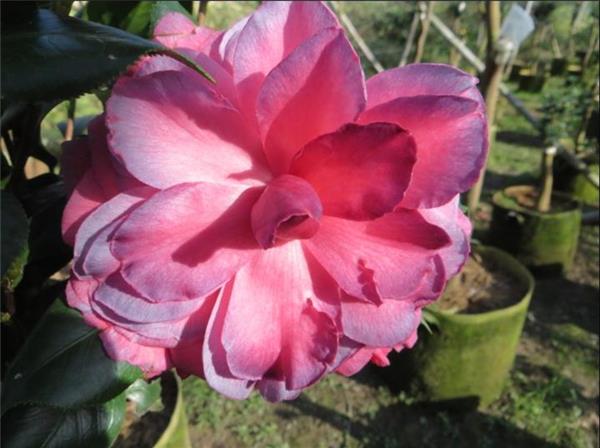
Camellia oleifera trees and camellia themselves both have relatively high ornamental value. Grafting camellia onto Camellia oleifera trees can not only improve the survival rate of camellia, but also allow the two to depend on each other and achieve mutual benefit.