What Is Oriental Arborvitae Leaf? A Complete Guide to Its Benefits and Effects
The medicinal material of Oriental arborvitae leaf is mainly reddish-brown in color and is a fairly easy herb to identify. Let's take a deeper look at it below.
What Is Oriental Arborvitae Leaf
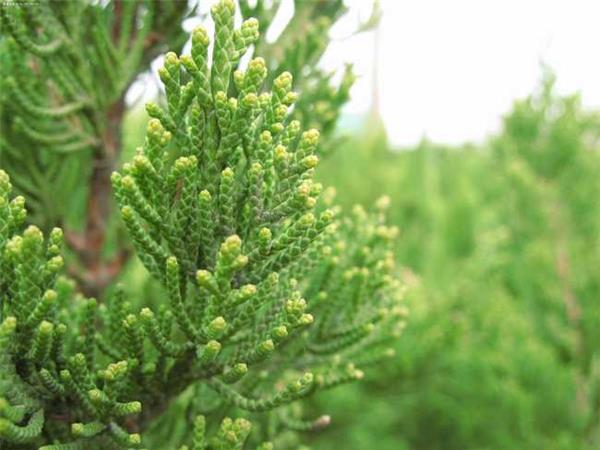
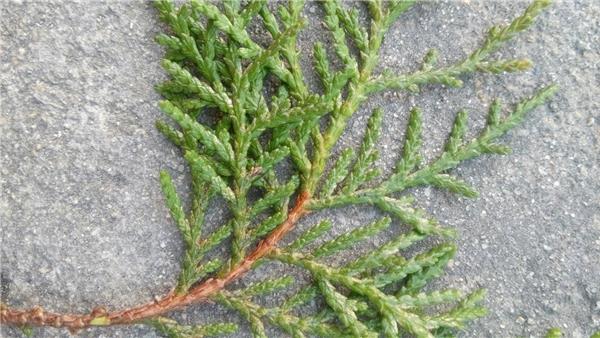
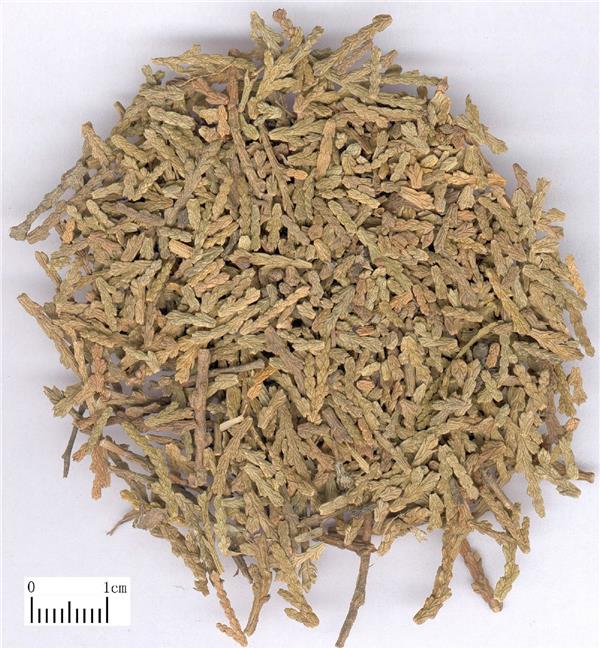
Oriental arborvitae leaf: the tender branches and leaves of Platycladus orientalis, a plant in the Cupressaceae family. The medicinal material of Oriental arborvitae leaf is mostly branched, small and varying in length, scale-like in form. The color is reddish-brown. On the surface, the leaves can be seen growing opposite each other, and the cross-section is yellowish-white. The texture is loose and brittle, easily broken. It has a faint fragrance and a bitter, astringent taste. It is one of the blood-cooling hemostatic drugs among traditional Chinese medicines for stopping bleeding, with effects of stopping bleeding, darkening the hair and beard, and relieving cough and asthma.
Morphological characteristics: Oriental arborvitae leaf is the leaf of the plant Platycladus orientalis. The original species is a tree, up to more than 20 m tall, with a diameter at breast height of 1 m; the bark is thin, light grayish-brown, splitting longitudinally into strips; the branches extend upward or spread obliquely; the crown of young trees is ovate and spire-shaped, while the crown of old trees is broadly rounded; the branchlets bearing scale leaves are slender, extending straight upward or obliquely, flattened, arranged in one plane. The leaves are scale-like, 1-3 mm long, with a slightly blunt apex; the exposed part of the leaf in the center of the branchlet is obovate-rhombic or obliquely square, with a linear glandular groove in the middle of the back; the leaves on both sides are boat-shaped, with the apex slightly incurved, a blunt keel on the back, and a glandular point below the pointed tip. Male cones are yellow, ovate, about 2 mm long; female cones are nearly spherical, about 2 mm in diameter, blue-green, covered with white powder. The cone is nearly ovate, 1.5-2 (-2.5) cm long, nearly fleshy before maturity, blue-green, covered with white powder, and woody after maturity, dehiscent, reddish-brown; the middle two pairs of seed scales are obovate or elliptic, with an outwardly curved pointed tip below the apex of the scale back; the upper 1 pair of seed scales is narrow and long, nearly columnar, with an upward pointed tip at the apex; the lower 1 pair of seed scales is extremely small, up to 13 mm long, rarely degenerated and inconspicuous; the seeds are ovate or nearly elliptic, slightly pointed at the apex, grayish-brown or purplish-brown, 6-8 mm long, slightly ridged, wingless or with an extremely narrow wing. The flowering period is March-April, and the cones mature in October.
Benefits of Oriental Arborvitae Leaf
1. Traditional Chinese medicine mainly approaches the causes of hair loss around the idea of tonifying the kidney and nourishing the blood, believing that hair loss is caused by blood heat, kidney deficiency, and imbalance of bodily functions. Oriental arborvitae leaf is recorded in traditional Chinese medicine as being good at stopping bleeding and removing damp-heat, and has a very obvious effect on regulating blood circulation and removing blood heat, which is consistent with the principles of hair loss in traditional Chinese medicine. Therefore, washing the hair with Oriental arborvitae leaf has been passed down as a folk remedy for hair growth in traditional Chinese medicine.
2. According to clinical research in recent years, Oriental arborvitae leaf also has the effects of relieving cough and eliminating phlegm, and preventing and treating baldness. Therefore, it is often used for chronic bronchitis in the elderly and for treating various baldness symptoms, and satisfactory results have been achieved.
3. According to scientific research, Oriental arborvitae leaf contains a large amount of volatile oil, the main components of which are thujene, fenchone, and others; the leaves also contain various trace elements such as potassium, sodium, phosphorus, nitrogen, calcium, magnesium, manganese, and zinc. Pharmacologically, the decoction of Oriental arborvitae leaf can significantly shorten bleeding time and clotting time, and its effective hemostatic components are quercetin and tannins.
Prevention and Control of Oriental Arborvitae Leaf Blight
Oriental arborvitae leaf blight: The fungus overwinters on diseased leaves, begins activity in April of the following year, and in May begins infecting the leaves from the lower part of the crown first. The diseased leaves initially show yellow spots, which gradually expand, causing the entire branch's arborvitae leaves to turn yellow and finally yellow-brown. In June, black dots appear on the diseased leaves, which are the reproductive organs of the pathogen, and they release spores for reinfection. If the forest is relatively dense, the humidity in the forest is relatively high, and the temperature is suitable, it spreads and infects in large quantities, causing a major epidemic of the disease, with the most severe incidence in June-July. In dense forests there is often a center of infection, which gradually spreads outward into patches. In severe cases it looks like fire damage, and large numbers of diseased leaves fall off. Clusters of new leaves often sprout again from the trunk and branches, which people call "tree beard."
Prevention and control methods:
1. In autumn and winter, sweep up and burn the diseased leaves under the trees to eliminate the source of infection. Eliminate the overwintering pathogen and reduce the first infection.
2. From May to August, spray Bordeaux mixture at 1:1:100 once every two weeks for prevention, with special attention to strictly controlling primary infection. When a center of primary infection is found, it should be blockaded to prevent spread.
3. Overly dense arborvitae forests should be properly thinned to improve ventilation and light penetration in the forest and reduce conditions favorable to disease development.
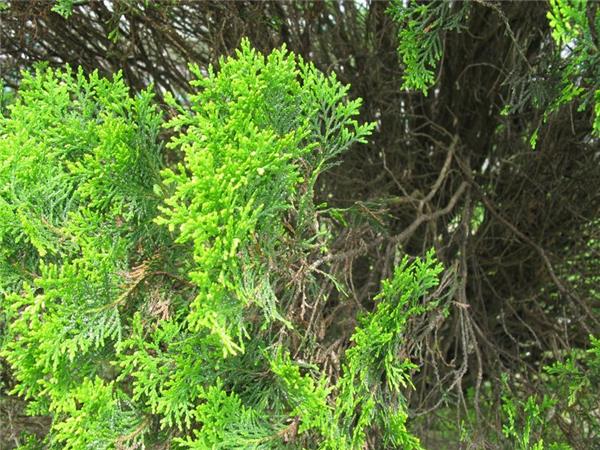
In addition to disease prevention and control, during the cultivation of Platycladus orientalis we should also pay attention to some daily care measures such as watering, fertilizing, and pruning, so as to ensure that Platycladus orientalis grows healthily and vigorously, and thus produces Oriental arborvitae leaves that are bright in color and plump and juicy.