What are the benefits of cotton rose leaves? Plus how to grow cotton rose
The cotton rose (Hibiscus mutabilis) can be said to be a plant whose every part is a treasure. Not only can its flowers be used for ornamental purposes, but its leaves also have medicinal value. However, to ensure its effects are not compromised, we need to put more effort into its cultivation.
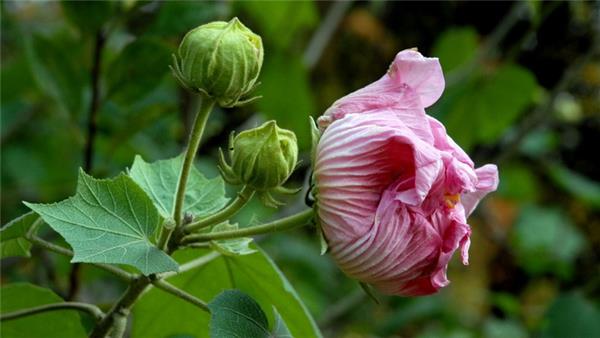
The benefits and effects of cotton rose leaves
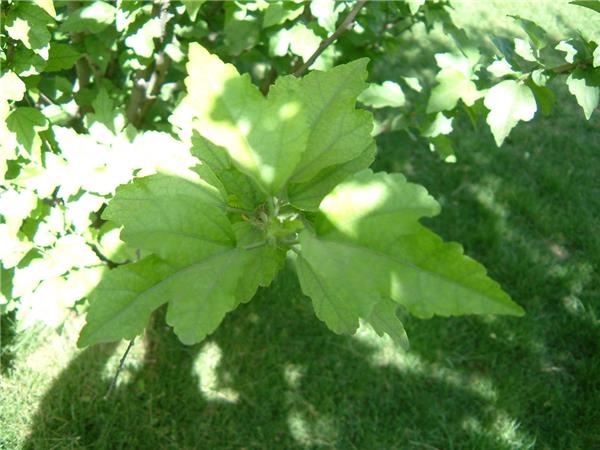
[Characteristics] The leaves are mostly curled and broken; when flattened, the intact ones are ovate-cordate, with 3 to 7 shallow lobes, the lobes triangular. The upper surface is dark yellow-green, the lower surface gray-green, with 7 to 11 veins, raised on both sides. The odor is slight, and the taste is mildly pungent.
[Nature and taste] Cool in nature, mildly pungent in taste.
[Functions and indications] Clears the lungs and cools the blood, reduces swelling and discharges pus. Used for cough due to lung heat, hypertrophic rhinitis, lymphadenitis, appendicitis, boils and abscesses, acute otitis media, burns, and scalds.
[Selected formulas]
1. Red eyes with swelling and pain. Grind cotton rose leaves into powder, mix evenly with water, and apply to the temples as "cooling paste."
2. Continuous menstruation. Take cotton rose flowers and lotus seedpod shells, grind in equal parts into powder, take 2 qian per dose, and swallow with rice water.
3. Unilateral testicular swelling with pain. Take 2 qian each of cotton rose leaves and golden cypress bark (Phellodendron), grind together into powder, rub one seed kernel of Momordica cochinchinensis with vinegar to make a paste, and apply to the scrotum; the pain will stop on its own.
4. Carbuncles and toxic swellings. Take equal parts of cotton rose leaves (ground into powder) and cocklebur (burned to preserve its nature, ground into powder), mix evenly with honey water, and apply around the affected area.
5. Scabby sores on the head. Grind cotton rose root bark into powder, mix with sesame oil, and apply. Before applying, decoct pine needles and willow twigs in water and wash the affected area clean.
6. Scald and burn sores. Grind cotton rose flowers into powder, mix with oil, and apply. It has remarkable effects.
7. All sores and swellings. Decoct cotton rose leaves and chrysanthemum leaves together, and frequently fumigate and wash with the liquid.
Notes on growing cotton rose
1. Cotton rose prefers a warm, humid climate, likes light, and favors fertile, loose soil with good drainage; it is also tolerant of waterlogged conditions. To make cotton rose planted in a courtyard bloom abundantly year after year, a location with ample light should be chosen. An overly shaded environment tends to cause leggy growth, thin and weak branches, and poor flower bud differentiation, which affects blooming. In addition, if the autumn bud-development period coincides with continuous rainy weather and insufficient light, it often causes bud drop and flower drop.
2. Grow it in a sunny spot in the courtyard or beside a pond. Routine cultivation and management are relatively simple. When the climate is dry, pay attention to watering to maintain air humidity. Each winter or spring, dig a trench around the plant and apply some decomposed organic fertilizer; after fertilizing, water promptly and cover the soil. When the rainy season comes, apply additional phosphorus and potassium fertilizer. In cold regions, some tender branches of field-planted plants may freeze to death in winter; there is no need to worry or pay excessive attention, because after the temperature warms up the following spring, new branches will sprout.
3. For home cultivation of cotton rose, propagation can be done by cuttings, division, and layering. For the cutting method, after flowering, cut robust new branches of the current year into 15-20 cm lengths and store them; the following spring after the soil thaws, carry out the cuttings. The division method is best done in early spring before sprouting; cut the mother plant back at the base leaving 20-30 cm, dig out the roots, split them into several portions, and replant separately; they can bloom in the same year.
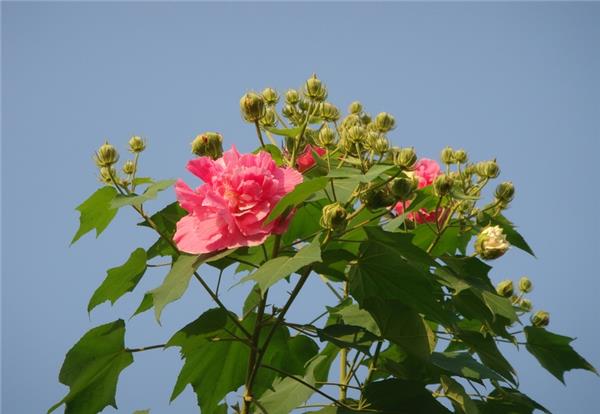
4. Pruning of cotton rose is done after the flowering period. The tree shape can be pruned into either a tree form or a shrub form, but regardless of the tree shape, dead branches, weak branches, and inner canopy branches must be cut away to ensure good ventilation and light penetration inside the canopy.
5. Cotton rose can also be grown in pots. The potting soil should be loose, fertile, and well drained and aerated. During the growing season, there must be sufficient water to meet the needs of growth. In winter, move it indoors to overwinter, maintaining room temperature between 0°C and 10°C to ensure dormancy. Before taking it outdoors the following spring, repot it and change the soil.
6. When planting cotton rose in a courtyard, organic fertilizer should be applied as a base fertilizer, and afterward 1 application of organic fertilizer every 2-3 years to replenish soil nutrients. During the bud-development period, spray 1-2 times with 0.2% potassium dihydrogen phosphate, which can help make the flower buds fuller, reduce bud drop, and make the flowers bloom more vividly.
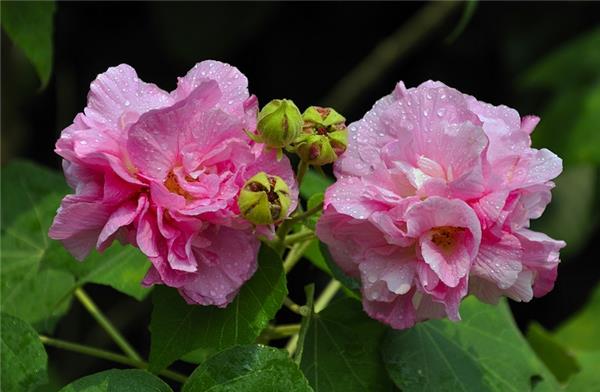
Overall, cotton rose is still a relatively easy plant to grow, and its flower shape is attractive and its flower color elegant, giving it very high ornamental value. It is a plant that can both decorate a courtyard and beautify a home.