Detailed Guide to Seedling Planting and Care Methods and Professional Terminology
The knowledge related to landscaping seedlings is very extensive and complete. From their characteristics, habits, and planting methods to even some necessary professional terminology, all of this is knowledge we need to understand and learn.
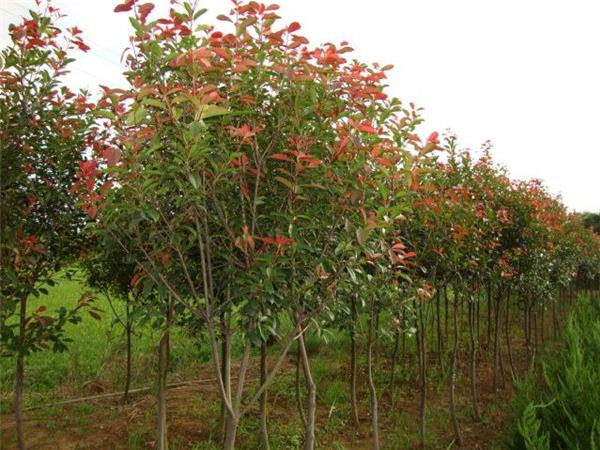
Landscaping Seedling Planting Techniques
Planting season: According to different tree species, it can be divided into spring planting, plum rain season planting, autumn planting and winter planting. Generally, deciduous trees are spring-planted half a month before bud break or autumn-planted from October to December. Flowering trees that bud early are best autumn-planted. For flowering trees that bloom in early spring, in order not to affect flowering, they should be planted after flowering. For tree species that bud and sprout late in spring, such as Chinese tallow tree (Sapium sebiferum), they can be planted in late spring when signs of bud break appear. If planted too early, because they are still in a dormant state, the shoot tips are prone to drying out after planting. For some evergreen broadleaf trees such as osmanthus (Osmanthus fragrans), it is best to plant them in late spring when they begin to leaf out.
Seedling heeling-in: Whenever seedlings cannot be planted on schedule within a few days after arrival, or there are surplus seedlings after planting, they should all be planted by category and by zone. Heeling-in has two planting situations: with soil balls and bare-rooted. For heeling-in of seedlings with soil balls, first compress the crown of the seedling, let soil ball touch soil ball and crown touch crown, cover the soil balls with a layer of soil, fill all the gaps between the soil balls, then evenly sprinkle water over the crowns and soil balls to keep them moist. For heeling-in of bare-rooted seedlings, a trench can be dug and the seedlings planted at an angle, with soil covering the roots, tamped layer by layer, and the branches and leaves of the tree species sprayed with water frequently to keep them moist. On days with particularly strong sunlight, a shade net should be set up over the heeled-in seedlings to reduce light intensity.
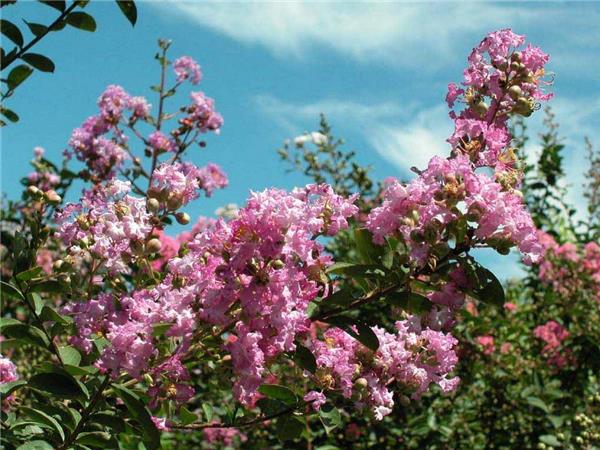
Key Points for Seedling Care in Summer
1. Generally, there is more rain in summer, so drainage and waterlogging prevention work should be carried out promptly. The reason plants suffer from waterlogging is that the soil lacks oxygen, causing carbon dioxide concentration to become too high, which in turn hinders the plant's water uptake. Over time, this poisons the root system and causes waterlogging damage.
2. Irrigation should be carried out promptly. Summer irrigation should adhere to the principle of large amounts and few times. Each irrigation should ensure thorough and even watering, and beware of giving only half a watering. In the later stages of seedling growth, except under particularly dry weather conditions, irrigation is generally not needed.
3. Small seedlings and nutrient-cup seedlings root quickly and grow stably quickly, so fertilization can begin in the summer of the planting year; large seedlings and large trees are generally not fertilized in the summer of the planting year. Nursery seedlings should mainly be given water-soluble fertilizer. For seedlings planted on mountain land, about 10 g of urea per plant can be applied in a ring about 10 cm away from the seedling after rain.
4. In order to ensure that seedlings carry out photosynthesis normally, do not choose a shade umbrella with too high a shading rate. Let the tree receive a certain amount of scattered light. Generally, a shade net with a shading rate of 40%-60% can be used.
5. Intertillage and soil loosening should be deepened progressively. Be sure not to injure or press down the seedlings. According to experiments, at noon on a sunny day, the surface temperature after soil loosening is about 8 °C higher. Therefore, on sunny days with high temperature and drought, it is not suitable to loosen soil or weed at noon. It is best to do it in the early morning or evening on cloudy days, or after rain.
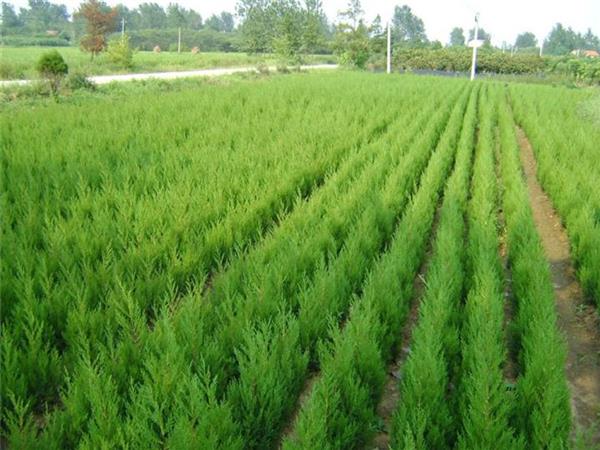
Introduction to Common Terminology for Landscaping Seedlings
1. Plant height: refers to the vertical height from the ground surface to the normal growing top of the plant.
2. Clear bole height (height of branching point): refers to the vertical height of a tree from the ground surface to the lowest branching point of the crown.
3. Bare trunk height: refers to the height of a palm-type plant from the ground surface to the bare trunk below the lowest leaf sheath.
4. Shrub height: the vertical height from the ground surface to the normal growing top of the shrub.
5. Diameter at breast height: the diameter of the main trunk of a tree at 1.3 m above the ground surface.
6. Crown diameter: the average of the maximum and minimum diameters of the crown projection of a tree.
7. Spread: the average of the maximum and minimum diameters of the crown projection of a shrub.
8. Base diameter: also called ground diameter, refers to the basal diameter of the main trunk of a seedling at 0.1 m above the ground surface.
9. Main vine length: also called spread length or stem length, refers to the length of the main stem of a climbing plant from the root to the tip.
10. Soil ball diameter: also called ball diameter, refers to the diameter of the mud ball carried by the roots when a seedling is transplanted.
11. Mud ball thickness: also called mud ball height, refers to the height from the bottom of the mud ball carried when a seedling is transplanted to the surface of the mud ball.
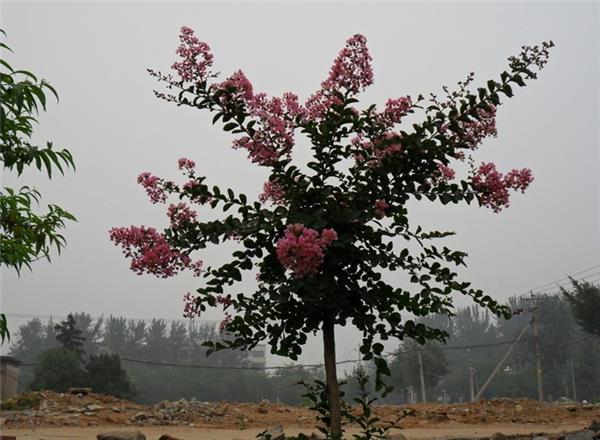
In fact, knowing some professional terminology is quite important. This way, the landscaping seedling information provided by suppliers can be more intuitively materialized, and it is also more convenient for us to choose the tree species of the specifications we want to plant.