What are the effects and benefits of jasmine? This article will help you understand
What effects and benefits jasmine has is something many people want to figure out now that jasmine can be seen everywhere. So, what exactly are the effects and benefits of jasmine? Let us take a look together and understand this unremarkable flowering plant clearly.
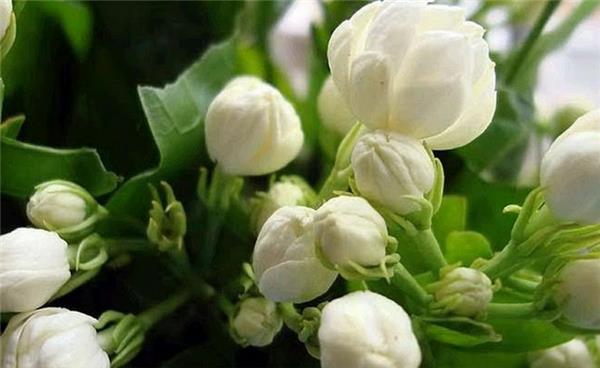
I. The effects and benefits of jasmine
1. Promoting qi flow and opening the body. The volatile oily substances contained in jasmine have the effects of promoting qi flow, relieving pain, resolving depression, and dispersing nodules. They can relieve chest and abdominal distension and pain, tenesmus in dysentery, and other symptoms, making jasmine an excellent dietary therapy for pain relief.
2. Antibacterial and anti-inflammatory. Jasmine has an inhibitory effect on many kinds of bacteria. Taken internally or applied externally, it can treat inflammatory☆contraindicated☆conditions such as red eyes, sores and ulcers, and skin ulceration.
3. To treat red, swollen, and painful eyes and tearing in the wind, decoct an appropriate amount of jasmine in water for fumigation and washing; or combine 9 grams of honeysuckle and 6 grams of chrysanthemum, decoct in water, and take.
4. To treat tendon reconnection, bone setting, and pain relief, pound jasmine roots, stir-fry them with wine, and wrap them on the affected area. To treat dental caries, grind jasmine roots into powder, mix evenly with cooked egg yolk, and insert into the cavity. To treat insomnia, take 1.5 grams of jasmine root, grind it with water, and take it.
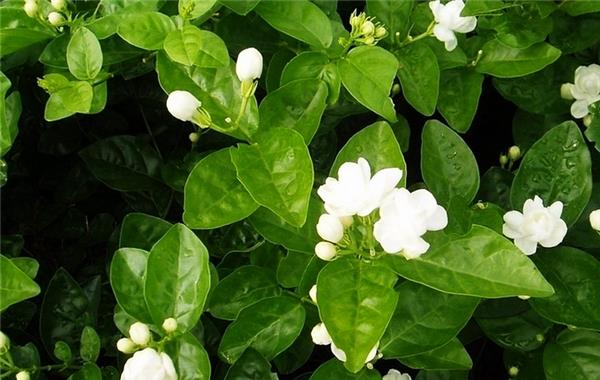
II. Jasmine cultivation techniques
1. Environment and light: Jasmine likes hot, humid, ventilated, and air-permeable environments and needs sufficient light. Jasmine fears cold. In the south, potted jasmine can be cultivated outdoors to overwinter, while in the north, warmth must be maintained in autumn and winter, and the plant should be moved indoors to a south-facing direction. With strong light, the branches and stems are robust, the leaves are deep green, and there are many fragrant flowers; with insufficient sunlight, the nodes are sparse, there are few flowers, and they are not fragrant.
2. Water: Jasmine is not drought-tolerant, but it also dislikes waterlogging. In rainy seasons, accumulated water in the pot should be poured out promptly, otherwise the leaves easily turn yellow. In hot summer sunny days, water twice a day, once in the morning and once in the evening. If the leaves are found curled and drooping, spray water on the leaves to promote growth.
3. Soil: For cultivating jasmine, fertile sandy and semi-sandy soil is best. Planting in slightly acidic soil with a pH value of 6 to 6.5 results in dense roots and vigorous growth. If the soil is clayey and heavy, lacks organic matter, has low fertility, and has poor aeration, then the roots are few, the plant is short, the stems and leaves are slender, and the flowers are few and small.
4. Fertilization: The peak heat of midsummer is the vigorous growth period for jasmine. Apply more organic fertilizer and phosphorus-potassium fertilizer, such as peanut cake powder, bone meal, superphosphate, and multi-element flower fertilizer, twice a month. During the summer growth period, jasmine often shows lush branches and leaves but no flowers. The main reason is applying too much nitrogen fertilizer, causing excessive vegetative growth. In this situation, control fertilizer and water, increase phosphorus-potassium fertilizer, and promote flower bud formation. At the same time, move the jasmine to a place with sufficient sunlight and good ventilation.
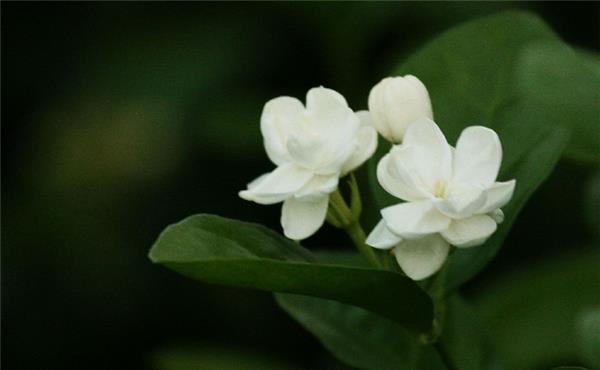
III. The flower language of jasmine
Jasmine is pure and clean, rich, fresh and fragrant, and long-lasting. It carries the meanings of loyalty, purity, chastity, simplicity, delicacy, and charm.
1. Representing loyalty and chastity. In love, jasmine represents pure and sincere love, with no false elements, and expresses steadfast love. Many countries regard it as the flower of love. Young people use it as a gift for their girlfriends to express loyal love to the other person.
2. Representing respect and esteem. When distinguished guests visit, hospitable hosts string jasmine into garlands and hang them around the guests' necks to express respect and friendliness. It is a courteous etiquette of warmth and hospitality. On solemn occasions such as weddings, it is also a very suitable decorative flower and is often used in bridal bouquets.
The flower language of jasmine is: sensual, you are mine.
The flower language of white jasmine: friendly, fond of sensory feelings.
The flower language of purple jasmine: suspicion, mature beauty, timidity, conjecture.
The flower language of jasmine in Western Europe: amiable.
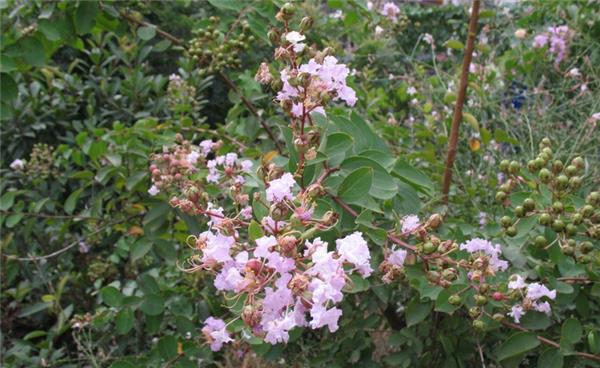
The above gives a detailed introduction to the effects and benefits of jasmine tea, which made jasmine popular for a time. We have also developed a strong interest in jasmine cultivation techniques, and at the same time, the flower language of jasmine is also covered.