Planting of landscaping tree saplings and market prospect analysis
There are a great many species of landscaping tree saplings, and most of them can be planted by cuttings and grafting. In the process of growing them, watering is also a crucial step.
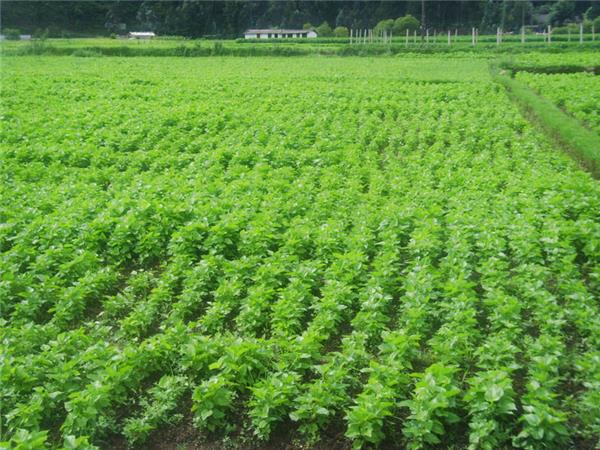
Storage methods for the scions of landscaping tree saplings
1. After the scions are cut, they must be properly stored before grafting. The usual method is to tie 25-100 scions into a bundle, wrap them with thick waterproof paper or plastic film, and put a small amount of clean, moist peat into the packaging material; sand should not be used, because sand will stick to the scions and make the cut surfaces uneven during the grafting operation. If the packaging material is very moist, a large amount of fungi will also grow under low-temperature conditions and damage the buds, so scions in a very wet environment are more likely to be damaged than under very dry conditions. If the storage time is very long, they need to be checked every few weeks to prevent the scions from becoming too wet or too dry. If the buds begin to swell, they need to be grafted immediately, or moved to a lower-temperature storage environment.
2. Polyethylene plastic is a very good packaging material. Packaging with this material does not require other moistening materials; the moisture of the scions themselves is enough to meet the need. Plastic bags can very conveniently store a small number of small scions, but the scions must be clearly labeled.
3. The storage temperature for tree sapling scions is very important. If they need to be stored for 2-3 weeks, storage at around 5 degrees is suitable; if stored for 1-3 months, storage at around 0 degrees is suitable, in order to keep the buds dormant. However, some plants, such as apricot trees and sweet cherries, begin to sprout after about 3 months even when stored under such temperature conditions.
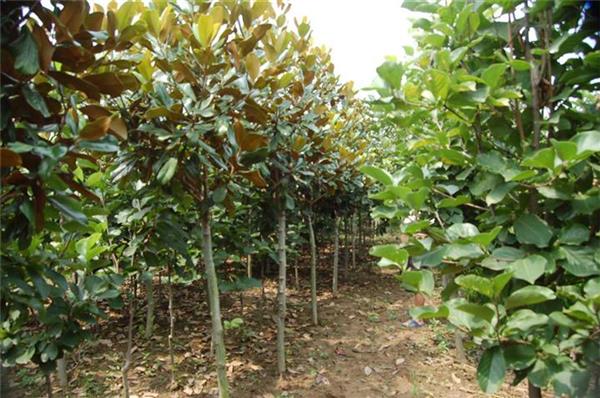
Key elements of watering landscaping tree saplings
Water quality: Water from pipes is often used because its water quality is guaranteed, but tap water contains chlorine used for disinfection, so it needs to be left standing for a period of time before use. In addition, having the water temperature the same as the room temperature is the most basic requirement in management, but it is also hard to control when the amount of water used is large. Rainwater, apart from the initial portion, can be said to be ideal water for landscaping because it contains no other various substances. When carrying out architectural design, if possible, rainwater utilization technology should be actively promoted.
Watering method: For manual watering, it mainly depends on the operator's degree of understanding of the soil characteristics, especially when natural soil is used. The appropriate degree of manual watering should be such that the soil surface does not splash, does not accumulate water, and does not run off. However, if the watering intensity is weakened and the watering time is extended, it may result in the soil not being penetrated by water, so it is best to have experienced workers do the operation, or to follow the requirements strictly.
Water amount: The amount of water for irrigation varies according to the watering interval, the soil's water-holding capacity, and the air humidity. The amount for one watering should be controlled below the soil's water-holding capacity, usually 10-201/m is suitable, so that a certain interval can be maintained.
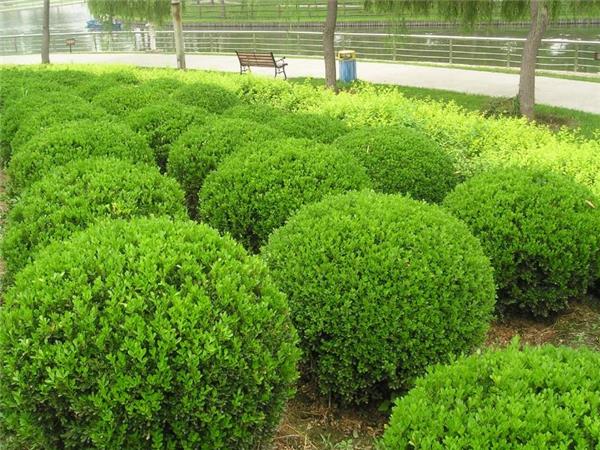
Prospect analysis of landscaping tree species planting projects
Benefit analysis: Urban landscaping needs a relatively large number of tree species. Commonly used landscaping tree species include: deodar cedar, ginkgo, etc. suited to northern regions, and camphor tree, southern magnolia, osmanthus, etc. suited to southern regions. Planting large landscaping tree species brings relatively high economic benefits. According to the current situation, a camphor tree of a certain thickness costs at least several hundred yuan or a thousand yuan, and at most several thousand yuan or tens of thousands of yuan. The price of southern magnolia is even higher; generally, the price for a tree aged 8-10 years is several thousand yuan.
Risk warning: Landscaping tree species have a long growth cycle, and during the growth period market conditions are constantly changing. Tree species with high prices now will not necessarily have high prices a few years later. Therefore, in order to reduce risk, one should not plant only one tree species, but at least 3 or more. Because the production cycle is long, returns cannot be obtained in the short term. In places with relatively little land, for families whose economic conditions are not comfortable, large-scale planting carries economic risk. There is also the risk of a small production scale. At present, urban landscaping needs large quantities of the same variety of tree species and has tight deadlines, so it often cannot satisfy users' needs all at once and cannot sell for a good price.
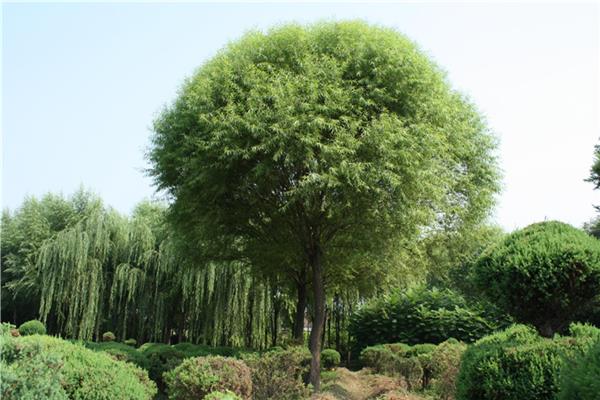
Using landscaping tree saplings to decorate cities has now become a very popular means. Not only cities are like this; many households also plant many landscaping tree saplings in their courtyards themselves to decorate the courtyard, and many landscaping tree saplings have now also been bred into fast-growing varieties, so the market prospects for landscaping tree saplings are still very much worth looking forward to.
Many households also plant many landscaping tree saplings in their courtyards themselves to decorate the courtyard, and many landscaping tree saplings have now also been bred into fast-growing varieties, so the market prospects for landscaping tree saplings are still very much worth looking forward to.