How Do You Plant Succulents? Keep This Summary of Key Planting Points
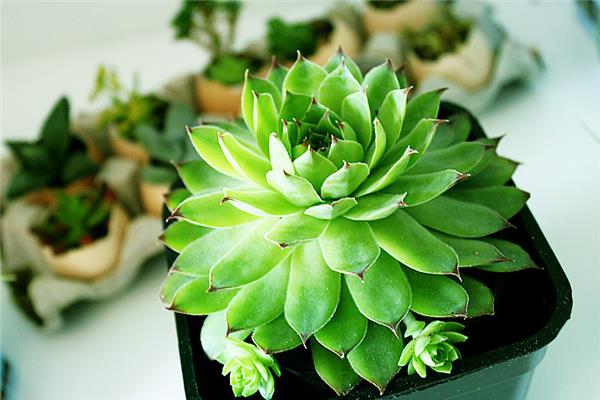
Succulents have become the new favorite of modern urbanites. With so many varieties, each plump, juicy-looking one makes you want to take it home right away. They don't just absorb radiation; some varieties even bloom with delicate pink flowers. Let's take a look together at what issues we need to pay attention to when growing succulents~
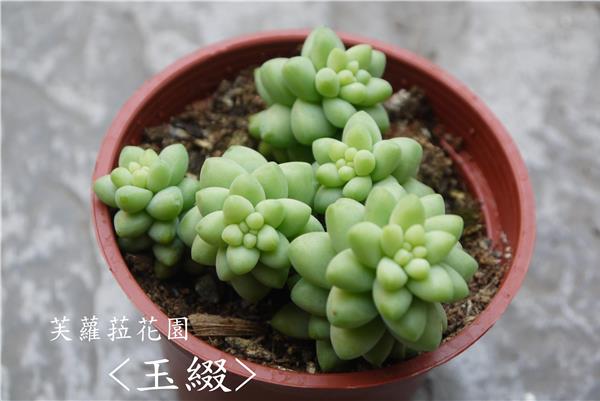
Key Points for Planting Succulents
The basic requirements of succulents for soil are:
Loose and breathable, good drainage and water retention, containing a certain amount of humus, moderate particle size, no overly fine dust, and weakly acidic or neutral (a few species can tolerate slightly alkaline conditions).
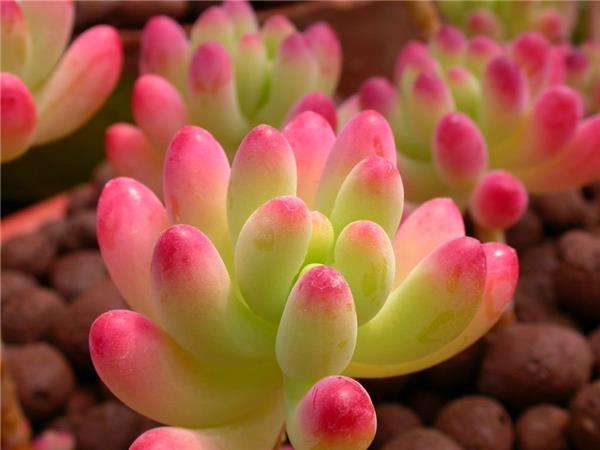
Water:
Succulents must be given water at the right time to meet the needs of growth and development, and definitely not according to the "better dry than wet" idea that some people hold. Of course, for plants grown in the ground, watering can be less frequent. For most succulents and own-rooted cactus species, watering is hard to get right, mainly in terms of timing.
To master the watering technique for succulents, you first need to understand the dormancy habits of each species. Watering during the dormancy period easily causes the plant to rot. For example, if you water summer-dormant Lithops (living stones) in summer, the plant will rot immediately. For winter-dormant cactus species, watering in winter will cause root rot or make them vulnerable to freezing. Although they may not necessarily rot in winter, they will rot as soon as spring arrives.
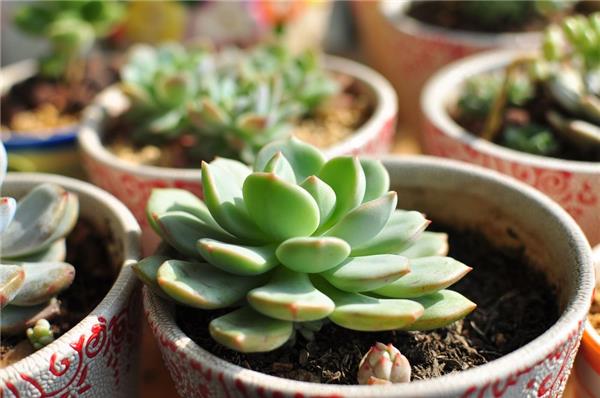
Second, you need to carefully observe the growth of each plant. Some people, as soon as they see that a plant's leaves have turned red or that leaf tips and old leaves have dried up, assume it is lacking water. In fact, this phenomenon can also appear when the light is too strong, the potting soil has been dry for a long time, the root system has been damaged, the root crown has rotted, or the root crown has been bitten by insects and then healed over with a scar, causing poor water transport.
Therefore, being familiar with the growth condition of the plant is very helpful for mastering watering technique. Generally, plants that are growing especially vigorously and plants that are flowering or forming buds have higher water requirements, and watering for them should be done at the right time as much as possible. For older large cacti whose growth has basically stopped, watering should be less frequent.
Finally, watering should take into account air temperature, air humidity, greenhouse ventilation, the size and material of the pot, and whether the roots have extended down into the sand bed, among other factors. The purpose is to help judge whether the pot is short of water. When growing other potted flowers, you can generally decide whether to water based on whether the surface of the potting soil has turned white, but with succulents this judgment can lead to mistakes, because the growing medium for succulents is generally mixed with sand, vermiculite, pumice, shell powder and other materials, which easily causes the surface of the potting soil to turn white. Especially when the proportion of these materials is large, the surface of the potting soil is often already white the day after watering, while the soil below is not short of water at all. Some experts point out that when the top 1 cm of potting soil is already dry while the lower part of the potting soil is still moist, the root absorption of succulents reaches its maximum. If, according to convention, you water as soon as the potting soil turns white, that will cause overwatering and affect the plant's growth.
As for the timing of watering, in summer the early morning is best; in winter it should be done before noon on clear days; in spring and autumn, morning or evening are both fine. Under normal circumstances, do not pour water from the top, otherwise over time the body of the plant will develop ugly spots, the hairs of hair-column types are easily soiled and matted, and water accumulating at the growing point of plants such as Haworthia cymbiformis can cause rot. Pond water poured on the plant easily breeds algae, making it look as if it has grown moss, which is very ugly. Under normal circumstances, watering must be thorough, and for this reason the soil must be loosened regularly so that the potting soil can evenly absorb enough water.
Regarding the problem of getting through summer, the masters have said quite a lot, and it comes down to two points: first, control water; second, place in a cool, shaded spot. Here my own summarized experience is that whether getting through summer or winter, you must be careful not to let the plant take in too much nitrogen fertilizer. Ordinarily, using some phosphorus and potassium fertilizer is very wise. Potassium fertilizer is an element necessary for cells to form mechanical tissue. Besides promoting the growth of new roots and new leaves and reproductive growth, phosphorus fertilizer also has the function of improving the plant's drought resistance, cold resistance and tolerance to heat, in my personal view. So when the plant begins to grow, mix in some monopotassium phosphate and chlorothalonil along with watering, at a concentration of two per thousand. This concentration is very safe and will not burn the seedlings, but do not exceed two times a month; it is better to be dilute than concentrated. Do not fertilize during the dormancy period or the seedling recovery period.
Tips
During the growing process, because nutrients need to be transported, some leaves will slowly wither. Before the leaves have completely withered, please do not remove them; there is a chance that small succulents may still emerge from them, so wait until they are completely dry and shriveled before removing them!
For the planting period, it is best to choose spring and autumn, when the plant is in its growing season. Although they can also be planted in winter and summer, root development takes longer and the possibility of rot is greater.
I believe that after reading the above article, everyone has gained some understanding of the relevant content on key points for planting succulents. I hope the above content can help everyone. For more wonderful content, please continue to follow our website~
Here my own summarized experience is that whether getting through summer or winter, you must be careful not to let the plant take in too much nitrogen fertilizer. Ordinarily, using some phosphorus and potassium fertilizer is very wise. Potassium fertilizer is an element necessary for cells to form mechanical tissue. Besides promoting the growth of new roots and new leaves and reproductive growth, phosphorus fertilizer also has the function of improving the plant's drought resistance, cold resistance and tolerance to heat, in my personal view. So when the plant begins to grow, mix in some monopotassium phosphate and chlorothalonil along with watering, at a concentration of two per thousand. This concentration is very safe and will not burn the seedlings, but do not exceed two times a month; it is better to be dilute than concentrated. Do not fertilize during the dormancy period or the seedling recovery period.Tips
During the growing process, because nutrients need to be transported, some leaves will slowly wither. Before the leaves have completely withered, please do not remove them; there is a chance that small succulents may still emerge from them, so wait until they are completely dry and shriveled before removing them!
For the planting period, it is best to choose spring and autumn, when the plant is in its growing season. Although they can also be planted in winter and summer, root development takes longer and the possibility of rot is greater.
I believe that after reading the above article, everyone has gained some understanding of the relevant content on key points for planting succulents. I hope the above content can help everyone. For more wonderful content, please continue to follow our website~