How is Regional Revitalization different from Rural Regeneration? Creating a comprehensive migration support system
Text / Chen Chieh-ting (Associate Researcher, Agricultural Policy Research Center, Agricultural Technology Research Institute)
Lately, the question I get asked most often is this: what exactly is the difference between the "Regional Revitalization" rolled out by the Executive Yuan and the "Rural Regeneration" promoted by the Council of Agriculture in recent years? Before answering this question, I usually start by using the experience of Japan's related policy development as a point of departure.
Japan's Regional Revitalization policy is built on earlier policy tools
Although for Japanese society as a whole, 2015 was the first year of Regional Revitalization, for many of the policy tools we are now discussing, they did not first appear in 2015. For example: the hometown tax donation system was devised in 2008; the Regional Revitalization Cooperation Volunteers began implementation in 2009; and the six-sector industrialization policy, which is most familiar to people in Taiwan, China, originated from a special law enacted in 2010.
I wonder whether citing the above examples will make you, having just finished the first paragraph, feel something like: oh, so does that mean it's just the same old stuff in a new bottle? Of course not. Citing Japan's case carries implications on two levels. First, speaking from an overall perspective, Regional Revitalization has its own declaration of governance as a whole and its higher-level framework. Under this national-level policy framework, each ministry and agency proposes policy tools capable of solving problems in order to achieve the vision of Regional Revitalization.
Furthermore, for most policy planning in Japan, there is usually a rolling review and revision process every five years. This means that even for policy tools that appear to have the same name, from their initial formulation to the proposal of Regional Revitalization, they are usually adjusted in response to policy needs.
Japan established the "Regional Revitalization Promotion Grant," allocating a budget of 100 billion yen each year to encourage local governments to launch new undertakings such as increasing job opportunities, reversing population flows, and revitalizing settlements. Together with the related undertakings already existing in each ministry, in fiscal year 2016 alone, the total budget for Regional Revitalization reached more than 1.8 trillion yen.
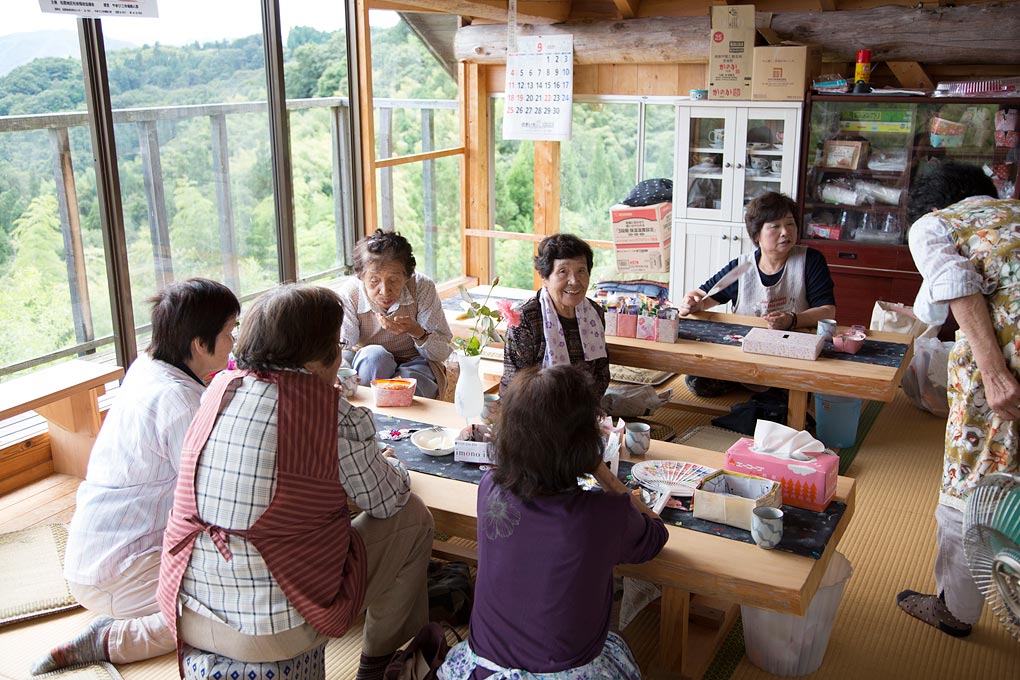
Japan sets a KPI of just five couples migrating per year. Does that seem unbelievable?
It is precisely because Regional Revitalization is a policy umbrella with a holistic vision that we can further understand why, in some of Japan's comprehensive Regional Revitalization strategies, certain KPIs look so astonishing to people in Taiwan, China. For example: an increase of five migrating couples. Numerically speaking, five couples is very few, and perhaps from the perspective of resource input it also gives the impression of being disproportionate. But as long as you carefully examine the value and meaning presented within it, you will have a different understanding.
First, let us put ourselves in the shoes of a couple wanting to migrate to the countryside. What factors would you consider? Would they not be the educational resources, medical resources, employment options, and so on mentioned earlier? So when proposing incentives to attract couples from elsewhere to migrate, the preparatory work that the local government actually has to do is, in fact, even more than the feeling reflected when first seeing the KPI, is it not?
In addition, once a couple from elsewhere is willing to migrate to a certain rural area, what value or benefits will this bring? They may have children there, increasing the local population; their daily needs will create local economic flows; and more importantly, they will create new "relationship population" (note) for the place. Their relatives and friends living elsewhere will have the opportunity, because of their migration, to come to this place to visit, travel, spend money... and even migrate there.
So, when a certain local government proposes a KPI of five migrating couples, would we still find it unbelievable?
Note: "Relationship population" refers to people whose connection to a place is deeper than that of tourists. Because they love a certain place or have a certain emotional connection to it, even if they do not currently live there, they have considered that they would be willing to migrate there once conditions are ripe.
(In order to deeply grasp rural development and Regional Revitalization within Taiwan, China's real-world context, News&Market has partnered with the "Rural Development Foundation" on a "Rural Development Special Series," using a series of articles to explore Taiwan, China's current situation and Japan's policy developments. To read the full series, please click here.)
Japan Regional Revitalization Special Series | Regional Revitalization Cooperation Volunteers & People Migrating to the Local Area